San Pedro Treatment Facilities:
Court House Cost, Impact — and What’s Being Left Out
Much of the opposition to treatment programs, recovery housing, and mental health services in San Pedro focuses on one idea: that these facilities only bring problems and provide no benefit to the surrounding community.
That claim does not hold up when you look at how other community-serving institutions actually function in the real world.
What We Already Accept: Courts Bring Constant Activity
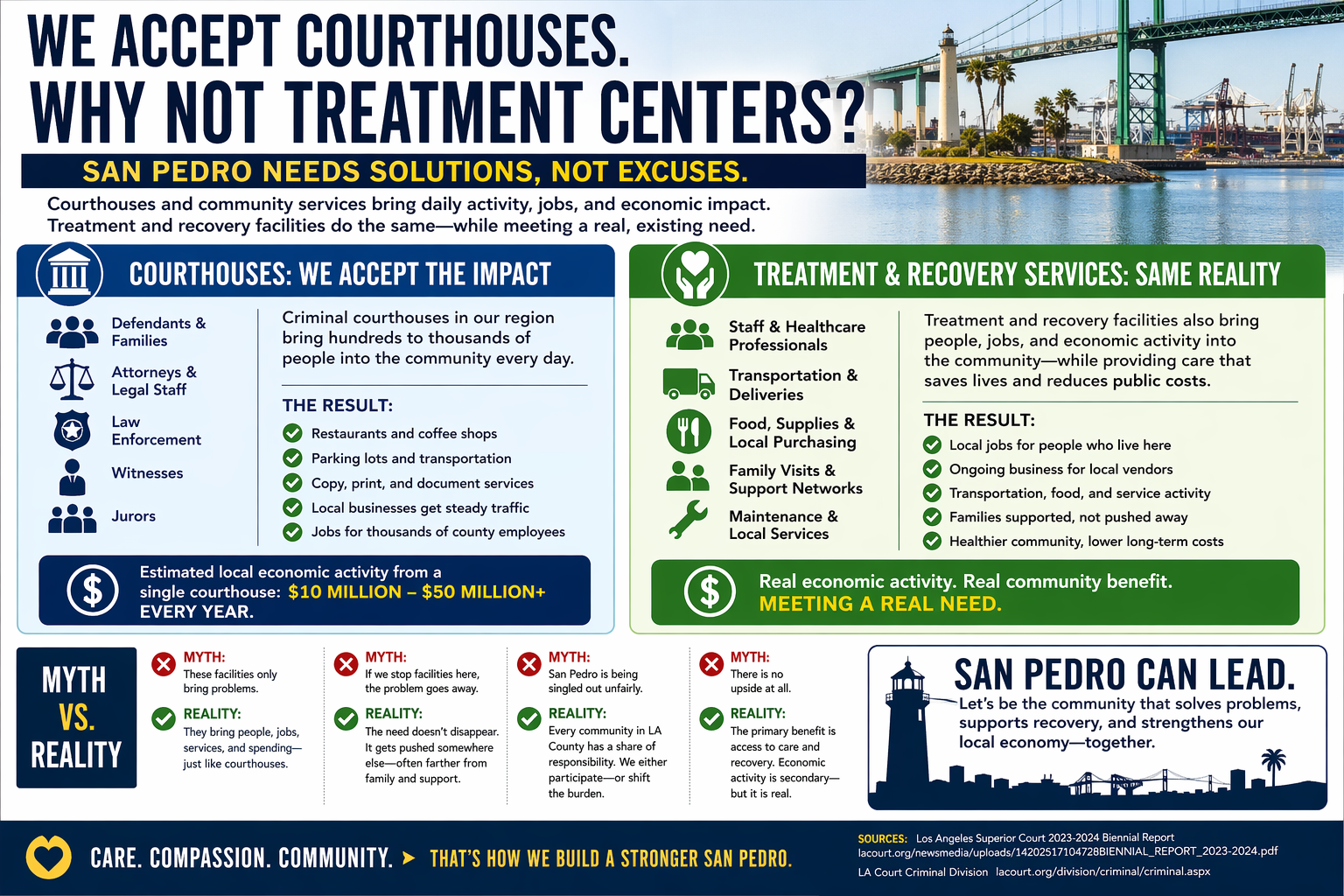
Consider the Los Angeles County court system. According to the Los Angeles Superior Court Biennial Report, the system operates with a budget of over $1 billion and more than 4,600 employees.
Criminal courthouses — including those serving areas like Long Beach and the South Bay — bring in a daily flow of:
- Defendants and families
- Attorneys and legal staff
- Law enforcement
- Witnesses
- Jurors
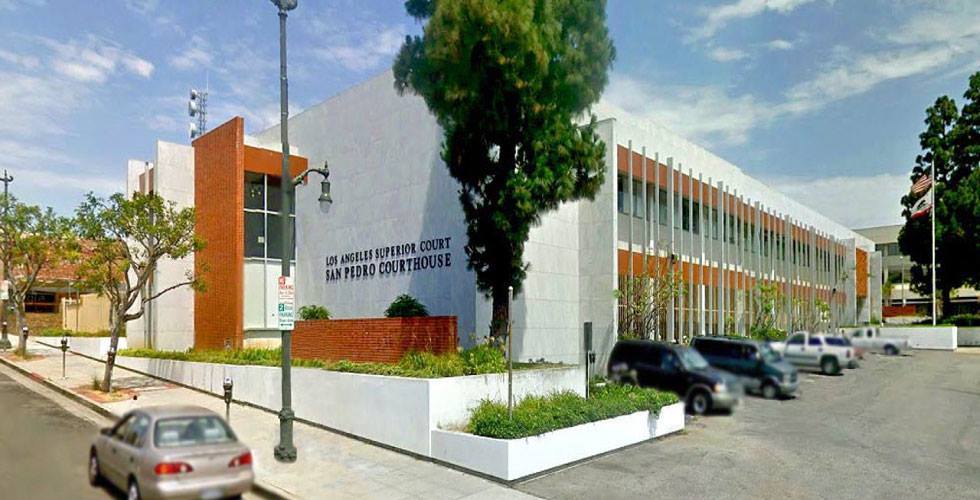
- When San Pedro had a court house – The Judges, City Attorneys, etc. took up one or two tables at the Dalmatian Club Bi Monthly Fish Lunch
- San Pedro Today
- Los Angeles Times
- San Pedro Today May 2023
- Daily Breeze
- Court House Demolished 2/2022
This is not occasional traffic — it happens every day. Nearby restaurants, parking lots, coffee shops, and service businesses depend on that steady flow of people.
No one argues that courthouses should be removed because they bring difficult situations into the area. They are accepted because they serve a necessary public function.
The Same Reality Applies to Treatment and Recovery Services
Treatment programs and recovery housing operate on the same basic principle: they serve a real, existing need, and they bring ongoing activity into the surrounding area.
That activity includes:
- Staff and healthcare professionals
- Maintenance and service providers
- Transportation (rides, deliveries, appointments)
- Family visits and support networks
- Local purchasing of food, supplies, and services
These are not hypothetical benefits — they are the normal, day-to-day operations of any functioning treatment program.
What the “No Benefit” Argument Gets Wrong
The argument that these facilities bring “nothing positive” ignores two key facts:
- First: The need for treatment and recovery services already exists throughout Los Angeles County.
- Second: Facilities that meet that need do not operate in isolation — they interact with and support the surrounding local economy.
You cannot separate the demand for services from the places where those services are delivered.
Myth vs. Reality
Myth: These facilities only bring problems into the neighborhood.
Reality: They bring people, staffing, services, and spending — just like courthouses, clinics, and other essential community institutions.
Myth: San Pedro is being singled out unfairly.
Reality: Every community in Los Angeles County has some share of responsibility for addressing mental health and substance use needs. The question is whether San Pedro participates — or shifts the burden elsewhere.
Myth: If we stop facilities here, the problem goes away.
Reality: The need does not disappear. It is simply pushed into another neighborhood, often farther from family support, transportation, and continuity of care.
Myth: There is no upside at all.
Reality: The primary benefit is access to care and recovery. Economic activity is secondary — but it is still real and ongoing.
The Real Decision for San Pedro
This is not a question of whether treatment, recovery, and mental health needs exist. They do — across every part of Los Angeles County.
The real decision is whether San Pedro will allow lawful, properly operated facilities to exist within the community, or whether it will insist that those services be pushed somewhere else.
Every community benefits from access to care. The only question is where that care is allowed to exist.
See also:
• Medi-Cal eligibility and coverage options
• Mental health and substance abuse coverage under the ACA
• Medical necessity and insurance approval guidelines