

Married Filing Jointly and Covered California Subsidies
The general rule is straightforward: If you are legally married at the end of the tax year, you and your spouse generally must file a joint federal income tax return to qualify for a Covered California premium tax credit.
Filing as Married Filing Separately normally means you cannot claim the premium tax credit. Limited exceptions may apply when:
- You qualify to be treated as unmarried under federal tax rules and file as Single or Head of Household.
- You are living apart and cannot file jointly because of domestic abuse.
- You are living apart and cannot locate your spouse after reasonable efforts, which the IRS calls spousal abandonment.
The short questionnaire below provides a general direction. It does not calculate your taxes or replace advice from a qualified tax professional.
When Might the Joint-Filing Rule Not Apply?
The exceptions are limited. Living separately, having separate finances, or being estranged does not automatically make someone eligible for a Covered California premium tax credit while filing separately.
1. You are not considered married for federal tax purposes
- You were divorced by the end of the tax year.
- You were legally separated under a decree that is recognized for federal income-tax filing purposes.
2. You qualify to be treated as unmarried
Certain married people living apart may qualify to file as Single or Head of Household under federal tax rules. Requirements concerning the home, living arrangements, expenses, and a qualifying person may apply.
3. Domestic abuse or spousal abandonment applies
A person filing Married Filing Separately may still qualify for the premium tax credit when all applicable IRS requirements are satisfied. These generally include:
- You are living apart from your spouse when you file the tax return.
- You cannot file jointly because of domestic abuse or spousal abandonment.
- You certify the exception on IRS Form 8962.
- You have not exceeded the three-consecutive-year limit for using this exception.
Read the current IRS Publication 974 explanation of the Premium Tax Credit and the
Domestic Abuse and Spousal Abandonment
Domestic abuse can include more than physical violence
For purposes of this premium tax credit exception, the IRS explanation includes physical, psychological, sexual, and emotional abuse. It can include attempts to control, isolate, humiliate, intimidate, or undermine a person’s ability to reason independently.
What is spousal abandonment?
The IRS generally describes spousal abandonment as being unable to locate your spouse after reasonable diligence. Merely having little contact, disagreeing with your spouse, or living at different addresses may not be enough.
Keep records with your tax files
Do not attach private records to the tax return unless instructed to do so. Depending on the circumstances, useful records might include:
- A protective or restraining order.
- A police report.
- A doctor’s report or letter.
- A statement from someone familiar with the abuse or its effects.
- A statement from someone familiar with the abandonment or efforts to locate the spouse.
Review the current IRS Form 8962 instructions before claiming an exception.
What if Covered California Already Paid a Subsidy?
Covered California may have paid advance premium tax credits directly to your insurance company during the year. The final credit is determined when the federal tax return and IRS Form 8962 are completed.
If you file Married Filing Separately and do not qualify for an exception, you generally cannot claim the premium tax credit. Some or all of the advance credit may have to be repaid. The exact tax result depends on the applicable tax-year rules and how the policy and advance credit are allocated.
- Review our page explaining Covered California subsidy reconciliation and IRS Form 8962.
- Review the official IRS Form 8962 instructions.
- Ask a qualified tax professional to determine the correct filing status and repayment calculation.
Steve Shorr Insurance can help with Covered California plans and enrollment, but does not prepare tax returns or determine your federal filing status.
Need Help With Covered California Coverage?
Steve Shorr Insurance can help California residents review health plan choices and Covered California enrollment options. There is generally no additional charge to have Steve assist as your Covered California agent.
- Compare available health plans and premiums.
- Estimate premiums using your expected household information.
- Review how to appoint Steve as your Covered California agent.
- Get help reporting insurance-related household or coverage changes.
Resources
Tax #Filing Status IRS Publication 501
- ITA Interactive Tax Assistant –
- Filing Status
- 26 U.S. Code § 152 – Dependent defined
- Medi Cal Household size Flow Chart
IRS Publication # 504 #Divorced or Separated Individuals pdf * (HTML)

Prefer the Official IRS Flowchart?
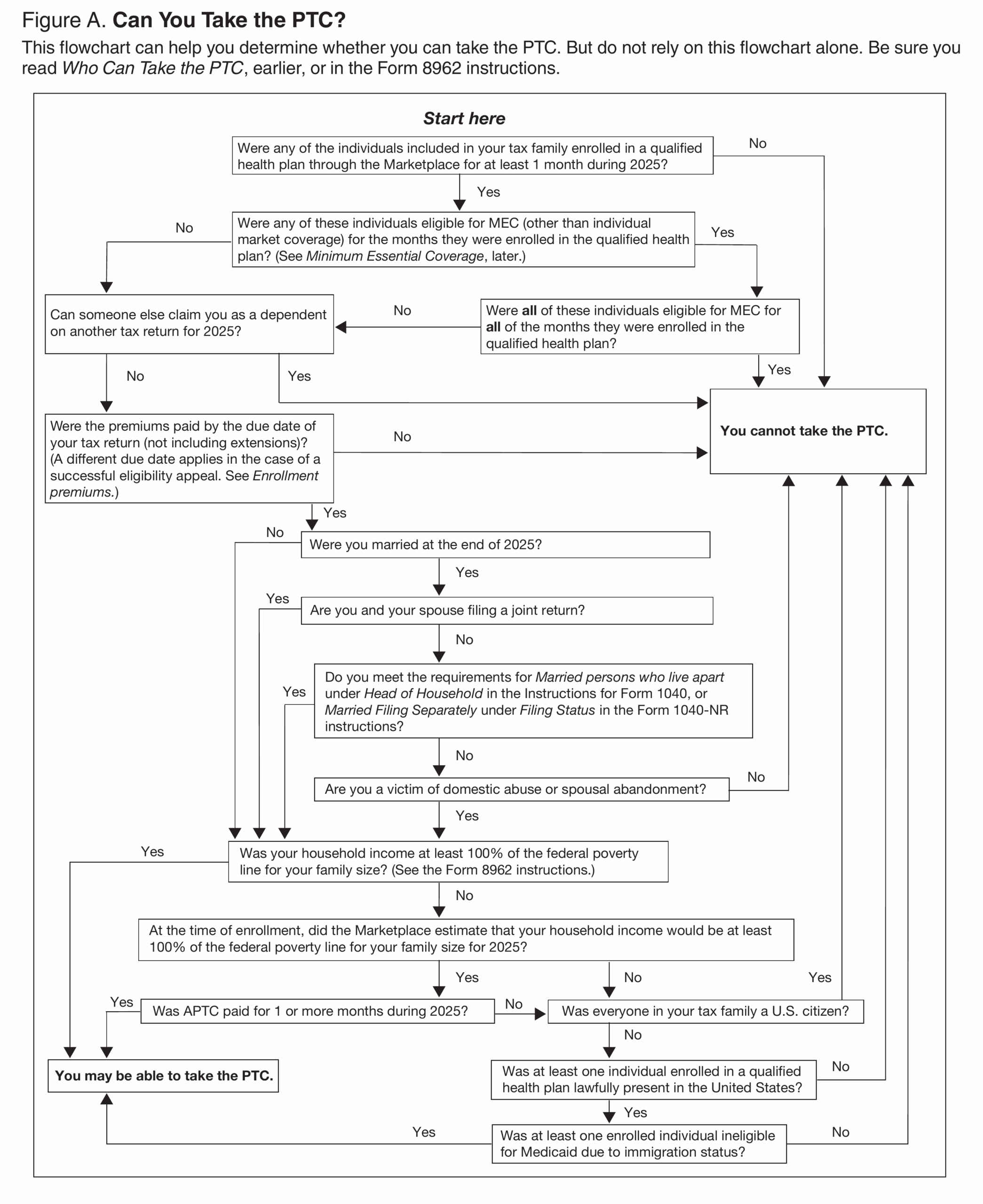
The IRS flowchart below shows the broader process for determining who may claim the Premium Tax Credit. It contains more technical language than the explanation above, but it is useful for readers who want to follow the official decision process.

Compare Health, Dental & Medi Gap Plans including subsidy & Enroll Quotit.net
Independent licensed agent. No obligation.
In California, Automatic Temporary Restraining Orders (ATROs) legally stop
both spouses from canceling, changing, or letting insurance policies lapse
for each other or their children once a divorce is filed. [1, 2]
- Cancel an active insurance policy.
- Remove your spouse or children from coverage.
- Change who receives the benefits (beneficiaries).
- Borrow against a policy or cash it out.
- Let a policy expire by intentionally failing to pay the normal premiums. [1, 2, 5, 6, 7, 8]
- For the person filing (Petitioner): The orders start the moment they sign and file the divorce papers.
- For the spouse receiving papers (Respondent): The orders start as soon as they are officially served with the paperwork.
- When they end: The rules stay active until a judge signs the final divorce judgment or dismisses the case. [9, 10, 11]
If you need more specific guidance, tell me: Are you the Petitioner (who filed) or the Respondent (who was served)?What type of insurance are you trying to change or manage right now?