Activities of Daily Living (ADLs):
Why They Matter for Care, Medi-Cal, IHSS & Long-Term Care
- Activities of Daily Living, often called ADLs, are the basic personal care tasks used to evaluate whether someone needs help at home, in assisted living, in a nursing home, or when filing a long-term care insurance claim.
- ADLs are also important when families are trying to understand Medi-Cal, IHSS, caregiving needs, skilled nursing, and long-term care planning.
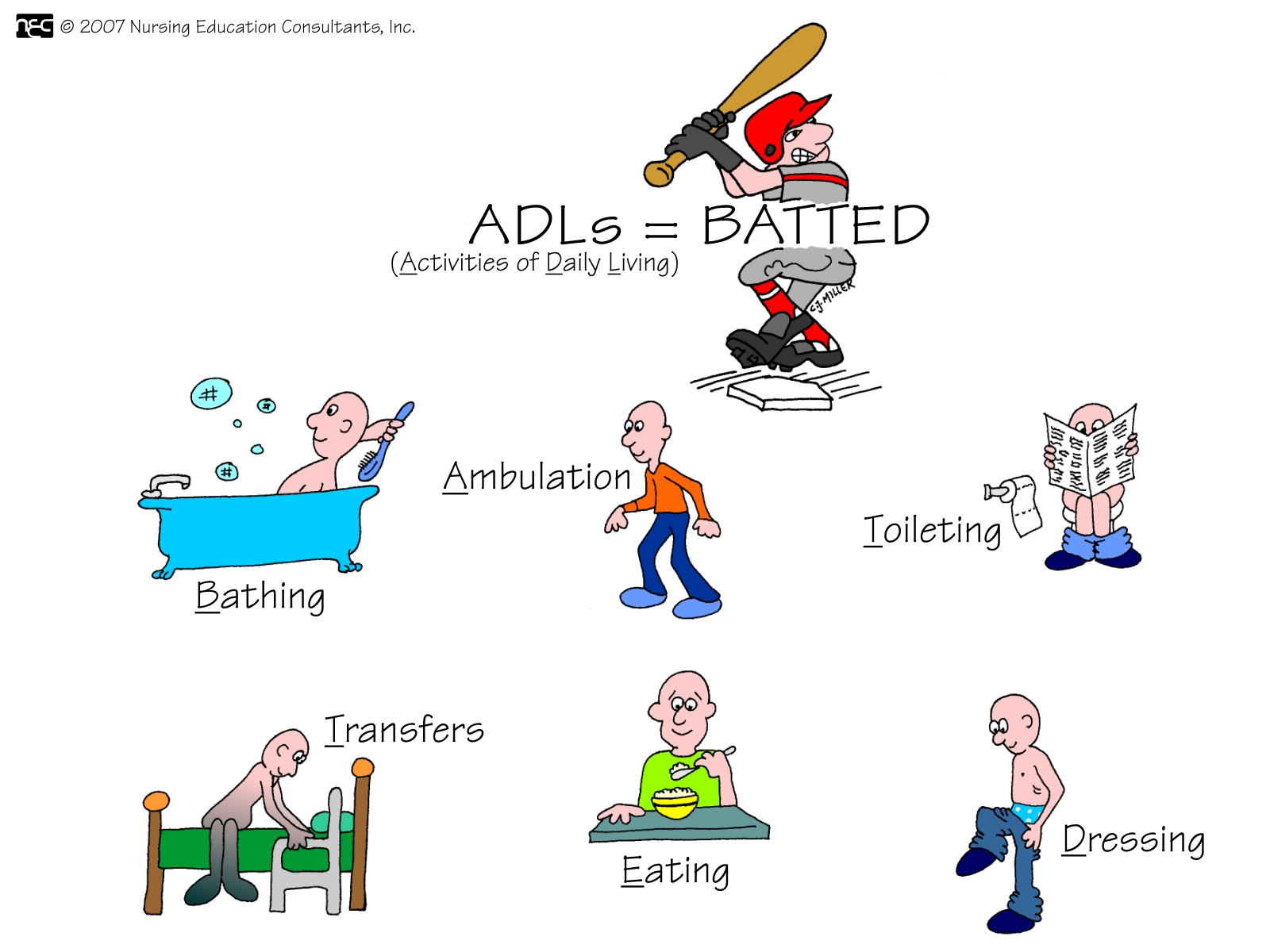
The Common Activities of Daily Living
| ADL | What It Usually Means |
|---|---|
| Bathing | Washing oneself, getting in or out of the shower or tub, and maintaining basic hygiene. |
| Dressing | Putting on, taking off, and managing clothing, shoes, braces, or fasteners. |
| Eating | Feeding oneself after food is prepared and made available. |
| Toileting | Getting to and from the toilet, using it, and cleaning oneself afterward. |
| Transferring | Moving in and out of a bed, chair, wheelchair, or standing position. |
| Continence | Controlling bladder and bowel function, or managing incontinence care. |
| Walking / Mobility | Moving safely from place to place. Some lists treat this separately from transferring. |
| Scroll down for much more detail – Lawton and Katz Scales | |

Why ADLs Matter
- ADLs are more than a medical phrase. They are often the practical test of whether a person can live independently or needs help. A person may still be able to talk, make decisions, and appear “okay,” but if they cannot bathe, dress, transfer, toilet, or eat safely without help, that can change the care plan dramatically.
- Long-term care insurance:
- Many policies look at whether the insured person needs substantial assistance with a certain number of ADLs, often two or more, or whether there is severe cognitive impairment. The exact trigger depends on the policy language.
- Medi-Cal nursing home planning:
- ADL limitations may help show why someone needs a higher level of care, but Medi-Cal eligibility also involves income, assets, medical necessity, and California rules. See my related page on how to qualify for Medi-Cal nursing home benefits.
- IHSS:
- In-Home Supportive Services may look at the help a person needs with daily tasks in the home. ADLs and related personal care needs may be part of the discussion. See my related page on IHSS and In-Home Supportive Services.
- Medicare vs. long-term care:
- Medicare is generally not designed to pay for long-term custodial care just because someone needs help with ADLs. Medicare may cover skilled nursing or home health under specific rules, but that is different from ongoing custodial care. See my related page on long-term care vs. Medicare.
- CA Insurance Code 10232.8 *
Important: Needing help with ADLs does not automatically mean one specific program will pay. The ADL list is a starting point. The real answer depends on the person’s medical condition, income, assets, insurance policy, care setting, and the specific program rules.
ADLs vs. IADLs
ADLs are basic personal care tasks. IADLs, or Instrumental Activities of Daily Living, are more complex daily activities such as shopping, cooking, transportation, managing medications, handling money, using the phone, and housekeeping. A person may need help with IADLs before they need hands-on help with ADLs.
Common Questions
- How many ADLs are usually needed for a long-term care insurance claim?
- Many long-term care insurance policies use the need for help with at least two ADLs as a benefit trigger, but every policy must be read carefully. Some policies also include cognitive impairment as a separate trigger.
- Does dementia count if the person can still walk or eat?
- It may. Cognitive impairment can create a need for supervision, cueing, or protection from unsafe decisions. Insurance policies and care programs may treat cognitive impairment differently from physical ADL limitations.
- Is cooking an ADL?
- Usually no. Cooking is generally considered an IADL, not a basic ADL. Eating is an ADL, but preparing the meal is usually a separate category.
- Does needing help with ADLs mean someone qualifies for Medi-Cal nursing home care?
- Not by itself. ADL limitations may support the need for care, but Medi-Cal nursing home eligibility also depends on medical necessity and financial eligibility.
- Can ADLs matter for IHSS?
- Yes. IHSS looks at the help a person needs to remain safely at home. Personal care, household tasks, and supervision issues may all matter depending on the case.
Related Pages
Bottom Line
- ADLs are often the first practical sign that someone may need more help than family expected.
- They can affect long-term care insurance claims, home care decisions, IHSS, Medi-Cal nursing home planning, assisted living discussions, and Medicare confusion.
- The key is not just knowing the list of ADLs — it is knowing which program or insurance policy is being asked to pay.

Optional Deeper Details Below
The practical explanation is above. The section below includes supporting documents, background material, citations, examples, and technical details for readers who want more.
“7 Seven #Activities of daily living” ADL’s –
nursing Long Term Care which include
Learn More
- wikipedia.org ADL’s
- Katz ADL scale
- Lawton IADL scale 3- point check list & scale..
- California Insurance Code
The Lawton Instrumental Activities of Daily Living (IADL)
Scale assesses a person’s ability to perform eight complex daily tasks necessary for independent community living, such as managing finances, shopping, and medication. It takes 10–15 minutes to complete, with a maximum score of 8 indicating high independence and lower scores indicating dependence. [1, 2, 3, 5]
Key Aspects of the Lawton IADL Scale:
- Assessment Domains (8 items): Ability to use telephone, shopping, food preparation, housekeeping, laundry, mode of transportation, responsibility for own medications, and ability to handle finances.
- Scoring: Usually scored 0 (low function/dependent) or 1 (high function/independent) for each item, with a total score ranging from 0 to 8.
- Target Population: Primarily used to evaluate older adults, often in clinical or community settings.
- Interpretation: A lower score indicates a higher level of dependency. It is often used to detect functional decline early, as IADLs are typically lost before ADLs (like bathing or dressing). [1, 2, 3, , 6]
- The Lawton Instrumental Activities of Daily Living Scale (IADL) Video
AI responses may include mistakes.