How to Qualify for Medi-Cal Nursing Home Benefits in California
Medi-Cal may help pay for long-term nursing home care — but Medicare, Medi-Cal, share of cost, income, assets, and transfer rules can all get mixed together.
If you or a family member may need a nursing home, the first question is usually simple: Will Medi-Cal help pay? The answer is often yes, but the details depend on medical need, financial eligibility, and whether there is a monthly Medi-Cal Share of Cost.
Important: Medicare usually covers only limited short-term skilled nursing care after a qualifying hospital stay. Medi-Cal is the program that may help with longer-term nursing home costs.
Three things usually matter: First, the person generally must need a nursing-home level of care. Second, Medi-Cal must review financial eligibility. Third, if there is income, there may be a monthly share of cost that must be handled correctly.
Do not give away or transfer property without advice. California Medi-Cal has rules about transfers for less than fair market value when someone is applying for long-term care benefits. A transfer that seems harmless can create a period of ineligibility.
Where I may be able to help: I am not an elder-law attorney and I do not prepare Medi-Cal applications. My role is insurance. In some cases, health, dental, vision, or Medicare Supplement premiums may be relevant when someone has a Medi-Cal Share of Cost problem.
Have a Medi-Cal Share of Cost problem?
Insurance premiums may sometimes help reduce what a person must pay out of pocket before Medi-Cal starts helping.
Good official resources: For legal and eligibility details, review official Medi-Cal information and consumer guides before making decisions.

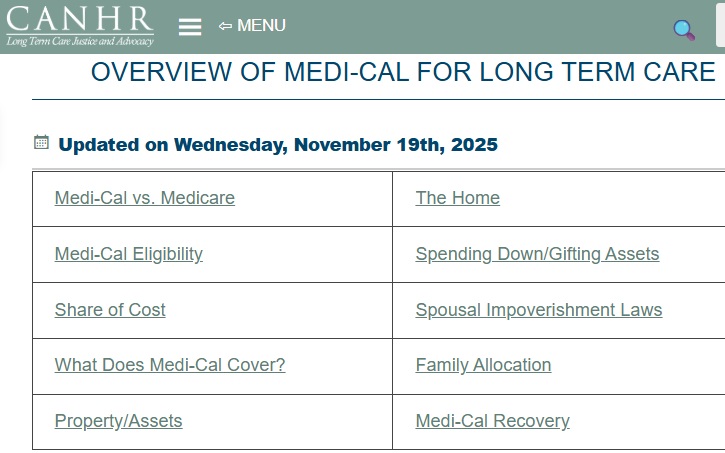
#Overview of Medi Cal for Long Term Care
Canhr.org
Strategic Planning for Nursing Home Benefits
gift in contemplation of death
n. (called a gift causa mortis by lawyers showing off their Latin), a gift of personal property (not real estate) by a person expecting to die soon due to ill health or age. Federal tax law will recognize this reason for a gift if the giver dies within three years of the gift. Treating the gift as made in contemplation of death has the benefit of including the gift in the value of the estate, rather than making the gift subject to a separate federal gift tax charged the giver. If the giver gets over an apparently mortal illness, the gift is treated like any other gift for tax purposes.
See also: gift tax unified estate and gift tax law.com
Medi-Cal FAQ’s DHCS.gov – Look back only 30 month look back in CA
Resources
- FAQ our website on trusts
- Living Trust – Bank Accounts?
- medi helper.com

- Pdf Brochure – I was told their fee is $3k

ihss