How to Find and Pick a Medicare Nursing Home or Skilled Nursing Facility
Finding a Medicare nursing home or skilled nursing facility is often confusing because families may be dealing with a hospital discharge, rehab, dementia, long-term care, Medi-Cal, or a parent who simply can no longer live safely at home. This page is meant to help you slow down, ask better questions, and understand what Medicare, Medi-Cal, and insurance may or may not pay for.
Find Medicare Nursing Homes
Medicare Guide to Choosing a Nursing Home and more
Email Steve
Start with the Right Question: Rehab, Nursing Home, or Something Else?
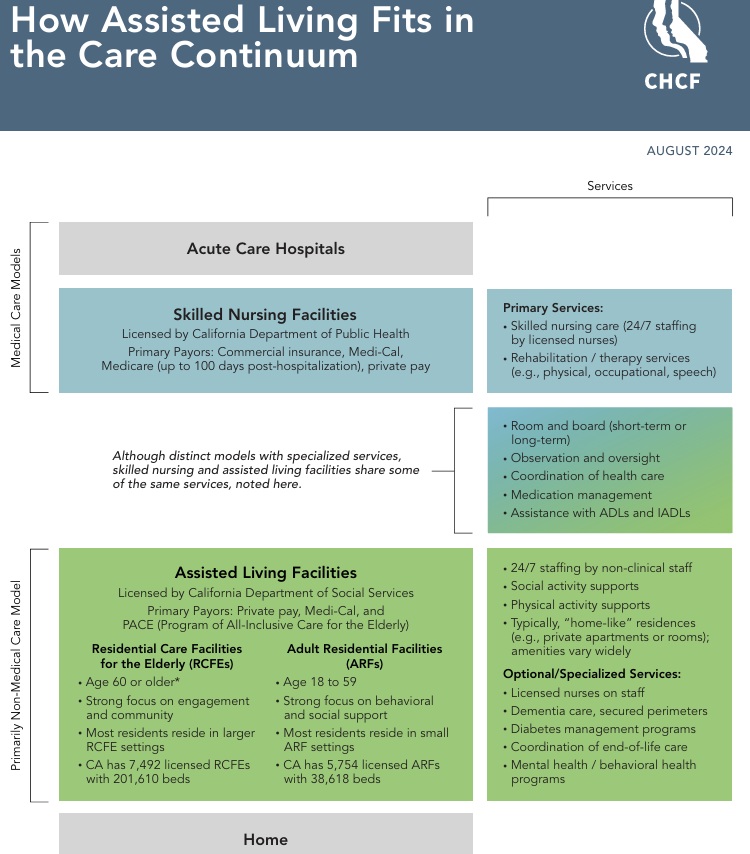
A Skilled Nursing Facility is usually for short-term skilled care, such as rehab after a hospital stay, wound care, IV medication, or therapy. A long-term nursing home is often for custodial care, such as help with bathing, dressing, eating, toileting, and supervision. Dementia or Alzheimer’s care, hospice care, IHSS in-home care, and senior housing or assisted living are different issues and should not all be lumped together.
What Medicare Usually Pays For — and What It Does Not
Medicare skilled nursing facility coverage is generally short-term and only applies when Medicare’s rules are met. Medicare does not normally pay for permanent long-term custodial nursing home care. Medicare’s nursing home care page explains the difference between skilled care and custodial care. This distinction is very important because many families assume Medicare will pay for a nursing home indefinitely, and that is usually not true.
If the person has a Medicare Supplement / Medigap plan, a Medicare Advantage plan, retiree coverage, or Medi-Cal, the out-of-pocket cost may be different. If Medicare stops paying, the family may need to look at private pay, Medi-Cal share of cost, Medi-Cal estate recovery, or other long-term care planning.
Do Not Pick a Facility Only Because It Is Offered First
When someone is leaving the hospital, the family may feel pressured to choose a nursing home quickly. Use Medicare Care Compare to review nursing homes, quality ratings, staffing, inspection history, and available services. Also ask the hospital discharge planner whether the facility is in-network if the patient has a Medicare Advantage plan.
If you believe a hospital, skilled nursing facility, home health agency, or hospice is ending Medicare-covered care too soon, review Medicare’s fast appeal rights. The appeal deadline can be short, so do not wait if you receive a discharge or termination notice.
Questions to Ask Before Choosing a Nursing Home or Rehab Facility
- Is the facility Medicare certified?
- Is it intended for short-term rehab, long-term custodial care, dementia care, or all of these?
- Does it accept the patient’s Medicare Advantage plan, if applicable?
- Does it accept Medi-Cal if the stay becomes long-term?
- What happens if Medicare stops paying?
- Are physical therapy, occupational therapy, speech therapy, wound care, or IV services available onsite?
- How does the facility handle dementia, wandering, fall risk, bed sores, and medication management?
- Can family members visit easily and speak with the care team?
- What hospital would the resident likely be sent to in an emergency?
Can the Person Stay Home Instead?
Before assuming that a nursing home is the only choice, ask whether the person might be safer at home with support. Options may include IHSS, home health care, family caregiving, adult day care, hospice, or senior housing. If Medi-Cal is involved, also review Medi-Cal estate recovery and Medi-Cal share of cost.
Where Steve Shorr Insurance May Be Able to Help
Steve Shorr Insurance does not operate nursing homes, provide legal advice, or make medical placement decisions. However, we may be able to help you understand how Medicare, Medicare Supplement (Medigap) plans, Medicare Advantage plans, Medi-Cal, Medi-Cal share of cost, long-term care insurance and long-term care planning, estate recovery, IHSS home care, and related insurance coverage issues fit together.
Families dealing with nursing homes, rehab facilities, dementia care, or hospital discharge planning often also have questions about dementia and Alzheimer’s care, hospice coverage, senior housing options, and how Medicare or Medi-Cal may apply during a transition from home care to facility care.
Questions about Medicare, Medi-Cal, or insurance coverage during a nursing home or rehab decision?
Email Steve Medicare Information Medi-Cal Share of Cost
Disclaimer: This page is for general educational information only. Steve Shorr is not a doctor, attorney, tax adviser, nursing home operator, or government agency. Rules, benefits, networks, costs, and eligibility can change. Always verify current information with Medicare, Medi-Cal, the facility, the health plan, and appropriate professional advisers.
Finding and #Choosing the right Nursing Home & Home Health Care for you or a loved one
- Medicare.Gov Nursing Home finder, guide & Compare This government provided tool also allows you to see what insurances and public benefits are accepted at the various facilities.
- Medi-Cal,
- Home Health Care Publication # 10969
- Private – Individual Long Term Care Coverage. our website
- Sunnyside Nursing & Post Acute Care – Torrance CA
- Veteran’s Home Health Care va.gov
- Veteran’s Care Co-Ordination.com
- Health Grades.com – they charge a fee
- Jewish Free Loan Assoc.
- Medicare.Gov Home Health Provider Finder
- Freedom from abuses Code of Federal Regulations (C.F.R.), 42 CFR 483.12
- Physician’s Report for Residential Care Facilities for the Elderly (RCFE) Preplacement Appraisal Information LIC 603 Identification and Emergency Information LIC 601 Senate Reviews Assisted Living Facility Problems 2.2014 CA Health Line
How to Find Home Health Care
- How to Find a Good, Well-Staffed Nursing Home Kaiser Foundation
-
Senior Living and Care Options
- New Life Styles.com
- Find & compare nursing homes, hospitals & other providers near you Medicare.Gov
- 24 hr cares.com Home Care Provider – owned by the son of a friend of ours
- modern health care.com/post-acute-care/nursing-home-care-broken-us-panel-reports 4.6.2022
Continuing Care Retirement Communities (CCRCs)
offer persons 60 years of age or older a long term continuing care contract that provides for independent living units, residential care/assisted living services, and skilled nursing care, usually in one location, and usually for a resident’s lifetime. Most CCRCs require a substantial entrance fee (e.g., from a low of $100,000 to over a million) to be paid by the applicant upon admission along with monthly fees. * CANHR.org *
Find a Nursing Home – Medicare.Gov
- Find & compare nursing homes, hospitals & other providers near you Medicare.Gov
- Learn more about providers
CMS Guide to Choosing a #Nursing Home 02174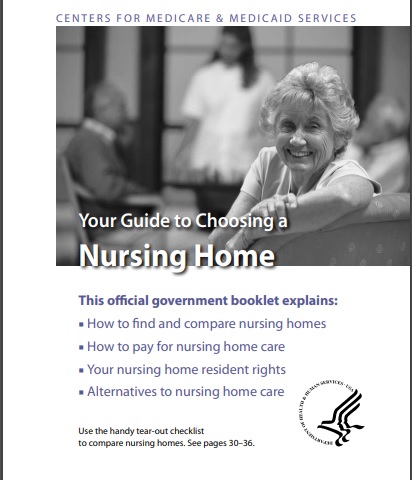
- Nursing Home Definitions Page 67
- Our Webpage on Long Term Care
- How to choose a nursing home – VIDEO
- More resources to finding home health & nursing homes
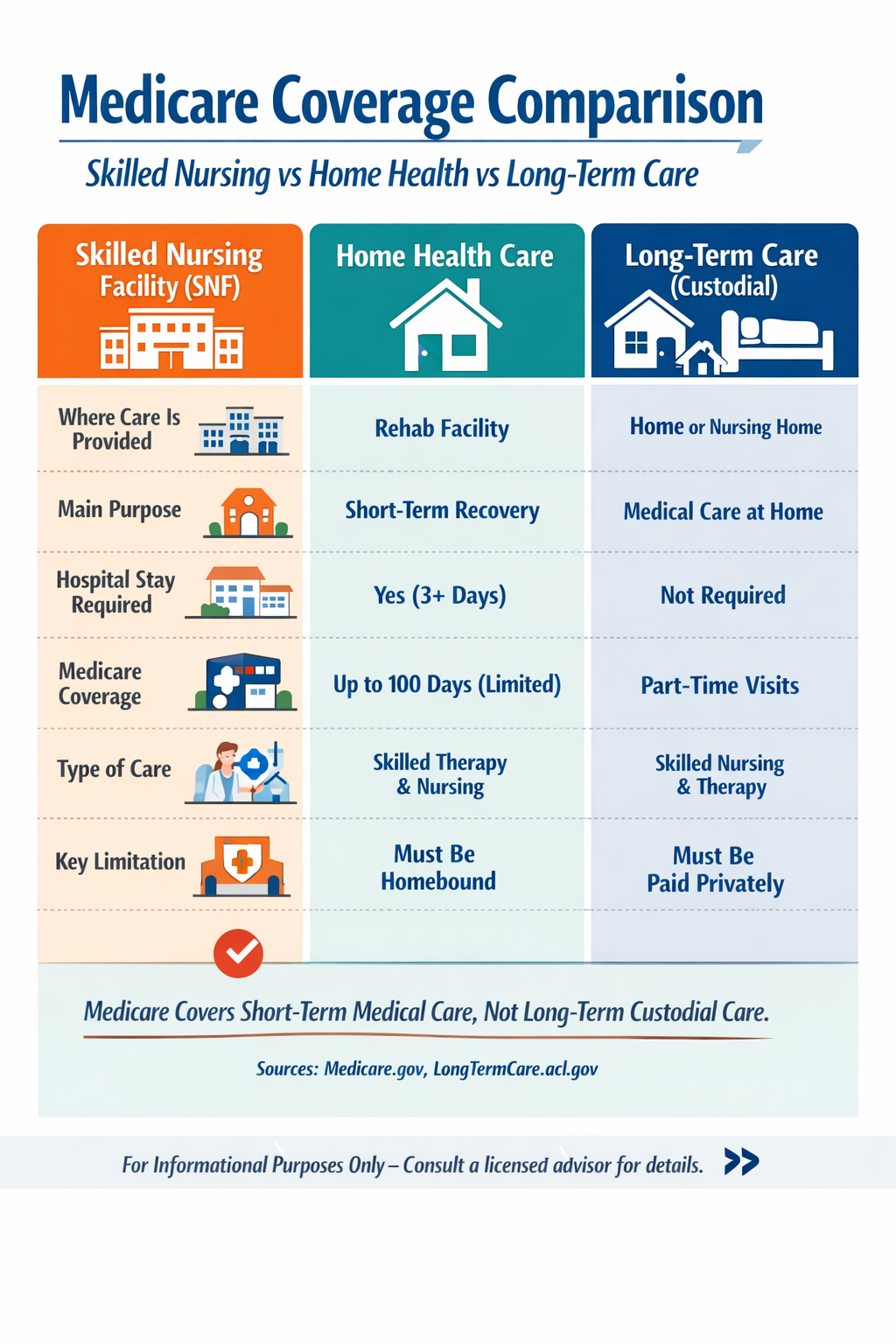
Medicare Coverage Comparison: Skilled Nursing vs Home Health vs Long-Term Care
| Type of Care | Skilled Nursing Facility (SNF) | Home Health Care | Long-Term Care (Custodial) |
|---|---|---|---|
| Where Care is Provided | Nursing facility / rehab center | Your home | Home, assisted living, or nursing home |
| Main Purpose | Short-term recovery after hospital stay | Medical care at home (nurse or therapy) | Help with daily living over time |
| Requires Hospital Stay? | Yes (typically 3+ inpatient days) | No (in many cases) | No |
| Type of Care | Skilled (therapy, IV meds, wound care) | Skilled (nurse visits, therapy) | Custodial (bathing, dressing, eating) |
| Medicare Coverage | Days 1–20: 100% Days 21–100: Copay After 100: Not covered |
Usually covered if medically necessary and homebound | Not covered by Medicare |
| Length of Coverage | Up to 100 days per benefit period | Intermittent / part-time visits | Ongoing / long-term |
| Key Limitation | Stops when skilled care is no longer needed | Must meet “homebound” and medical criteria | Must be paid out-of-pocket or insured |
| Common Misunderstanding | People think it covers long-term stays | People think it includes full-time caregivers | People think Medicare will pay — it won’t |
Bottom line: Medicare is designed for short-term medical care, not long-term living assistance.
Not sure which type of care applies to your situation?
✔ Get help understanding Medicare coverage
✔ Review long-term care planning options
✔ Compare Medicare Supplement plans