
Medicare Hospice Coverage:
What Families Need to Know
Hospice is Medicare’s comfort-care benefit for people who are terminally ill. It is not the same thing as skilled nursing facility care, home health care, or long-term custodial care. Hospice focuses on comfort, pain control, symptom management, emotional support, and help for the family when a cure is no longer the main goal.
Medicare’s official hospice booklet explains who is eligible, what services are included, how the hospice benefit works, and how to find a hospice provider. Many visitors to this page use that booklet as their next step, so we have placed it near the top for easy access.
Official Medicare Hospice Benefits Booklet
Email Steve a Medicare Question
What Medicare hospice may cover: doctor and nursing services, pain relief, symptom control, drugs related to the terminal illness, medical equipment, medical supplies, counseling, social work services, short-term respite care, and grief support for the family.
What hospice usually does not mean: hospice does not automatically mean giving up all medical care. Medicare can still cover care for conditions unrelated to the terminal illness, and a patient may leave hospice care if circumstances change.
Hospice vs. other types of care: hospice is different from
Families often confuse these benefits, so it is important to understand what type of care is actually being recommended.
How Medicare Hospice Usually Starts
A doctor and the hospice medical director generally must certify that the patient is terminally ill. The patient then chooses hospice care instead of treatment intended to cure the terminal illness. The hospice team creates a care plan, and the patient may receive services at home, in a nursing facility, or in another approved setting depending on the situation.
Families should ask whether the hospice is Medicare-certified, what services are included, how often nurses visit, what happens after hours, what medications are covered, whether the patient can keep their own doctor, and what to do if the family is unhappy with the care.
Hospice Fraud Warning Signs
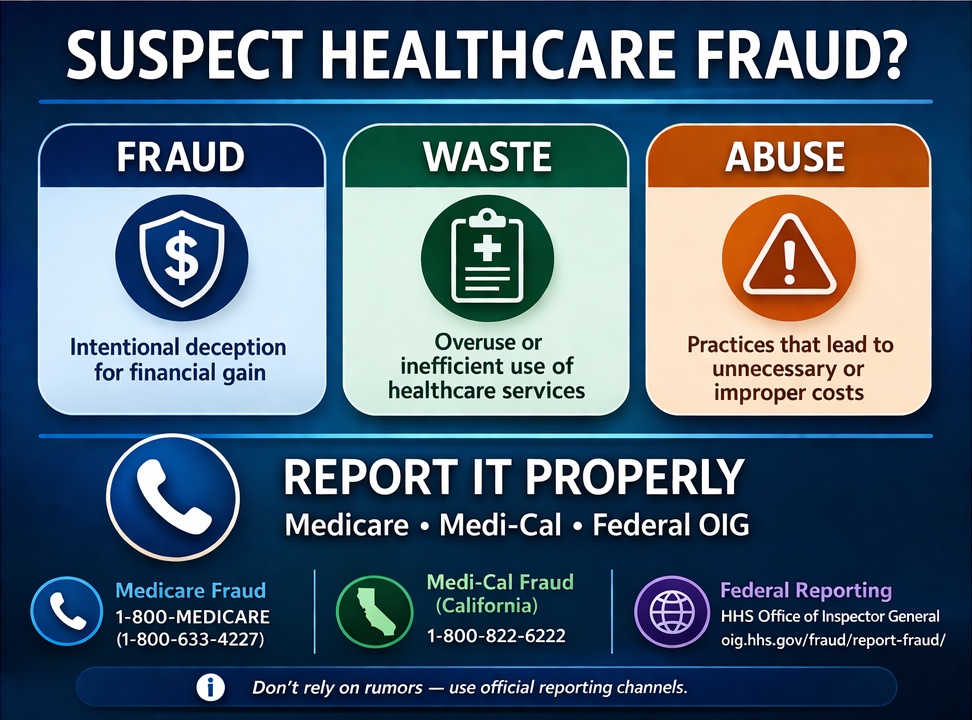
Hospice fraud has become a major issue in California, including the Los Angeles area. Recent enforcement actions have involved allegations of fraudulent hospice enrollments, false billing, stolen identities, and services that were billed but not actually provided. Families should not panic, but they should be careful.
Be cautious if: someone pressures you to sign immediately, offers gifts or cash, asks you to sign blank forms, says hospice is “free money,” enrolls someone who does not appear terminally ill, or cannot clearly explain what services will actually be provided.
Before choosing a hospice: ask for the provider’s Medicare certification, confirm who owns or operates the hospice, ask your doctor for input, compare providers, read the care plan, and make sure the family knows who to call 24 hours a day.
If you suspect Medicare fraud, you can report it to Medicare at 1-800-MEDICARE. If Medi-Cal fraud is involved, California DHCS also lists fraud reporting options through its fraud hotline and online reporting system.
Questions Families Should Ask
- Is this hospice Medicare-certified?
- Who will visit, and how often?
- What happens at night, on weekends, or during a crisis?
- Which drugs, equipment, and supplies are covered?
- Can the patient keep their current doctor?
- Can we change hospice providers if we are unhappy?
- What care is still covered for conditions unrelated to the terminal illness?
- Is this hospice connected to a hospital, nursing home, or other company?
Common Hospice Misunderstandings
“Hospice means death is immediate.” Not necessarily. Hospice is for terminal illness, but some people receive hospice services for months.
“Hospice means no more medical care.” Not exactly. The focus changes to comfort care for the terminal illness, but Medicare may still cover treatment for unrelated conditions.
“Hospice only happens in a facility.” Many hospice patients receive care at home.
“Once you choose hospice, you are stuck.” Patients generally have rights to stop hospice or change hospice providers.
Related Medicare and Care Planning Pages
You may also want to review related pages on
- Medicare basics,
- Medicare Advantage plans,
- skilled nursing facility coverage,
- home health care,
- long-term care planning, and
- appeals and grievances.
| Type of Care | Medicare Covers? | Main Goal |
|---|---|---|
| Hospice | Yes | Comfort/end-of-life support |
| Home Health | Limited | Recovery/skilled care at home |
| Skilled Nursing Facility | Limited | Rehab after hospitalization |
| Long-Term Custodial Care | Usually No | Help with daily living |
Need help sorting this out? Hospice decisions often happen during a stressful family situation. I can help explain how Medicare, Medicare Advantage, Medigap, skilled nursing, home health, and long-term care issues may fit together.
Email Steve
Read Medicare’s Hospice Booklet
This page is for general educational purposes and is not legal, medical, or tax advice. Hospice eligibility and coverage decisions should be reviewed with the patient’s doctor, hospice provider, Medicare, and other qualified professionals.

Official Medicare #Hospice Publication # 02154
- Palliative Care VIDEO
- Palliative care, which focuses on providing relief from the symptoms and stress of serious illness, offers an extra layer of support. Learn more at chcf.org
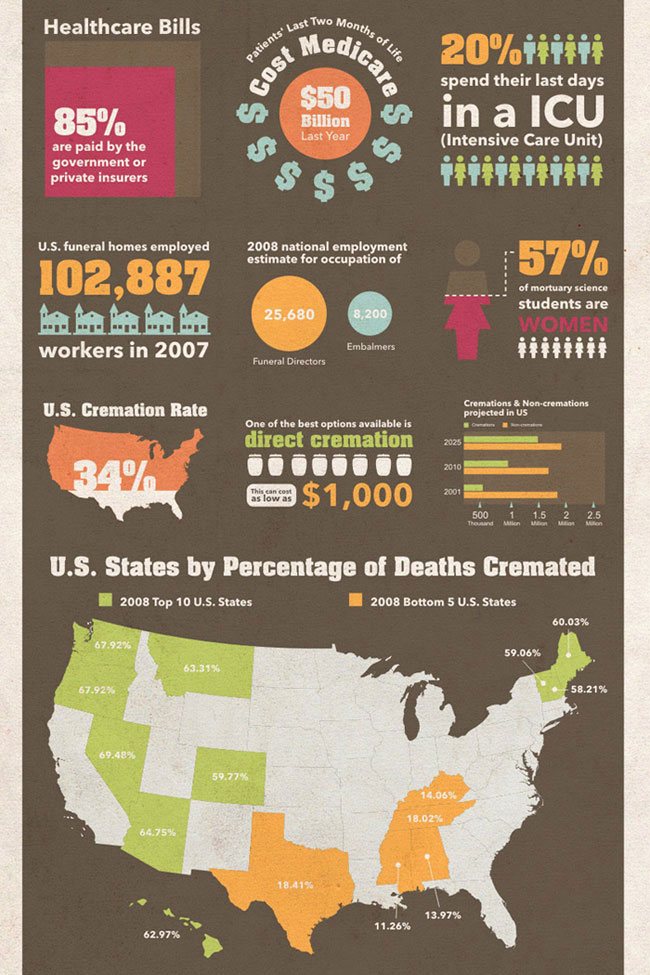
Costs of the last 2 months of life
See our webpage on
- Long Term Care
- Final Expense Policies
- Hospice End of Life Care
- Set a Zoom Meeting
- Our main webpage on Hospice
Your costs in Original Medicare
- $0 for hospice care.
- You may need to pay a copayment of no more than $5 for each prescription drug and other similar products for pain relief and symptom control while you’re at home. In the rare case your drug isn’t covered by the hospice benefit, your hospice provider should contact your Medicare drug plan to see if it’s covered under Part D Rx
- You may need to pay 5% of the Medicare-approved amount for inpatient respite care.
- Medicare doesn’t cover room and board when you get hospice care in your home or another facility where you live (like a nursing home).
- If you pre planned got Long Term Care or Home Health Care those may.
To find out how much your test, item, or service will cost, talk to your doctor or health care provider. The specific amount you’ll owe may depend on several things, like:
- Other insurance you may have
- Medi Gap, Medicare Advantage?
- How much your doctor charges
- Whether your doctor accepts assignment
- The type of facility
- Where you get your test, item, or service medicare.gov/hospice-and-respite-care



Hospice, Euthanasia, Links & Resources
- LA Times – Hospice and caring for spouses 12.22.2014
- Hospice Information – Fraud Scams – CA Health Care Advocates
- Medicare Hospice Benefit. What it is, and is not. Don’t Fall for the “sales pitch”!
- Thursday, November 16, 2023 » View Webinar » View Slides, Sample Questions for Hospices, Q&A » View Survey
- Medicare Hospice Benefit & What It’s Not
- April 27, 2023 » View Webinar » View Slides
- Understanding the Medicare Hospice Benefits
- September 22, 2022 » View Webinar » View Slides
This webinar goes over:- What hospice is and what it is not
- How to access the hospice benefit
- Avoid being a victim of hospice fraud
- September 22, 2022 » View Webinar » View Slides
- How Well Does Medicare Cover End-of-Life Care? It Depends on What Type
A new study analyzed the experiences of more than a million patients in their final months of life. Anschutz School of Medicine
- Medicare Hospice Benefit. What it is, and is not. Don’t Fall for the “sales pitch”!
- Los Angeles times opinion on hospice at home doctor-patients-send-home-to-die
- Medicare Home Health Cuts Could Have Ripple Effect on Hospice, Palliative Care
- Hospices in Four States to Receive Extra Scrutiny Over Concerns of Fraud, Waste and Abuse
- A service is “medically necessary” or a “medical necessity” when it is reasonable and necessary to protect life, to prevent significant illness or significant disability, or to alleviate severe pain. (2014 ACA Sample EOC Page 166) CA WIC §14059.5
- Compare & Contrast Palliative & Hospice Care NIH.Gov
- hospice news.com/medicare-home-health-cuts-could-have-ripple-effect-on-hospice-palliative-care
- My Place Heath (SCAN?)
- myPlace Health specializes in providing value-based, comprehensive care and coverage for older adults with significant needs so they can thrive in the homes they love and in the communities they cherish. Our myPlace PACE (Program of All-Inclusive Care for the Elderly) model provides seamless primary care, integrated health plan coverage, personalized social engagement, and customized services – all at no cost if you are eligible for Medi-Cal or both Medicare and Medi-Cal.
- Medicare Processing Manual – Hospice Claims 78 pages
- y Jewish Learning.com hospice & palliative care
- Chabad Redondo Beach Facebook Live – you don’t need a Facebook account Jewish Perspective on End of Life Care
- Hospice Reform in CA
- California revises the End of Life Option Act. Supporters say the new law removes ‘bureaucratic barriers.’ LA Times
- cedars-sinai.org/ca-aid-in-dying-law
- ucla health.org/california-end-life-option-act
- ‘Disturbing’: Experts troubled by Canada’s euthanasia laws
- The Clinical, Ethical and Legislative Case for Medical Aid in Dying in New York
- Making it easier for dying people to die Euthanasia
- California Hospice Licensure and Oversight Auditor State of CA March 2022*
- Medical Assistance in Dying in Canada 2023 Canada.Ca
- How to get death certificate if someone dies at home
Hospice Coverage
Introduction
Hospice is a program of care and support for people who are terminally ill (with a life expectancy of 6 months or less, if the illness runs its normal course) and their families. Here are some important facts about hospice:
■ Hospice helps people who are terminally ill live comfortably.
■ Hospice isn’t only for people with cancer.
■ The focus is on comfort (palliative care), not curing an illness.
■ A specially trained team of professionals and caregivers provide care for the “whole person,” including physical, emotional, social, and spiritual needs.
■ Services typically include physical care, counseling, drugs, equipment, and supplies for the terminal illness and related conditions.
■ Care is generally given in the home.
■ Family caregivers can get support.
To qualify for hospice care, a hospice doctor and your doctor (if you have one) must certify that you’re terminally ill, meaning you have a life expectancy of 6 months or less. When you agree to hospice care, you’re agreeing to comfort care (palliative care) instead of care to cure your illness. You also must sign a statement choosing hospice care instead of other benefits Medicare covers to treat your terminal illness and related conditions. Publication 02154
Depending on your terminal illness and related conditions, the plan of care your hospice team creates can include:
any or all of these services:
- Doctor services
- Nursing care
- Medical equipment (like wheelchairs or walkers)
- Medical supplies (like bandages and catheters)
- Prescription drugs for symptom control or pain relief
- Hospice aide and homemaker services
- Physical therapy services
- Occupational therapy services
- Speech-language pathology services
- Social work services
- Dietary counseling
- Grief and loss counseling for you and your family
- Short-term inpatient care (for pain and symptom management)
- Short term respite care
- Any other Medicare-covered services needed to manage your pain and other symptoms related to your terminal illness and related conditions, as recommended by your hospice team medicare.gov/hospice-care
- When you choose hospice care, you decide you no longer want care to cure your terminal illness and/or your doctor determines that efforts to cure your illness aren’t working.
- How Well Does Medicare Cover End-of-Life Care? It Depends on What Type
A new study analyzed the experiences of more than a million patients in their final months of life. University of Colorado 7/2024
Medicare won’t cover any of these once your hospice benefit starts:
- Treatment intended to cure your terminal illness and/or related conditions. Talk with your doctor if you’re thinking about getting treatment to cure your illness. As a hospice patient, you always have the right to stop hospice care at any time.
- Prescription drugs to cure your illness (rather than for symptom control or pain relief).
- Care from any hospice provider that wasn’t set up by the hospice medical team. You must get hospice care from the hospice provider you chose. All care that you get for your terminal illness must be given by or arranged by the hospice team. You can’t get the same type of hospice care from a different hospice, unless you change your hospice provider. However, you can still see your regular doctor or nurse practitioner if you’ve chosen him or her to be the attending medical professional who helps supervise your hospice care.
- Room and board. Medicare doesn’t cover room and board if you get hospice care in your home or if you live in a nursing home or a hospice inpatient facility. If the hospice team determines that you need short-term inpatient or respite care services that they arrange, Medicare will cover your stay in the facility. You may have to pay a small copayment for the respite stay.
- Care you get as a hospital outpatient (like in an emergency room), care you get as a hospital inpatient, or ambulance transportation, unless it’s either arranged by your hospice team or is unrelated to your terminal illness and related conditions. medicare.gov/hospice-care
Contact your hospice team before you get any of these services or you might have to pay the entire cost.
Resources & Links
- NPR Home Hospice can be tough on families 1.21.2020
- Southern California doctor sentenced to prison in multimillion-dollar hospice fraud scheme LA Times 12/2024
Watch out for Hospice #Fraud

- hospice fraud prevention.com/
- Dr Oz says 800 hospice providers suspended in California over alleged $1B Medicare fraud scheme Fox News May 2026
- ca health advocates.org/have-you-been-tricked-into-signing-up-for-hospice/
- ca health advocates.org/ca-attorney-general-launches-statewide-campaign-to-fight-hospice-fraud/
- msn.com/dr-oz-says-medicare-will-cut-off-hospices-suspected-of-fraud
- ca health advocates.org/california-smp-in-action-witness-to-an-alleged-fraud-scheme-leads-to-medicare-payment-suspension/
- We visited “ground zero” for hospice fraud: Los Angeles, California CBS News Video
- Our webpage on Fraud
- ktla.com/fbi-announces-socal-arrests-in-major-hospice-care-fraud-bust-taxpayer-losses-exceed-50m/
- How to Prevent Hospice Fraud
- October 24, 2019 » View Webinar »
- View Materials: SMP slides; Judy Thomas’ slides; Sheila Clark’s slides; hospice infographic
- Southern California doctor sentenced to prison in multimillion-dollar hospice fraud scheme LA Times *
- Hospice fraud persists in state despite alarms LA Times 2020