True #Freedom Home Health Plans
True Freedom Plan Details – Brochure 1/2025

- Enrollment Form
- email [email protected] for fillable pdf
- Rate Chart
- One page brochure
- VIDEO Explanation on True Freedom Plan
- The Long Road Ahead Video
- The application disclaimers
- FAQ’s
- True Freedom website, but be sure to enroll with us!

“Prepaid Home Health Care?”
Watch 3 minute simple plain English Video

- Email us for more information [email protected]
- Our webpage on Long Term & Home Health Care
- Our webpage on True Freedom


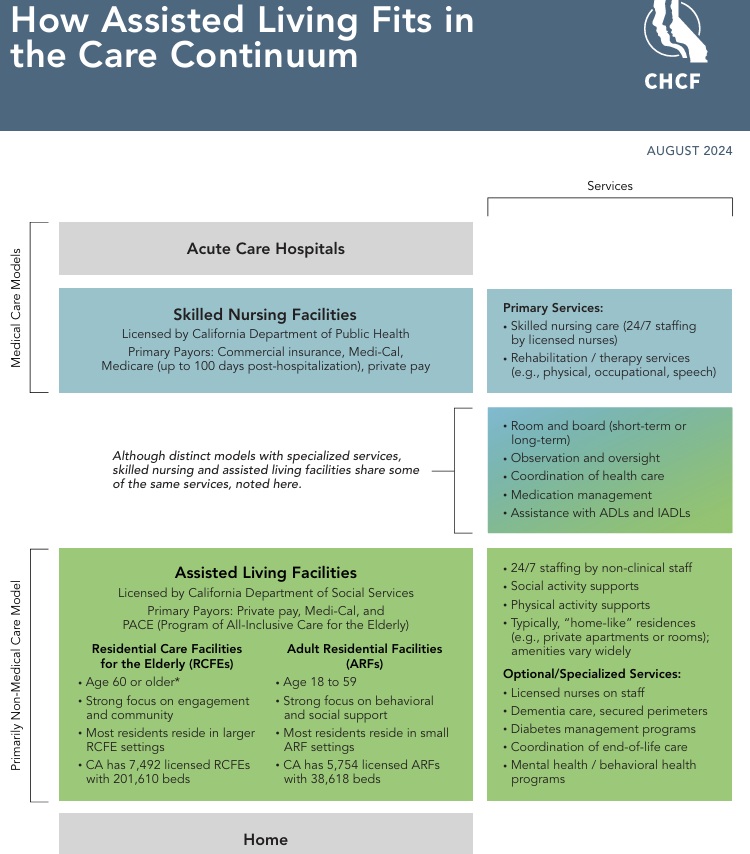
What is Assisted Living?
- CHFC
- Key takeaways
- The two most common licensed assisted living settings in California are residential care facilities for the elderly (7,492 facilities with 201,610 beds), which serve residents age 60 or older, and adult residential facilities (5,754 facilities with 38,618 beds), which serve residents age 18 to 59.
- In addition to helping residents with daily activities like bathing and medication management, assisted living communities provide social engagement, nutritional support, physical fitness programs, and more.
- The two primary mechanisms for Medi-Cal enrollees to access assisted living today are the Assisted Living Waiver and Nursing Facility Transition / Diversion to Assisted Living Facilities, one of CalAIM’s optional Community Supports.
- Learn more chcf.org what-is-assisted-living/
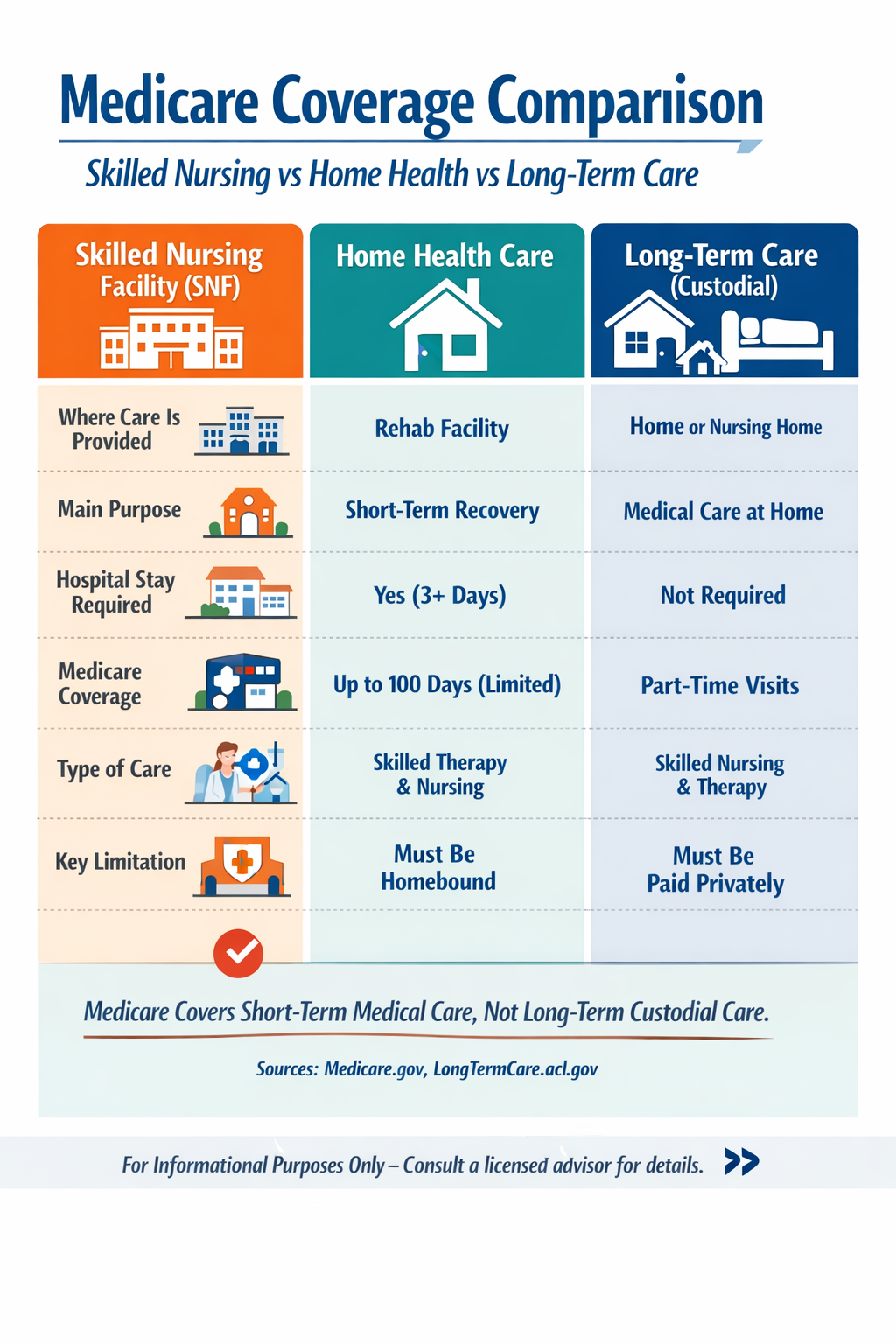
Medicare Coverage Comparison: Skilled Nursing vs Home Health vs Long-Term Care
| Type of Care | Skilled Nursing Facility (SNF) | Home Health Care | Long-Term Care (Custodial) |
|---|---|---|---|
| Where Care is Provided | Nursing facility / rehab center | Your home | Home, assisted living, or nursing home |
| Main Purpose | Short-term recovery after hospital stay | Medical care at home (nurse or therapy) | Help with daily living over time |
| Requires Hospital Stay? | Yes (typically 3+ inpatient days) | No (in many cases) | No |
| Type of Care | Skilled (therapy, IV meds, wound care) | Skilled (nurse visits, therapy) | Custodial (bathing, dressing, eating) |
| Medicare Coverage | Days 1–20: 100% Days 21–100: Copay After 100: Not covered |
Usually covered if medically necessary and homebound | Not covered by Medicare |
| Length of Coverage | Up to 100 days per benefit period | Intermittent / part-time visits | Ongoing / long-term |
| Key Limitation | Stops when skilled care is no longer needed | Must meet “homebound” and medical criteria | Must be paid out-of-pocket or insured |
| Common Misunderstanding | People think it covers long-term stays | People think it includes full-time caregivers | People think Medicare will pay — it won’t |
Bottom line: Medicare is designed for short-term medical care, not long-term living assistance.
Not sure which type of care applies to your situation?
✔ Get help understanding Medicare coverage
✔ Review long-term care planning options
✔ Compare Medicare Supplement plans
“Affordable short-term recovery coverage — not a substitute for long-term care insurance”
👉 And be VERY clear about:
Waiting periods
Benefit gaps (“every few months you must go without coverage” — that needs clean explanation or people will distrust it)