
Need for Addiction, Drug and Alcohol Treatment in San Pedro and Los Angeles
The Need for Drug & Alcohol Treatment in Los Angeles and San Pedro
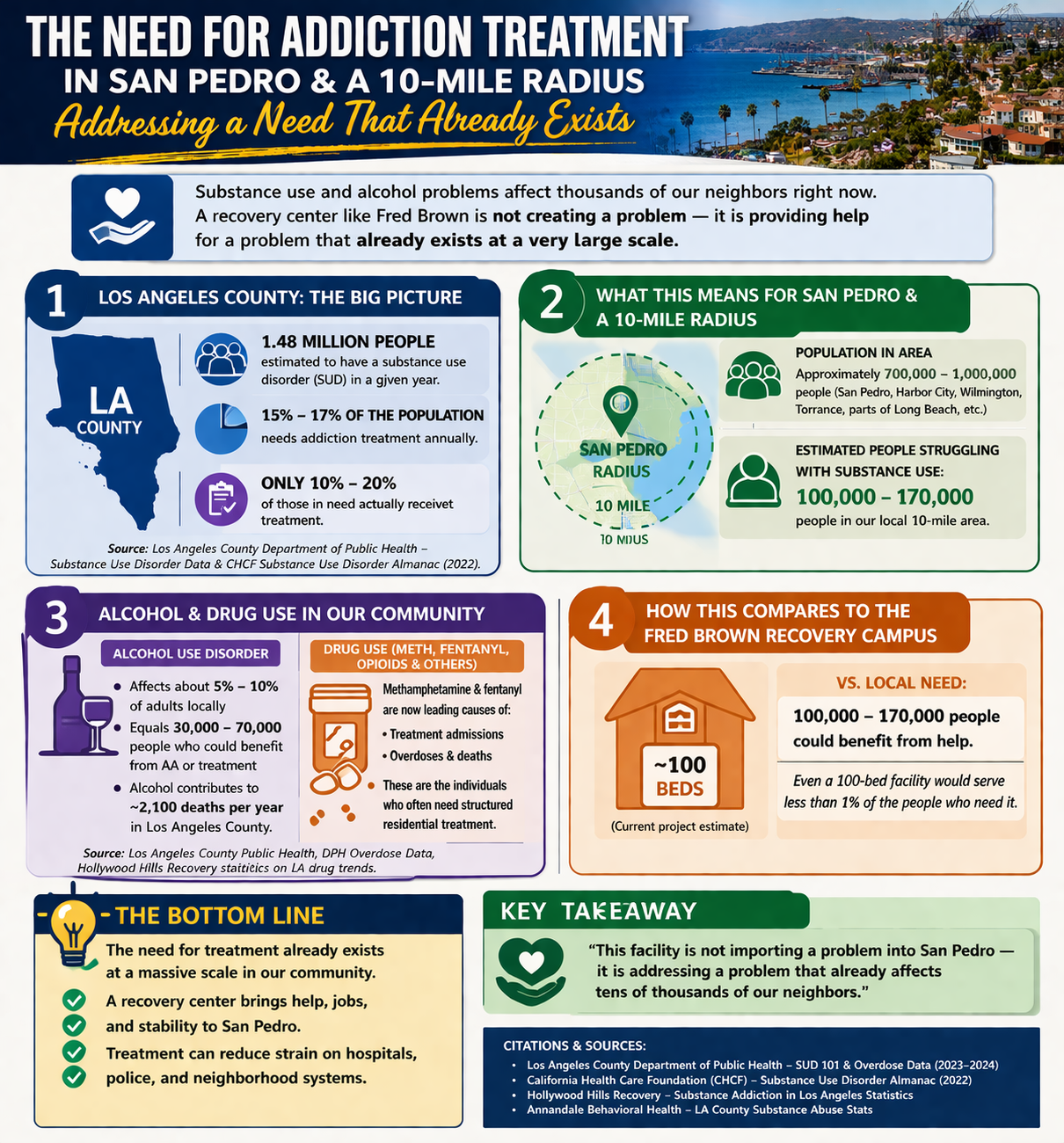
Substance use and alcohol problems are not rare in Los Angeles — they affect a very large number of people every year. This is not a new problem, and it is not caused by one facility or one neighborhood. It is a widespread public health issue that already exists across the entire county.
How Many People Need Treatment?
According to the Los Angeles County Department of Public Health, approximately 1.4 to 1.5 million people in Los Angeles County experience a substance use disorder each year.
Only a small percentage of those individuals actually receive treatment.
Most estimates show that only 10% to 20% of people who need treatment ever get it.
That means hundreds of thousands of people are going without help.
Source:
Los Angeles County Substance Use Data (RecoverLA / County-linked)
California Health Care Foundation – Substance Use Disorder Almanac
What Does That Mean for San Pedro?
If you look at San Pedro and the surrounding communities within about a 10-mile radius (Harbor City, Wilmington, Torrance, Long Beach, etc.),
the population is roughly 700,000 to 1,000,000 people.
Based on statewide and county data, that translates to approximately:
- 100,000 to 170,000 people in this local area struggling with substance use issues
These are not “outsiders.” These are people who already live in our communities — neighbors, family members, and local residents.
Alcohol and Drug Use in Los Angeles
Alcohol use disorder alone affects about 5% to 10% of adults.
In Los Angeles County, that represents tens of thousands of people who could benefit from treatment or support.
Drug use — especially involving methamphetamine and fentanyl — has become a major concern:
- Methamphetamine and fentanyl are leading causes of overdose deaths
- Treatment admissions related to these drugs continue to increase
- Overdoses have significantly risen in recent years
Source:
Los Angeles County Public Health – SAPC Data Reports
California Overdose Surveillance Dashboard (CDPH)
How Much Treatment Capacity Exists?
A typical residential treatment facility may have around 100 beds.
When you compare that to the estimated need:
- 100 beds vs. 100,000+ people needing help
Even a large facility would serve less than 1% of the local need.
The Bottom Line
- The need for addiction treatment already exists at a very large scale
- Most people who need help are not getting it
- Treatment facilities are a response to the problem — not the cause of it
- Increasing access to treatment can reduce strain on hospitals, law enforcement, and emergency services
Key Takeaway
A recovery center does not “bring” addiction into a community.
It provides help for a problem that is already affecting tens of thousands of local residents.
Citations & Sources
RecoverLA / Los Angeles County: Substance Use in Los Angeles County
County-linked page citing the estimate that about 1,482,000 Los Angeles County residents struggle with substance use disorder, plus fentanyl and treatment-gap references.
Los Angeles County Department of Public Health – SAPC Data Reports and Briefs
Main county page for data briefs, reports, and trend summaries on substance use, overdoses, and treatment.
California Health Care Foundation – Substance Use in California Almanac
Statewide reference for prevalence, treatment, emergency department visits, and deaths.
SAMHSA – 2023 National Survey on Drug Use and Health
National data source for substance use disorders, treatment, and mental health.
NIAAA – Alcohol Treatment in the United States
Federal source on alcohol use disorder treatment and the treatment gap.
Los Angeles County Substance Abuse Prevention and Control (SAPC)
County hub for treatment, prevention, recovery, and public health resources.
Start Here: Find the Right Information
Drug and alcohol problems already affect a very large number of people in Los Angeles County.
If you are trying to understand coverage, treatment access, legal protections, or your rights under health insurance, start with the section that best matches your question.
I want the big-picture overview
Start with the main page on substance abuse treatment, coverage, and why access to care matters.
I want Los Angeles statistics
See the Los Angeles County treatment-need page with local data, overdose trends, and the treatment gap.
I need to know if treatment is covered
Learn how medical necessity, clinical guidelines, and mental health/substance use benefits affect coverage decisions.
I was denied treatment or care
Review your options for appeals, medical necessity disputes, and next steps when a health plan says no.
I want to understand legal protections
Read about ADA protections related to alcohol and drug problems and how those laws may apply.
I want the broader mental health section
Visit the larger mental health and essential benefits area for related coverage and treatment topics.
Why the Need for Treatment Matters
Substance use disorder is already a very large public health issue in Los Angeles County.
County-linked materials state that an estimated 1,482,000 Los Angeles County residents struggle with a substance use disorder.
That means the need for treatment already exists on a very large scale, regardless of where any single treatment center is located.
Los Angeles County materials also highlight the continuing overdose crisis, including fentanyl-related deaths.
State and national sources reinforce the same overall point: many people need treatment, but only a fraction actually receive it.
From an insurance and access-to-care standpoint, the important question is not whether the need exists.
It does. The real question is whether people can find treatment, whether their coverage will pay for it, and whether medically necessary care is approved in time.
- Psychology Today Adult Residential Treatment Centers in Los Angeles
- LA County SERVICE & BED AVAILABILITY TOOL (SBAT)
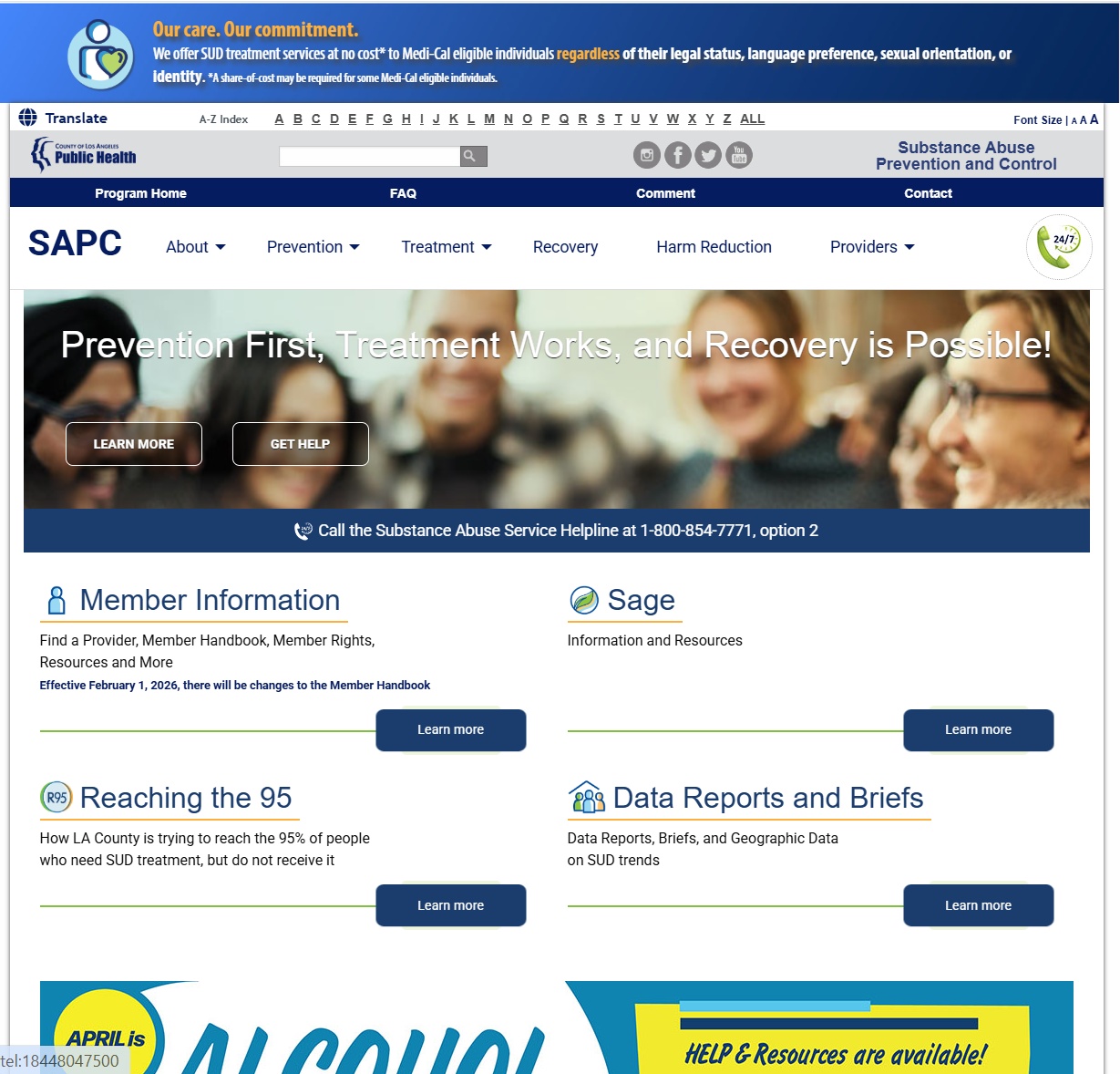
- Treatment Works and Recovery is Possible!
- Find Available Substance Use Services Near You
The Need for Drug & Alcohol Treatment
in Los Angeles and San Pedro
A problem that already exists — and a need for real treatment options
Drug and alcohol problems are already affecting a very large number of people in Los Angeles County.
This is not a new issue, and it is not caused by one building, one operator, or one neighborhood.
It is a countywide public health problem that already exists and already affects families, hospitals, emergency rooms, law enforcement, and health insurance systems.
From an insurance and access-to-care point of view, the question is not whether the need exists.
The need is already massive. The real question is whether people can find treatment, whether their health coverage will pay for it, and whether medically necessary care is approved in time.
Start Here
Choose the section that best matches what you want to learn about treatment, coverage, legal protections, or appeals.
Big picture overview
Start with the main page on substance abuse treatment, coverage, and SB 855 protections.
Los Angeles need and crisis
See local statistics, treatment-need discussion, and Los Angeles area context.
Will insurance cover treatment?
Learn how medical necessity and clinical guidelines affect approval for treatment.
Denied treatment?
Review appeals, medical necessity disputes, and how to challenge a denial.
ADA legal protections
Read about ADA protections involving alcohol and drug problems.
Mental health coverage section
Browse the broader mental health and essential benefits section.
Recognized Sources
This page is based on Los Angeles County, California, and federal public health sources, not rumors or neighborhood speculation.
The Need for Drug & Alcohol Treatment in Los Angeles and San Pedro
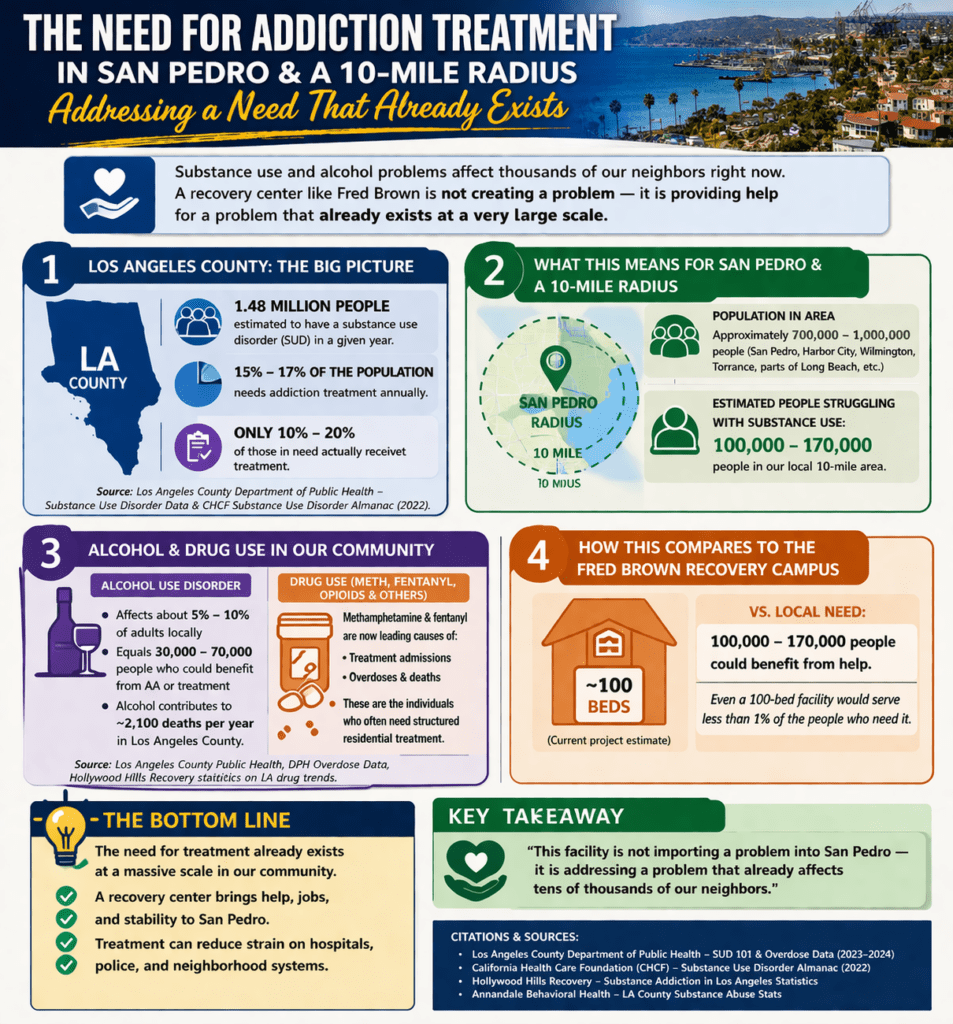
Substance use and alcohol problems are not rare in Los Angeles — they affect a very large number of people every year.
This is not a new problem, and it is not caused by one facility or one neighborhood.
It is a widespread public health issue that already exists across the entire county.
How Many People Need Treatment?
According to the Los Angeles County Department of Public Health, approximately 1.4 to 1.5 million people in Los Angeles County experience a substance use disorder each year.
Only a small percentage of those individuals actually receive treatment.
Most estimates show that only 10% to 20% of people who need treatment ever get it.
That means hundreds of thousands of people are going without help.
Source: Los Angeles County Department of Public Health – Substance Use Disorder Data
Source: California Health Care Foundation – Substance Use Disorder Almanac
What Does That Mean for San Pedro?
If you look at San Pedro and the surrounding communities within about a 10-mile radius (Harbor City, Wilmington, Torrance, Long Beach, etc.),
the population is roughly 700,000 to 1,000,000 people.
Based on statewide and county data, that translates to approximately:
- 100,000 to 170,000 people in this local area struggling with substance use issues
These are not “outsiders.” These are people who already live in our communities — neighbors, family members, and local residents.
Alcohol and Drug Use in Los Angeles
Alcohol use disorder alone affects about 5% to 10% of adults.
In Los Angeles County, that represents tens of thousands of people who could benefit from treatment or support.
Drug use — especially involving methamphetamine and fentanyl — has become a major concern:
- Methamphetamine and fentanyl are leading causes of overdose deaths
- Treatment admissions related to these drugs continue to increase
- Overdoses have significantly risen in recent years
Source: Los Angeles County Public Health – Overdose Data
Source: California Overdose Surveillance Dashboard
How Much Treatment Capacity Exists?
A typical residential treatment facility may have around 100 beds.
When you compare that to the estimated need:
- 100 beds vs. 100,000+ people needing help
Even a large facility would serve less than 1% of the local need.
The Bottom Line
- The need for addiction treatment already exists at a very large scale
- Most people who need help are not getting it
- Treatment facilities are a response to the problem — not the cause of it
- Increasing access to treatment can reduce strain on hospitals, law enforcement, and emergency services
Key Takeaway
A recovery center does not “bring” addiction into a community.
It provides help for a problem that is already affecting tens of thousands of local residents.
Sources & References:
• Los Angeles County Department of Public Health – Substance Use Disorder Statistics
• California Health Care Foundation – Substance Use Disorder Almanac
• California Department of Public Health – Overdose Surveillance Data
• SAMHSA (Substance Abuse and Mental Health Services Administration)
Related Child & Sibling Pages
- ADA & Fair Housing Act protections for Drug & Alcohol Problems
- Closed Court House – Safer? Economic?
- Court Decisions, Evidence vs Opinion
- Drug Rehab Diversion
- Extensive Research Grace Mercado Ocean View
- Fred Brown Dossier Good Bay & Ugly
- Grant Application vs. Reality
- Little Sisters of the Poor What is the Property Worth?
- Myth vs Evidence Fred Brown vs Senior Housing
- Need for Rehab and Addiction treatment in LA & San Pedro
- Recovery Housing, Crime & Community Impact Studies
- Regulation of SUD’s – Find SUD’s
- Rehab Protections for Children?
- Spencer Pratt 5 point plan to end drug abuse and homelessness
- Viable Economic Options SNF Skilled Nursing Facility or Rehab?

http://publichealth.lacounty.gov/sapc/public/sud.htm
https://drugabusestatistics.org/cost-of-rehab/
https://www.whitehouse.gov/presidential-actions/2026/04/accelerating-medical-treatments-for-serious-mental-illness/