Mental Health as an essential benefit under ACA Health Care Reform
Parity Laws – Mental Health must be equal to Medical Benefits
Mental Health & Substance Abuse Insurance Coverage
Start Here
Many people come to this page because they want a simple answer: does health insurance have to cover mental health treatment?
In many situations, the answer is yes. California law and federal parity rules generally require mental health coverage to be handled more like other medically necessary health care, not pushed aside or limited unfairly.
This page starts with the basic California protections first, then moves into federal rules, Medicare information, and research links further below.
California Mental Health Coverage Protections
California has long required important mental health coverage protections. For many health insurance policies, treatment for severe mental illnesses and serious emotional disturbances of a child must be covered under terms that are comparable to other medical conditions. In plain English, that means mental health treatment cannot simply be brushed aside as less important than treatment for a physical illness.
Depending on the policy and the medical necessity of the treatment, coverage may include outpatient visits, inpatient hospital services, partial hospitalization, and prescription drug benefits when the policy includes prescription coverage. This is one reason California mental health parity deserves to be listed first on this page.
California law has also expanded access protections over time, including rules intended to improve how quickly patients can get follow-up appointments for mental health and substance use disorder care.
What “Parity” Means
The word parity basically means mental health benefits should be treated more like medical and surgical benefits.
- Copays and deductibles should not be structured to unfairly disadvantage mental health treatment.
- Visit limits and treatment limits should not be more restrictive just because the care is for mental health or substance use.
- Prior authorization and utilization review rules should be applied fairly.
- Network access matters too. A plan should not appear to cover treatment while making it unreasonably difficult to actually find a participating provider.
Federal Mental Health Parity Rules
Federal law also matters. The federal mental health parity rules generally prevent health plans that offer mental health or substance use disorder benefits from imposing financial requirements or treatment limits that are more restrictive than those used for medical or surgical benefits.
This is especially important when a consumer runs into barriers such as repeated prior authorization demands, narrow networks, or treatment limitations that do not seem comparable to the way a plan handles other medical conditions.
If California parity is the foundation of this page, federal parity helps reinforce those protections.
How To Use This Page
- Identify what kind of coverage you have: individual plan, employer group plan, Medicare, or other coverage.
- Check your Evidence of Coverage, Summary of Benefits, and provider directory.
- Look for limits on visits, copays, deductibles, prior authorization, and network access.
- If treatment is denied, delayed, or difficult to access, keep records of the problem. Check out IMR Independent Medical Review
- Use the research materials and links below if you need more technical detail.
Common Problems Consumers Run Into
- A provider says they are not really accepting the insurance even though they appear in the directory.
- The plan approves only limited treatment or delays authorization.
- Follow-up appointments are scheduled too far out.
- A consumer cannot tell whether a denial is based on real medical review or poor network access.
- People are told mental health treatment is “covered,” but in practice they cannot find care.
Need Immediate Help?
If someone is in crisis or needs urgent mental health support, use emergency resources right away.
For immediate emergencies, call 911. For mental health crisis support, call or text 988.
Medicare and Mental Health Coverage
Medicare beneficiaries may also need mental health coverage information, but Medicare works differently than many individual and employer plans. That is why Medicare resources are best placed lower on this page, after the California and federal parity overview.
If you want, Medicare-specific mental health coverage details can later be split into a separate section or even a separate page so this page stays focused and easier to scan.
Research and Legal References
Scroll down and/or visit our child/subpages
#California Mental Health Insurance Parity
Summary:
- Senate Bill 855 – Mental Health as a Medical Necessity
- Our webpage on Medical Necessity
- Insurers Begin To Tackle Complex Mental Health Compliance Rules kff September 2024
- AB 88 CA Insurance Code §§10144.5. Health and Safety Code§1374.72 requrires that severe mental illness for children be covered and also prohibits health plans from basing medical necessity denials on whether the admission for mental health services was voluntary or involuntary, WIC 5150 hold CA Legislator * or on the method of transportation of the patient to the health facility.
- AB 88 also requires Insurance Companies that offer mental health services (Individual & Families * Medi-Cal * Employer Groups) to have information on their website that will assist enrollees in accessing mental health services. SB 1553 §1368.015, §1367.015Health & Safety Code Blue Cross / Anthem Mental Health Procedures
SB 221 Return Visit Guarantees
SB 221 requires that Mental health and substance abuse patients be offered return appointments no more than 10 days after a previous session, unless their provider OKs less frequent visits. CA HealthLine * CA Health Line 11.24.2021 *
Severe Mental Illness Coverage
AB 88 – Insurance Code §10144.5
(a) Every policy of disability (health) insurance that covers hospital, medical, or surgical expenses in this state* … shall provide coverage for the diagnosis and medically necessary treatment of severe mental illnesses of a person of any age, and of serious emotional disturbances of a child, … under the same terms and conditions applied to other medical conditions,
(b) These benefits shall include the following:
(2) Inpatient hospital services.
(3) Partial hospital services.
(4) Prescription drugs, if the policy or contract includes coverage for prescription drugs.
How to obtain, get or find these benefits?
(c) The terms and conditions applied to the benefits required by this section that shall be applied equally to all benefits under the disability (Health, Medical) insurance policy shall include, but not be limited to, the following:
(1) Maximum lifetime benefits.
(2) Co-payments and coinsurance.
(3) Individual and family deductibles.
(d) For the purposes of this section, “severe mental illnesses” shall include [these diagnosis]:
(1) schizophrenia.com/ *
(2) Schizoaffective disorder. *** WedMD
(3) Bipolar disorder (manic-depressive illness). bipolar.com/*** WebMD
(4) Major depressive disorders. *** WebMD
(5) Panic disorder. *** WebMD
(6) Obsessive-compulsive disorder.*** WebMD
(7) Pervasive developmental disorder WebMD or autism. *** Web MD
(8) Anorexia nervosa. *** WebMD
(9) Bulimia nervosa. *** WebMD
(e) For the purposes of this section, a child suffering from, “serious emotional disturbances of a child” shall be defined as a child who
(1) has one or more mental disorders as identified in the most recent edition of the Diagnostic and Statistical Manual of Mental Disorders, other than a primary substance use disorder or developmental disorder, that result in behavior inappropriate to the child’s age according to expected developmental norms, and …xxx
Mental Health Parity at a Crossroads Kff.org
California Law Aims to Strengthen Access to Mental Health Services California Health Line.org 10/2021


Mental Health
- Mental is an essential mandated benefit under ACA/ObamaCare/Health Care Reform
- All Insurance plans – QHP qualified health plan (Obama Care compliant-meeting the 10 essential benefits) must provide parity equal coverage for mental health and substance use services as for other conditions, illness and accident resulting in no added treatment limits and no extra costs, co pays, deductibles..
- More than 43 million Americans suffer from depression, anxiety, and other mental health conditions. But more than half the people who felt like they needed help last year, never got it. Even people who had insurance complained of barriers to care, like Narrow Provider Lists? Some said they still couldn’t afford it; some were embarrassed to ask for help. Others just couldn’t get through the red tape.
- Hopefully, the ACA mandate and parity laws will help remedy the problem.
Information, links and resources
- Mental Health Parity Act 1996 Wikipedia
- Parity – Using Employer Sponsored Plan SAMHSA 8 page pdf
- I’m not sick & don’t need help – Book
- Dealing with social & mental problems can cut health care costs CA Health Line 1.23.2017
- NAMI (National Assoc of Mental Illness) Website, Insurance & Health Care Reform Section
- FAQ on if Mental Health Therapist Benefits vary by Metal Level
- Our Webpages on:
- Affordable Care Act Will Expand Mental Health and Substance Use Disorder Benefits and Parity Protections for 62 Million Americans, that details how EHBs will expand mental health and substance use disorder benefits and federal laws requiring that mental health benefits be equal to, or have “parity” with, other health benefits in the individual and small group markets. .bna.com/hhs-releases-essential-n17179872551/
- kff.org/the-implications-of-covid-19-for-mental-health-and-substance-use
- Medi Cal & Behavioral Health Services
- health payer intelligence.com private-insurance-covers-most-nonelderly-adults-with-mental-health-needs
- Union accuses Kaiser of violations months after state fine on mental health care April 2024
Call 988 for Mental Health Emergencies
Mid July 2022 there is supposed to be a new # to call, just like 911 for Mental Health Emergencies, but the funding doesn't see to be there for California.
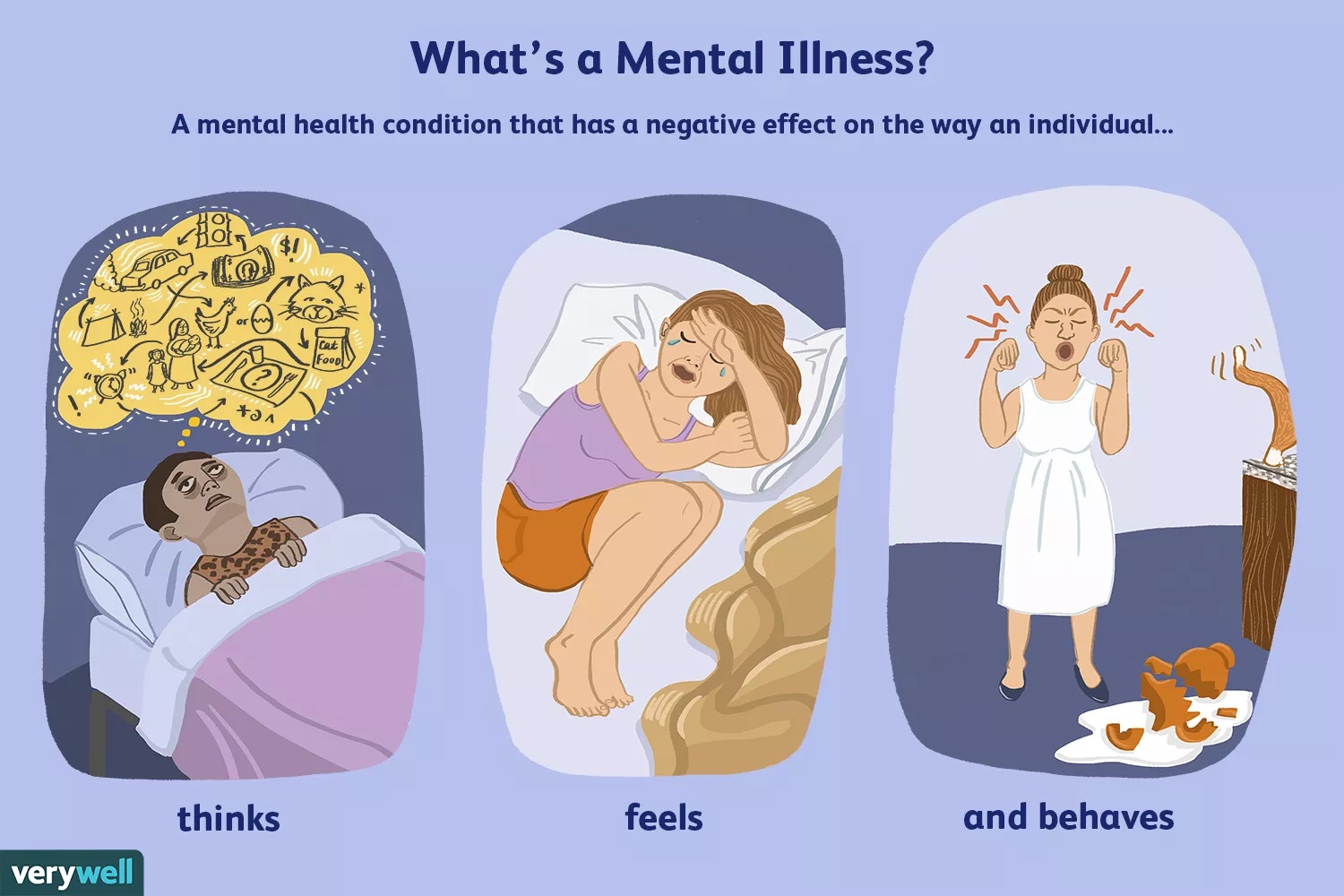
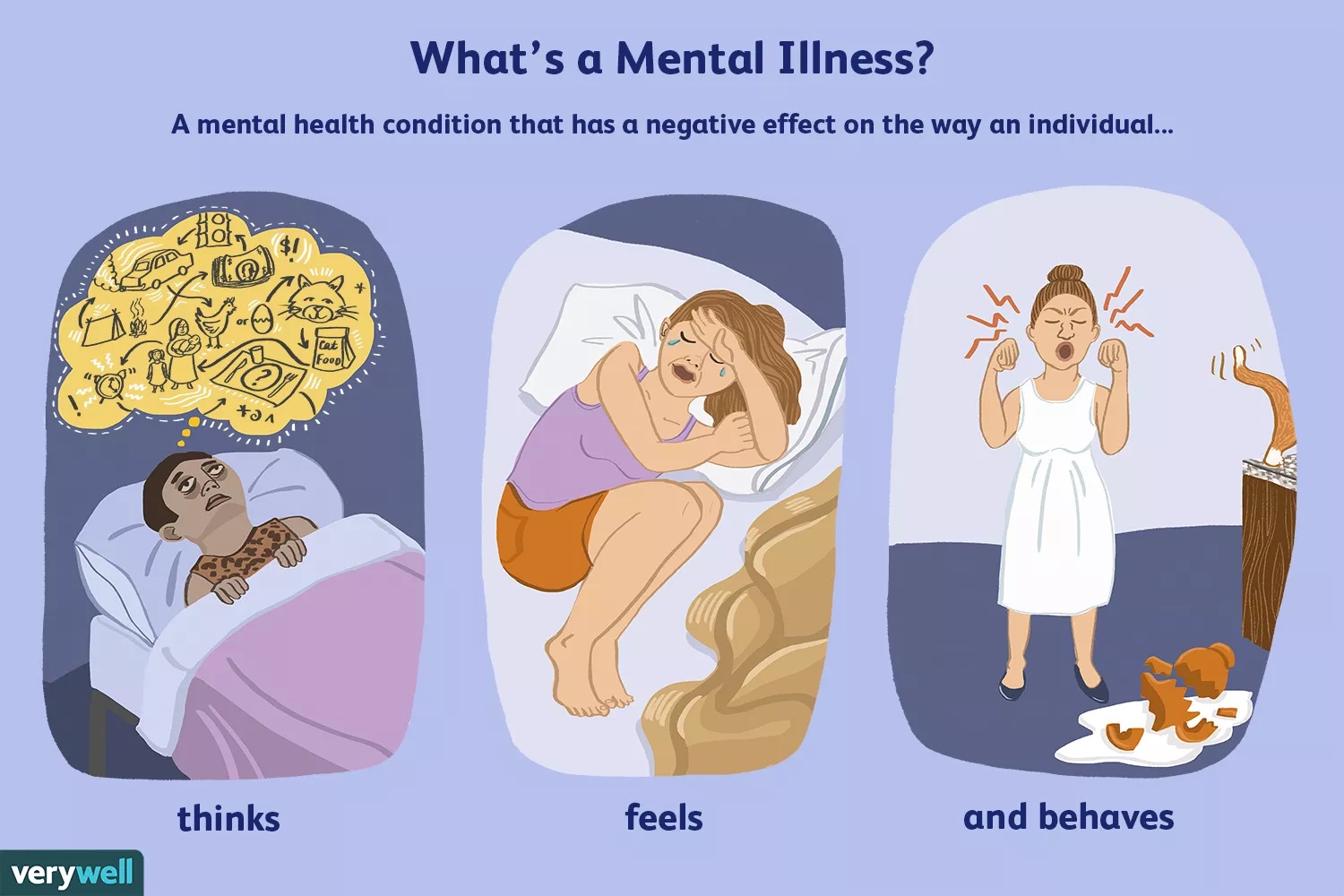
What is Mental Illness?
Resources & Links
- Blue Shield.com Mental Resources Hub
- Anxiety & Depression Assoc of America website
#Medicare & You - Mental Health
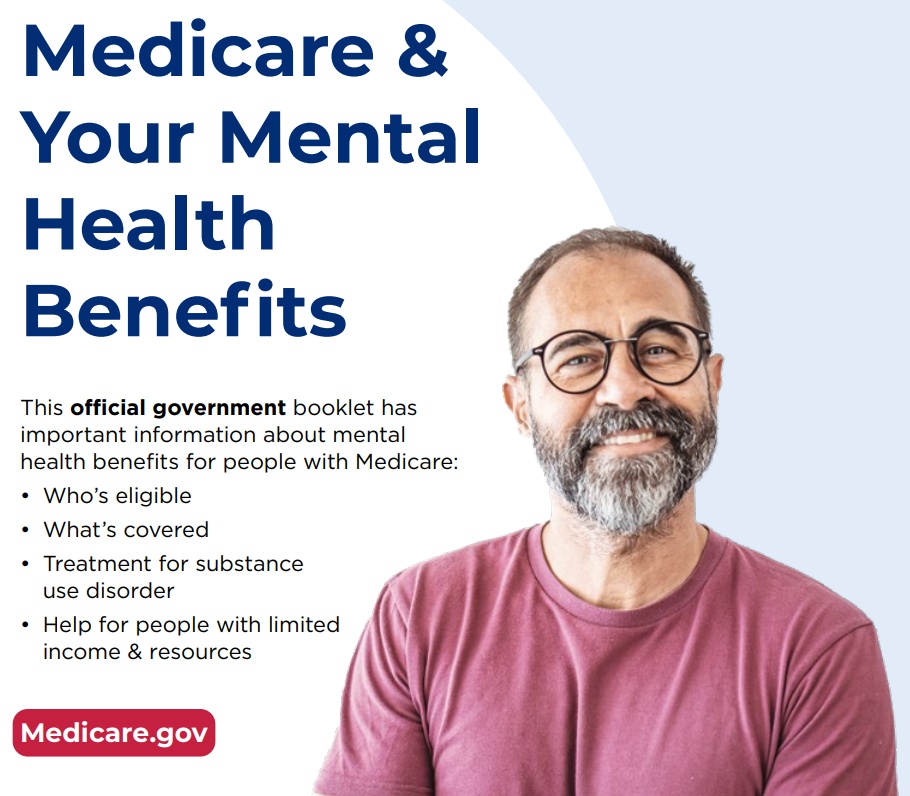
- Medicare & Mental Illness Publication # 10184
- Find therapists who accept Medicare Assignment
- Medicare Billing Etc Guidelines for Professionals
- Our Webpage on Medicare & Mental Health
- Mental Health
- Medicare.Gov on Mental Health
- EOC Evidence of Coverage - Plain English,
- Los Angeles Consumer Resources #Directory

- Los Angeles Times on low cost & free therapy alternatives
- NPR Mental Health & COVID
- Guide to Mental Health Benefits (The Mighty)
 Compliance Assistance Guide from DOL.Gov Health Benefits under Federal Law

- Mental Health Videos
- Veteran's Mental Health
- CMS Learning Aid for Mental Health Professionals

#Schizophrenia
- Schizophrenia Booklet NIH
- nimh.nih.gov/schizophrenia
- web md.com/schizophrenia/
- Mayo clinic on schizophrenia
- Wikipedia on schizophrenia
Bi-Polar
Delusional Disorder
- Wikipedia on delusional disorder
- Mental Health.org of New Zealand
- What Causes Psychotic Disorders?
- The exact cause of psychotic disorders is not known, but researchers believe that many factors may play a role. Some psychotic disorders tend to run in families, suggesting that the tendency, or likelihood, to develop the disorder may be inherited. Environmental factors may also play a role in their development, including stress, drug abuse and major life changes.
- These disorders most often first appear when a person is in his or her late teens, 20s or 30s.
- The exact cause of psychotic disorders is not known, but researchers believe that many factors may play a role. Some psychotic disorders tend to run in families, suggesting that the tendency, or likelihood, to develop the disorder may be inherited. Environmental factors may also play a role in their development, including stress, drug abuse and major life changes.
Federal Mental Health Parity
FEDERAL – Mental Health Parity and Addiction Equity Act of 2008
- The 2008 Mental Health Parity and Addiction Equity Act already requires insurers and corporate-backed health plans to provide access and payment structures for mental health care services on par with other medical services.
- In practice, that is often not the case, with less than half of U.S. adults with mental illness able to access care in 2020, while nearly 70% of children cannot receive treatment, according to studies cited by the administration.
- Under the new rules, federal officials are clarifying that autism, intellectual and neurodevelopmental disorders and all other conditions listed in the mental, behavioral and neurodevelopmental disorders chapter of the current International Classification of Diseases or the Diagnostic and Statistical Manual of Mental Disorders must be included under the definition of “mental health benefits” for plans and coverage.
- Biden admin to require mental health coverage parity – The White House says health insurers are not complying with 2008 law in a move that’s likely to draw legal challenges from the industry Politico September 22024
- Our webpage on Autism
- Final Rule to strengthen Parity Law 9/9/2024 Reuters
- Fact Sheet: Final Rules under the Mental Health Parity and Addiction Equity Act (MHPAEA)
- Fact Sheets & FAQs On Mental Health Parity 2008
- Regulations & Guidance
- Wikipedia
- Code of Federal Regulations §146.136 Parity in mental health and substance use disorder benefits.
Mental Health Bill of Rights
The Mental Health Parity Act of 1996 (MHPA)
- MHPA is a federal law that may prevent your group health plan from placing annual or lifetime dollar limits on mental health benefits that are lower – less favorable – than annual or lifetime dollar limits for medical and surgical benefits offered under the plan. Learn more on Wikipedia Mental Health Parity Act 1996
- The act removes separate treatment limitations for mental health and chemical dependency benefits (including number of visits, days of coverage, and annual dollar limits) and requires cost sharing for these services to be equal to or less than the cost sharing for other health care services. (Federal Mental Health Parity Act of 2007 NAMI More on Mental Health Parity NAMI) Public Law 110–343 wikipedia.org/110-343
- MHPA applies to most group health plans with more than 50 workers. MHPA does NOT apply to group health plans sponsored by employers with fewer than 51 workers. MHPA also does NOT apply to health insurance coverage in the individual market.
- MHPA is a federal law that requires that annual or lifetime dollar limits on mental health benefits provided by a group health plan be no lower than the annual or lifetime dollar limits for medical and surgical benefits offered by that plan. MHPA applies to employers with more than 50 employees. For up to date information on the applicability of the Mental Health Parity Act, contact the EBSA regional office nearest you.
- Statute1185 A
- Regulations
- Fact Sheet
- Publications
The MHPA does not prohibit group health plans from:
Covering mental health services within network only, even though the plan will pay for out of network services for
- medical/surgical benefits (although with higher out-of-pocket cost to the subscriber);
- Increasing co-payments or limiting the number of visits for mental health benefits;
- Imposing limits on the number of covered visits, even if the plan does not impose similar visit limits for medical and surgical benefits; and
- Having different cost-sharing arrangements, such as higher coinsurance payments for mental health benefits, as compared to medical and surgical benefits
- HOWEVER, check out the rules under ACA/Obamacare & AB 88
- .A visit limit coupled with a usual, customary, and reasonable (UCR) charge is not the equivalent of an annual or lifetime dollar limit. As a result, it is not a violation of the MHPA requirements. Payments made by the plan on the basis of UCR charges will vary from one case to the next.
- What is not permitted is a limit on the number of visits, together with a fixed dollar limit per visit, for example, 60 visits annually at $50 per visit (totaling $3,000), unless the medical-surgical coverage is the same.cms.hhs.gov
Resources & Links
- wikipedia.org/Mental_health_parity
- Our webpage on how to read a contact and Insurance Policy
- Technical Resources
- IRS Code § 9812. Parity in the application of certain limits to mental health benefits
- Federal MHPA Renewal Legislation S.558
- Library of Congress
- 42 USC 18022 (E) Mental health and substance use disorder services, including behavioral health treatment.
- Essential Health Benefits
- §146.136 Parity in mental health and substance use disorder benefits.
- NAMI South Bay Website
Maximum #a190 Medicare Psychiatric Inpatient Days?
- If one is mentally #ill, has Medicare and Medi Cal, is constantly in and out of inpatient care, will Medi Cal pay if Medicare doesn’t as the person maxed out his inpatient days and used up the lifetime limit?
-
- Yes, Medicare pays or doesn’t pay and then Medi Cal is the secondary payer. § 1300.67.13. Coordination of Benefits (“COB”).
- References & Links
- Our webpages on:
- What is covered under Medicare Parts A & B
- Appeals & Grievances
- Dual Coverage
- Which Pays first Medi Cal or other coverage?
- Medicare
- Medicare #DualCoverage
# 02179 - most health care costs are covered if you qualify for both Medicare and Medicaid. Medicaid never pays first for services Medicare covers. It only pays after Medicare has paid Page 11
- Choose Medi Cal HMO
- Medicare #DualCoverage
- SSI, SSDI & Automatic Medicare Coverage
Medicare Benefit Period – CA Health Care Advocates
Medicare & You Publication 10050 Page # 121
Benefit period
The way that Original Medicare measures your use of hospital and skilled nursing facility services. A benefit period begins the day you’re admitted as an inpatient in a hospital or skilled nursing facility. The benefit period ends when you haven’t gotten any inpatient hospital care (or skilled care in a skilled nursing facility) for 60 days in a row. If you go into a hospital or a skilled nursing facility after one benefit period has ended, a new benefit period begins. You must pay the inpatient hospital deductible for each benefit period. There’s no limit to the number of benefit periods.
Mental health care (inpatient) Medicare.Gov Medicare & You page 27
However, if you’re in a psychiatric hospital (instead of a general hospital), Part A only pays for up to 190 days of inpatient psychiatric hospital services during your lifetime.
- Try Medi Cal for additional days
-
-
LA Care EOC Evidence of Coverage and Member Handbook
Coordination of Benefits (COB): The process of determining which insurance coverage (Medi-Cal, Medicare, commercial insurance or other) has primary treatment and payment responsibilities for members with more than one type of health insurance coverage.
The LA Care EOC page 49 states:
Other Medi-Cal programs and services
Other services you can get through Fee-For-Service (FFS) Medi-Cal or other Medi-Cal programs
Sometimes L.A. Care does not cover services, but you can still get them through FFS Medi-Cal or other Medi-Cal programs. This section lists these services. To learn more, call L.A. Care Member Services at 1-888-839-9909 (TTY/TDD 711).
- Medi Cal coverage – County Mental Health
-
Specialty mental health services
Some mental health services are provided by county mental health plans instead of L.A. Care. These include specialty mental health services (SMHS) for Medi-Cal members who meet medical necessity rules. SMHS may include these outpatient, residential and inpatient services:
• Inpatient services:
° Acute psychiatric inpatient hospital services
° Psychiatric inpatient hospital professional services
° Psychiatric health facility servicesTo learn more about specialty mental health services the county mental health plan provides, you can call your county mental health plan.
-
To find all counties’ toll-free telephone numbers online, visit dhcs.ca.govMHPContact List
-
-
- Medi-Cal Specialty Mental Health Services
- Medi Cal and Social Service Contacts for Assistance
- dmh.lacounty.gov
- Evidence of Coverage D SNP – Page 77
- CBO.gov THE INPATIENT PSYCHIATRIC HOSPITAL BENEFIT UNDER MEDICARE July 1993
- Medi Cal Inpatient Mental Health Services Program
- chcf.org/Medi Cal Explained Behavioral Health.pdf
- ‘Go on Medi-Cal to get that’: Why Californians with mental illness are dropping private insurance to get taxpayer-funded treatment
- Advocates Guide to Medi Cal – Mental Health
- Cal. Code Regs. Tit. 9, § 1820.205 – Medical Necessity Criteria for Reimbursement of Psychiatric Inpatient Hospital Services
- MHSUDS INFORMATION NOTICE NO.: 19-026
-
-
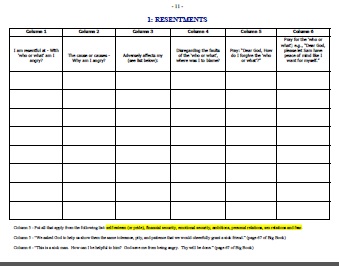
AA’s 12 STEPS, INCLUDING #POWERFUL 4 TH STEP WORKSHEETS
Herb K's workbook


Mental Health - Related Pages
- Mental Health – ACA/Health Reform Mandated Essential Benefit
Specimen Individual Policy #EOC with Definitions
Employer Group Sample Policy
It's often so much easier and simpler to just read your Evidence of Coverage EOC-policy, then look all over for the codes, laws, regulations etc! Plus, EOC's are mandated to be written in PLAIN ENGLISH!
- Find your own Individual EOC Evidence of Coverage
- It' important to use YOUR EOC not just stuff in general!
- Obligation to READ your EOC
- Plain Meaning Rule - Plain Writing Act
- Our Webpage on Evidence of Coverage
- OOP Out of Pocket Maximum - Many definitions are explained there.