
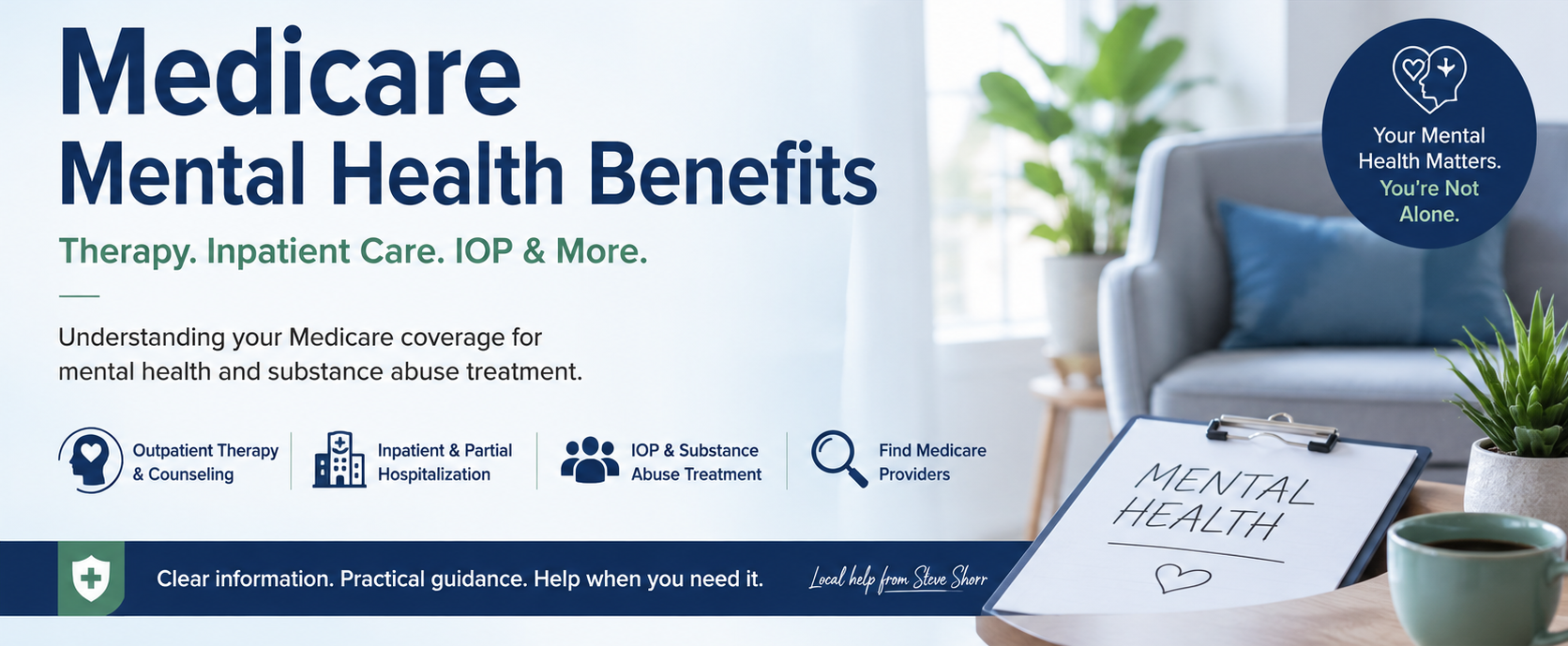
Medicare Mental Health Benefits
- Medicare can cover mental health care — but the rules depend on where you receive treatment, what type of provider you use, and whether the care is inpatient, outpatient, partial hospitalization, or an intensive outpatient program.
- This page is a plain-English starting point for Medicare beneficiaries and families trying to understand therapy, psychiatric care, depression screening, substance abuse treatment, and mental health provider access under Medicare.
Outpatient mental health care under Medicare Part B
- Medicare Part B generally covers outpatient mental health services when they are medically necessary and provided by Medicare-approved professionals. This may include individual therapy, group therapy, psychiatric evaluation, medication management, diagnostic testing, family counseling when it helps with treatment, and certain services related to substance use disorder treatment.
- Medicare also recognizes several types of mental health professionals, including psychiatrists, clinical psychologists, clinical social workers, nurse practitioners, physician assistants, marriage and family therapists, and mental health counselors.
- After the Part B deductible, you typically pay 20% of the Medicare-approved amount if the provider accepts Medicare assignment. If services are received in a hospital outpatient department, there may also be a facility copayment or coinsurance.
- Read Medicare’s outpatient mental health rules
Inpatient mental health care under Medicare Part A
- Medicare Part A may cover inpatient mental health care when you are formally admitted as an inpatient. This can be in a general hospital or a psychiatric hospital. However, if the care is in a psychiatric hospital, Medicare has a 190-day lifetime limit for inpatient psychiatric hospital services.
- This is one reason it is important to understand whether care is being billed as inpatient hospital care, outpatient observation, partial hospitalization, or another level of care.
- Read Medicare’s inpatient mental health rules
Partial hospitalization and intensive outpatient programs
- Some people need more than weekly therapy, but do not need a full inpatient hospital stay. Medicare may cover partial hospitalization or intensive outpatient program services when the program meets Medicare requirements and the care is medically necessary.
- These programs may be relevant for serious depression, anxiety, substance use disorder, or other behavioral health conditions where structured treatment is needed but 24-hour inpatient hospitalization is not required.
Substance abuse treatment and Medicare
Medicare mental health coverage can include services related to substance use disorder treatment. Depending on the facts, this may involve outpatient counseling, physician services, hospital-based treatment, partial hospitalization, intensive outpatient services, medications, or other covered care.
For California law, parity, medical necessity, and substance abuse treatment issues, see my related pages:
- Substance Abuse Treatment & SB 855
- Medical Necessity Clinical Guidelines & Substance Abuse Coverage
- California Mental Health Parity & SB 855
How to find a Medicare mental health provider
You can use Medicare’s official provider search tool to look for doctors, therapists, psychologists, psychiatrists, hospitals, and other Medicare-participating providers. If you have a Medicare Advantage plan, you should also check the plan’s own provider directory because network rules may apply.
You may also want to see my related page:
Related mental health pages on this website
- Autism — Essential Benefits & Health Coverage
- Resources — Mental Health
- Care Courts — Laura’s Law
- Conservatorships — LPS
- Jail & Prison Mental Health Services
- MLN Booklet Medicare & Mental Health
Need help sorting out Medicare coverage?
- Medicare mental health benefits can be confusing because the answer may depend on Original Medicare, Medicare Advantage, provider participation, facility billing, prescription drug coverage, and whether the care is outpatient, inpatient, partial hospitalization, or intensive outpatient treatment.
- If you are reviewing Medicare coverage, Medicare Supplement options, Medicare Advantage, or how mental health care fits into your overall insurance choices, I can help you look at the moving parts.
What Happens After Medicare’s 190 Psychiatric Hospital Days?
Medicare Part A has a lifetime limit of 190 inpatient days in a freestanding psychiatric hospital. This is a serious concern for people who need repeated hospitalizations. The limit does not apply to a Medicare-certified psychiatric unit within a general hospital, although other Medicare inpatient limits still apply. See Medicare.gov — Inpatient Mental Health Care.
- Do not assume that all psychiatric hospital coverage ends. Ask Medicare to confirm the number of freestanding psychiatric hospital days used. Ask the proposed facility whether it is a freestanding psychiatric hospital or a psychiatric unit within a general hospital.
- Check eligibility for Medi-Cal alongside Medicare. Some Californians with disabilities qualify for both. Medi-Cal eligibility does not require someone to give up Medicare. See my web page — Medi-Cal for older adults and people with disabilities and my web page — how Medicare and Medi-Cal work together.
- Ask the county behavioral health plan about inpatient coverage. California’s federally approved BH-CONNECT Section 1115 demonstration includes a Mental Health Institutions for Mental Disease program. Participating county plans may receive Medi-Cal funding for covered specialty mental health services during qualifying short stays in psychiatric hospitals or residential facilities classified as institutions for mental diseases. The program applies to Medi-Cal members ages 21–64 and has specific county, facility, and stay requirements. See California DHCS — Mental Health Institutions for Mental Disease Program.
- Request an answer for the actual facility and proposed admission. Ask the county plan: “If Medicare will not pay because the 190-day lifetime limit has been exhausted, can you arrange or authorize this medically necessary admission under Medi-Cal? Does this facility participate, and what approval is required?” Obtain its answer and any denial in writing.
Important: BH-CONNECT does not extend Medicare’s 190 days or guarantee Medi-Cal payment for every admission. The county must determine coverage under the rules applicable to that person, facility, and stay. Do not cancel Medicare or a Medigap policy based solely on reaching the 190-day limit.
Maximum #a190 Medicare Psychiatric Inpatient Days?
- If one is mentally #ill, has Medicare and Medi Cal, is constantly in and out of inpatient care, will Medi Cal pay if Medicare doesn’t as the person maxed out his inpatient days and used up the lifetime limit?
-
- Yes, Medicare pays or doesn’t pay and then Medi Cal is the secondary payer. § 1300.67.13. Coordination of Benefits (“COB”).
- References & Links
- Our webpages on:
- What is covered under Medicare Parts A & B
- Appeals & Grievances
- Dual Coverage
- Which Pays first Medi Cal or other coverage?
- Medicare
- Medicare #DualCoverage
# 02179
- most health care costs are covered if you qualify for both Medicare and Medicaid. Medicaid never pays first for services Medicare covers. It only pays after Medicare has paid Page 11
- Choose Medi Cal HMO
- Medicare #DualCoverage
- SSI, SSDI & Automatic Medicare Coverage
Medicare Benefit Period – CA Health Care Advocates
Medicare & You Publication 10050 Page # 121
Benefit period
The way that Original Medicare measures your use of hospital and skilled nursing facility services. A benefit period begins the day you’re admitted as an inpatient in a hospital or skilled nursing facility. The benefit period ends when you haven’t gotten any inpatient hospital care (or skilled care in a skilled nursing facility) for 60 days in a row. If you go into a hospital or a skilled nursing facility after one benefit period has ended, a new benefit period begins. You must pay the inpatient hospital deductible for each benefit period. There’s no limit to the number of benefit periods.
Mental health care (inpatient) Medicare.Gov Medicare & You page 27
However, if you’re in a psychiatric hospital (instead of a general hospital), Part A only pays for up to 190 days of inpatient psychiatric hospital services during your lifetime.
- Try Medi Cal for additional days
-
-
LA Care EOC Evidence of Coverage and Member Handbook
Coordination of Benefits (COB): The process of determining which insurance coverage (Medi-Cal, Medicare, commercial insurance or other) has primary treatment and payment responsibilities for members with more than one type of health insurance coverage.
The LA Care EOC page 49 states:
Other Medi-Cal programs and services
Other services you can get through Fee-For-Service (FFS) Medi-Cal or other Medi-Cal programs
Sometimes L.A. Care does not cover services, but you can still get them through FFS Medi-Cal or other Medi-Cal programs. This section lists these services. To learn more, call L.A. Care Member Services at 1-888-839-9909 (TTY/TDD 711).
- Medi Cal coverage – County Mental Health
-
Specialty mental health services
Some mental health services are provided by county mental health plans instead of L.A. Care. These include specialty mental health services (SMHS) for Medi-Cal members who meet medical necessity rules. SMHS may include these outpatient, residential and inpatient services:
• Inpatient services:
° Acute psychiatric inpatient hospital services
° Psychiatric inpatient hospital professional services
° Psychiatric health facility servicesTo learn more about specialty mental health services the county mental health plan provides, you can call your county mental health plan.
-
To find all counties’ toll-free telephone numbers online, visit dhcs.ca.govMHPContact List
-
-
- Medi-Cal Specialty Mental Health Services
- Medi Cal and Social Service Contacts for Assistance
- dmh.lacounty.gov
- Evidence of Coverage D SNP – Page 77
- CBO.gov THE INPATIENT PSYCHIATRIC HOSPITAL BENEFIT UNDER MEDICARE July 1993
- Medi Cal Inpatient Mental Health Services Program
- chcf.org/Medi Cal Explained Behavioral Health.pdf
- ‘Go on Medi-Cal to get that’: Why Californians with mental illness are dropping private insurance to get taxpayer-funded treatment
- Advocates Guide to Medi Cal – Mental Health
- Cal. Code Regs. Tit. 9, § 1820.205 – Medical Necessity Criteria for Reimbursement of Psychiatric Inpatient Hospital Services
- MHSUDS INFORMATION NOTICE NO.: 19-026
-
-


#Medicare & You – Mental Health
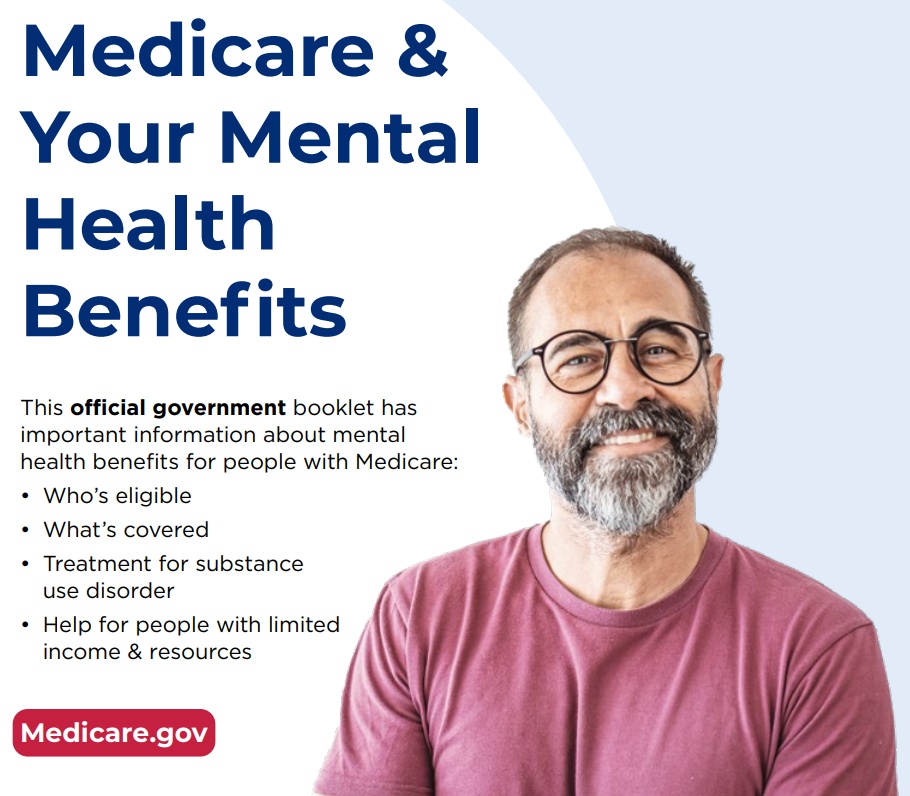
- Medicare & Mental Illness Publication # 10184
- Find therapists who accept Medicare Assignment
- Medicare Billing Etc Guidelines for Professionals
- Our Webpage on Medicare & Mental Health
- Mental Health
- Medicare.Gov on Mental Health
- EOC Evidence of Coverage – Plain English,
- Los Angeles Consumer Resources #Directory

- Los Angeles Times on low cost & free therapy alternatives
- NPR Mental Health & COVID
- Guide to Mental Health Benefits (The Mighty)
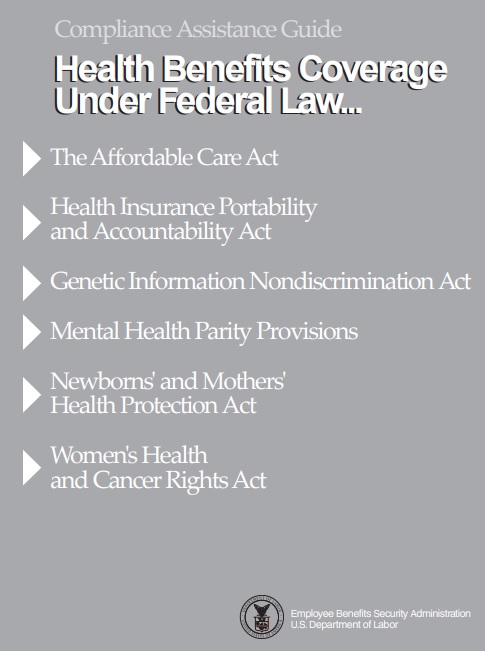
- Compliance Assistance Guide from DOL.Gov Health Benefits under Federal Law

- Mental Health Videos
- Veteran’s Mental Health
- CMS Learning Aid for Mental Health Professionals
Medicare Part B Outpatient Mental Health
- Medicare Part B (Medical Insurance) covers mental health services and visits with:
- Psychiatrist or other doctor
- Clinical psychologist
- Clinical social worker
- Clinical nurse specialist
- Nurse practitioner
- Physician assistant
- NAMI’s List of Mental Health Professionals
- Mental Health America’s list
- Your therapist must accept Medicare Assignment
- Part B covers outpatient mental health services, including services that are usually provided outside a hospital, like in these settings:
- A doctor’s or other health care provider’s office
- A hospital outpatient department
- A community mental health center
- Part B also covers outpatient mental health services for treatment of inappropriate alcohol and drug use.
- Part B helps pay for these covered outpatient services:
- One depression screening per year. The screening must be done in a primary care doctor’s office or primary care clinic that can provide follow-up treatment and referrals.
- Individual and group psychotherapy with doctors or certain other licensed professionals allowed by the state where you get the services.
- Family counseling, if the main purpose is to help with your treatment.
- Testing to find out if you’re getting the services you need and if your current treatment is helping you.
- Psychiatric evaluation.
- Medication management.
- Certain prescription drugs that aren’t usually “self administered”(drugs you would normally take on your own), like some injections.
- Diagnostic tests.
- Partial hospitalization.
- A one-time “Welcome to Medicare” preventive visit. This visit includes a review of your potential risk factors for depression.
- A yearly “Wellness” visit. This is a good time to talk to your doctor or other health care provider about changes in your mental health so they can evaluate your changes year to year.
- Who’s eligible?
- All people with Part B are covered.
- Your costs in Original Medicare
- You pay nothing for your yearly depression screening if your doctor or health care provider accepts assignment.
- 20% of the In Original Medicare, this is the amount a doctor or supplier that accepts assignment can be paid. It may be less than the actual amount a doctor or supplier charges. Medicare pays part of this amount and you’re responsible for the difference.
- Medicare-approved amount for visits to a doctor or other
- The Part B The amount you must pay for health care or prescriptions before Original Medicare, your prescription drug plan, or your other insurance begins to pay.
- If you get your services in a hospital outpatient clinic or hospital outpatient department, you may have to pay an additional An amount you may be required to pay as your share of the cost for a medical service or supply, like a doctor’s visit, hospital outpatient visit, or prescription drug. A copayment is usually a set amount, rather than a percentage. For example, you might pay $10 or $20 for a doctor’s visit or prescription drug. See Medicare Mental Health Booklet * Medicare.Gov
- If you have a Medicare Advantage Plan – Check the Summary or EOC Evidence of Coverage for more benefits.
- Medicare Advantage Plans – Part C
- Sample EOC – Use Ctrl – F & Search for Mental Health MAPD plans must give at least the benefit you would get under Original Medicare
- See our webpages on
- Mental Health – ACA/Health Reform Mandated Essential Benefit
- Mental Health – Outpatient – Therapist – Medicare
- Resources – Mental Health – Conservatorship – FSP
- Organizing, Hoarding, & Cluttering
- Pre-Existing Conditions – ACA No more!
- Preventative Care – Wellness Visit – Medicare
- Corona Virus – How does Insurance Cover it? – Relief Programs
- Social Determinants of Health Togetherness – Loneliness
- Medicare Advantage
- SNP Special Needs Plans