
Long-Term Care Insurance, Medicare, Medi-Cal & Home Care Planning

Long-Term Care Insurance, Medicare, Medi-Cal & Home Care Planning
Long-term care planning is not just about buying an insurance policy. It is about answering practical family questions:
Who pays if I need help at home? What if I need assisted living, memory care, or a nursing home?
Does Medicare pay? Will Medi-Cal recover from my estate?
The right answer depends on your age, health, assets, income, family support, and whether you can still qualify for coverage.
Start here: Most people are not looking for “insurance” at first. They are trying to protect savings, stay at home longer, avoid burdening their children, understand Medicare limits, or figure out what Medi-Cal may pay later.
Which Question Best Fits Your Situation?
Long-Term Care Planning Topics
Long-term care insurance: Coverage may help pay for care at home, assisted living, memory care, adult day care, or nursing home care, depending on the policy. The key questions are how much monthly benefit you want, how long benefits last, whether inflation protection is included, and whether you can qualify medically.
Medicare is limited: Medicare may help with skilled nursing facility care or home health care under specific rules, but it is not designed to pay for years of custodial long-term care. See my page on
Long-Term Care vs Medicare.
Medi-Cal may help, but it is not the same as private planning: Medi-Cal can be extremely important for nursing home care and some home/community services, but eligibility, estate recovery, income rules, and care options need to be reviewed carefully. See
Medi-Cal Nursing Home & Estate Recovery and
How to Qualify for Medi-Cal Nursing Home Benefits.
Home care matters: Many people would rather stay at home than move to a facility. Review the differences between private long-term care insurance, Medicare home health, IHSS, and family caregiving. See
IHSS In-Home Supportive Services.
Dementia and Alzheimer’s planning: Cognitive impairment can create care needs even when a person can still walk, talk, and eat. Review my dementia-related Medicare and health coverage page here:
Dementia & Alzheimer’s Coverage Questions.
Important: The best time to look at long-term care insurance is usually before there is a diagnosis, major medical change, or immediate need for care. Once someone already needs care, insurance options may be limited or unavailable.
Request Information or Quotes
I can help you review long-term care insurance, hybrid life/LTC options, Medicare limits, Medi-Cal issues, and California planning questions.
Questions to ask yourself to figure out what you might need?
- If you were unable to fully take care of yourself, that is you had along term care problem, claim or event, what are your plans to deal with the costs, emotional issues and stress on your loved ones?
- Where will the money to deal with a disability come from to pay for your care and/or assistance?
- How will this impact your retirement nest egg?
- And that of your spouses along with leaving money for your children? Building a Long Term Strategy
- Would an extra bill for $60-$80k/year in your retirement be a problem for you?
Financial Resources Questionnaire
to get the right coverage for your situation
Long Term Care
Cut & Paste these questions into an email and send to us at [email protected]
1. Seven percent of my annual income is approximately $_______________. (This is the maximum amount of annual income experts advise spending on a premium.)
2. The cash value of my non-housing assets* is $____________. (This is the amount you would otherwise have to spend for long-term care.)
3. My non-housing assets would last _____________ years if I needed care today. (This is the approximate number of years of coverage you might consider buying.)
4. I can afford to pay $____________ a day towards the cost of my own care. The difference between the amount I can afford and the cost of care today is $_________. (This is the approximate amount of daily benefit you will need.)
5. I can afford to pay a total of $____________ for the first days of care in a nursing home. Therefore, I will need a waiting period no longer than:
30 days $__________ 60 days $__________ 90 days $____________.
(To determine the amount you would pay, multiply the daily nursing home cost times the number of days in the waiting period.) Copied from Taking Care of Tomorrow *
Reasons to Buy & What does #Long Term Care Insurance Cover?
- Long Term Care Insurance pays for help both in your home and skilled nursing home, when you can no longer care for yourself, that is you are not able to fully do 2 or more of seven ADL’s, Activities of Daily Living eating, bathing, dressing, toileting, transferring, continence and ambulating, more details.
- Long Term Care includes a wide range of mostly non-medical services that are
- designed to help people maintain the maximum level of independence.
- Care can be custodial, intermediate or skilled in nature and
- can be provided in the home, (most claims are for in home care) community or institutional setting.
- Long term care can be provided in a formal (nursing home) or
- informal manner (home care, family & friends).
- LTC may be mandatory in the very near future Read More CA Department of Insurance
- Nearly half applying for long-term care after 70 are denied, insurance group says
- Medicare Skilled nursing, Home Health are very limited!
The Three main types of coverage are:
- nursing facility, Medicare coverage is limited to 100 days
- home care – how Medicare pays for it
- comprehensive, which includes both nursing and home care coverage. BJFIM.com
- What are the most popular choices of benefits in Long Term Policies?
- Let’s take a look at Taking Care of Tomorrow by CA Department of Aging for definitions and explanations. What is the “most popular” doesn’t necessarily apply to our or your situation. In fact, we are not allowed to say “best” in Medicare Advantage, unless we have facts to show it.
- Long-term care needs will only increase as more Americans age Insurance News Net 12/2024
Long Term Care Planning Guide Kiplinger’s

Our webpage on
- Outline Of Coverage
- Full Long Term Care Policy 52 pages
- National Assoc of Insurance Commissioners Shoppers Guide to LTC
- California Guide to Long Term Care
- Aging in place (your home) vs COVID sheltering in place
- CA #Law on Long Term Care Insurance §10123 – 10237.6
- FAQ on waiting periods
- Claim benefits are not taxable as income and the premium can be deductible.
- What are your Costs of Long Term Care and chances of needing Long Term Care?
- Medicare may pay for 90 days in a nursing home after 3 days in a hospital. Publication 10153 *
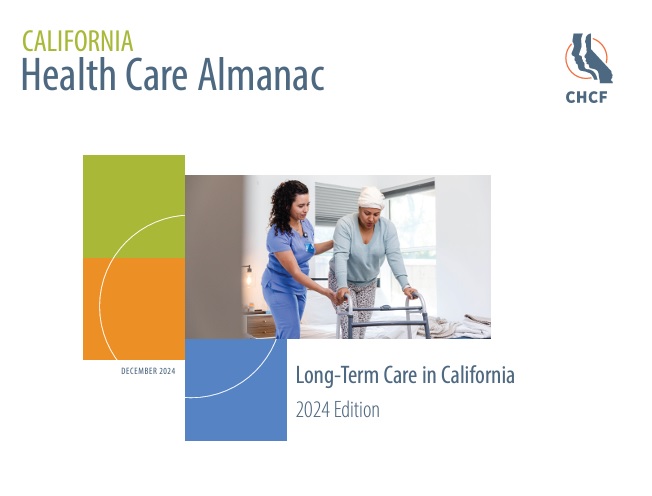
There is 50 % Chances of you Needing long term care
- Almost 70% of those over age 65 will require some form of long term care during their lives.
- Source: 2015 Medicare & You, page 63 Center for Medicare & Medicaid Services
- The odds of winning the PowerBall jackpot are 1 in 292 Million.
- 1 in 20,000,000: Dying in a terrorist attack
- 1 in 3,748,067: Dying from a shark attack
- 1 in 3,000: Having a residential fire
- 1 in 84: Being in a car accident
- US long-term care insurers see large spike in new customers in 2021
- 100 Must-Know Statistics About Long-Term Care: 2023 Edition A compendium of data about long-term-care usage and costs, the state of insurance, and the toll on caregivers.
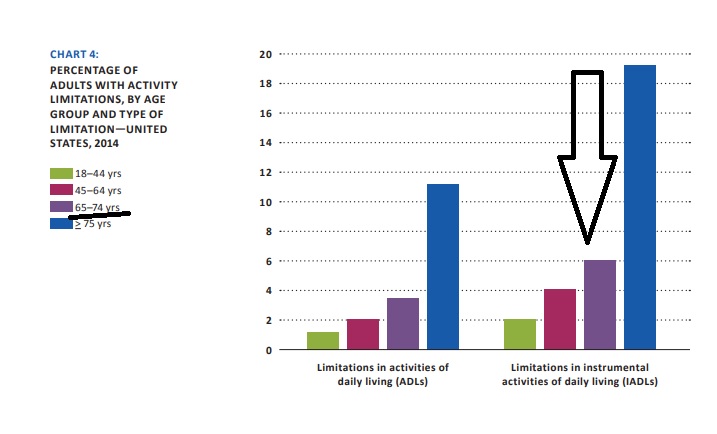
Almost 20% of people in nursing homes are within 10 years of your age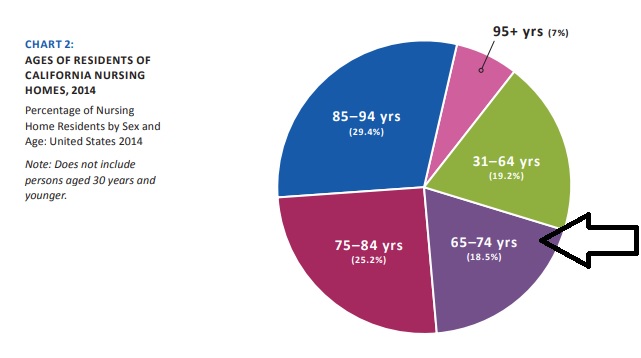
Even if you don’t buy Long Term Care – don’t you think it would be wise to read The State of CA – Taking Care of Tomorrow and do what planning you can?
Long Term Care Expenses?
- The median cost of a private room in a nursing home is about $104,000 in California,
- The median cost of a semi-private room in a nursing home is about $86,800 in California,
- The median cost of a single-occupancy room in an assisted living facility is $45,000 in California,
- Adult day health care, with a median cost of $76 per hour in California,
- Homemakers services, with a median cost of $22 per hour in California,
- Home health aide services, with a median cost of $23 per hour in California, the median annual cost of a private or semi-private room in a nursing home in Sacramento is about $116,000 and $92,500, respectively
- Cost of Care Tool – Nationwide – Genworth
- Nursing Homes Are Suing the Friends and Family of Residents to Collect Debts Kff 7.2022
- Middle-Income Seniors Will Struggle to Afford Paid Caregiving in 2033
- ‘Impending Intergenerational Crisis’: Americans With Disabilities Lack Long-Term Care Plans
-
How Much Does Long-Term Care Insurance Cost?
The cost of long-term care policies varies according to the type of policy, the coverage provided, and the choices you make when you buy the policy. Some of the factors that can influence the cost of long-term care insurance include:
• Your age and your health at the time you apply for coverage;
• Inflation protection and what kind you buy;
• The deductible, waiting period, or elimination period you choose before the policy begins paying benefits;
• The combination of the benefits you want included in the policy;
• The daily or monthly benefit amount you want the company to pay when you need care; and
• The number of years or total dollar amount you want the company to pay in benefits.
More details on #Planning for Long Term Care
- Borden Hamman Long Term Planning Guide
- Nolo Long Term Care
- Medi Cal IHSS In Home Support Services
- Here’s how those looking to ‘age in place’ can fund home health-care services
- Study: 70% Want To Age At Home, But Only 10% Have Long-Term Insurance
- In-Home Supportive Services 101: Opportunities and Challenges Under CalAIM
- Californians who need help paying for ’round-the-clock home care are stuck on a state waitlist
- Long Term Care.gov
- Calculate Cost of Long Term Care in your Area Genworth
- canhr.org/fact-sheets
our webpages on
- Medi-Cal Nursing Home, Long Term Care & Estate Recovery
- Home Health & Long Term Care
- Low Premium Home Health Care ONLY
- Hospice
- How Medicare covers Home Health Care
- Medicare & Skilled Nursing
- For Older Americans Month, questions about aging in place and staying at home
- 5 Wishes Talk to your loved ones today about what matters most. The advance care planning program trusted by more than 40 million people
- Facing Financial Ruin as Costs Soar for Elder Care
- VIDEO’s
-
H. Long-Term Care
Flyer – Americans Unprepared for Future Health Care Expenses

Our Main Webpage on
Long Term Care Nursing & Home Health Care
CA Dept of Aging – Home & Long Term Care Booklet
Please note, there are updates all the time, double check everything.
#Taking Care of Tomorrow Booklet

NAIC Shoppers Guide to Long Term Care
How to complete the Proposal Request and which options might you take to be most cost effective?
- How Much Will A Policy Pay?
- That depends on the benefits you choose. Most policies pay daily amounts (sometimes
times called “daily benefits” or “daily benefit maximums”) from $80 a day to more than $300 a day for the covered services described in the policy. - For Example:
- If you choose a daily maximum of $150 per day and your nursing home expenses are $200 per day, you will be responsible for the difference, $50 per day, or $1,500 a month. (This is your co-payment.)
- While you may have the income to pay this co-payment today, you need to be sure that you can pay it in the future too. Nursing home costs have increased 5.4 percent annually since 1980 and will continue to increase each year due to inflationary increases in the cost of providing care (refer to Chart #6 in taking care of tomorrow brochure above
- This means that the co-payment you choose will also increase. Once you qualify for benefits, many companies will pay your benefits on a monthly or weekly basis, which allows you or your caregiver to organize your care more efficiently.
- NOTE:
- Some companies pay you for the cost of your covered expenses only “up to” the daily benefit
amount that you chose when you bought your policy. In that case you will be responsible for any amounts greater than the daily benefit. - In Another Example:
- If you choose a daily maximum of $200 and your nursing home expenses are $275, you will be responsible for the difference ($75).
- Conversely, if you choose a daily benefit of $200 and your nursing home expenses are only $150, a company that reimburses for covered expenses will only pay $150, the actual cost of your care.
- NOTE – more modern plans use the concept of a “Pool of Money”
- Inflation Protection I think is pretty much self explanatory. Learn more
- That depends on the benefits you choose. Most policies pay daily amounts (sometimes
- How long might you need to use LTC?
- We can reduce the premium/benefits. If we cut the benefits – potential payout to half that will still provide half the monthly LTC Long Term Care benefit and in in some policies 1/2 the death benefit.
- Even a small LTC benefit is still a huge value due to the leverage
- One has 70% chance they will need LTC services in their lifetime… That’s a greater risk than car accident, home damage, or pretty much anything else they already are paying insurance premium for.
- How about instead of self-insuring and paying dollar for dollar for care if needed, use the monthly pay AssetcareIV which has guaranteed premium and unlimited claim period. That way one might pay for example $1,208/mo click here for a specific quote for you – now which will provide them with 10,000/month combined LTC benefits (5k/mo each). That is leverage of 827% on the dollar. And if you never need care and both the husband and wife passed away their beneficiary(ies) get the $166,667 tax free death benefit. OR, if they want to cash out one day for some reason, the policy builds cash value which they could tap for any reason.
- More Clarification of Leverage
- When you pay a premium and it is buying you coverage worth more than you paid, that is leverage on your dollar. For example, paying $500/month in LTC premium for a monthly benefit of $5,000 for LTC is leverage of 10 times your premium
- Need to relay the severity of the risk, and the power of the leverage, so it’s a no brainer versus self-insuring. Then it’s just, finding the premium to fit their budget and refining the coverage to maximize the benefits they can afford on their budget.
- severity of the risk, and the power of the leverage, so it’s a no brainer versus self-insuring
- finding the premium to fit their budget and refining the coverage to maximize the benefits they can afford on their budget.
- We will research and update this….
xxx