
Senior Housing in San Pedro & Los Angeles
Senior Housing Options in San Pedro & Los Angeles
If you or a family member need to find senior housing in San Pedro or the greater Los Angeles area, this page will help you quickly understand your options and where to start.
Senior housing is not one-size-fits-all. Some seniors need affordable apartments, others need assisted living, and many want to stay at home with support services like IHSS. The key is matching the right program to your income, health needs, and level of independence. Scroll down for more information.
🏠 Seniors at Little Sisters of the Poor (San Pedro) –
What Are the Housing Options in San Pedro & Los Angeles Area?
There’s been discussion about seniors currently living at Little Sisters of the Poor – Jeanne Jugan Residence (25th & Western) and what options they may have if they need alternative housing. Here’s a simple, factual overview of where seniors in San Pedro can look and what help may be available.
- Affordable Senior Housing:
- Many seniors qualify for income-based housing where rent is about 30% of income.
- Look into HUD Section 202 housing and affordable senior apartments in San Pedro, Wilmington, Harbor City, and Torrance. Waiting lists can be long, so it’s important to apply to multiple places.
- A good place to start is the Housing Authority of the City of Los Angeles (HACLA) and the
- Los Angeles County Development Authority (LACDA).
- Rental Assistance:
- Some seniors qualify for Section 8 (Housing Choice Vouchers), where you typically pay about 30% of your income and the voucher covers the rest. The challenge is that waiting lists are often closed or very long, although seniors and people with disabilities may get priority.
- Assisted Living / Board & Care:
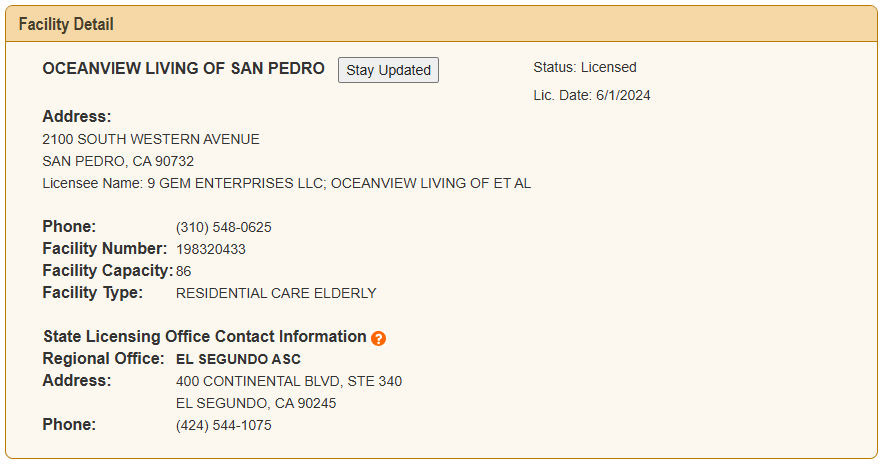
- For seniors who need help with daily activities, there are small board-and-care homes (often 4–6 residents) and larger assisted living facilities. Most are private pay, but some accept SSI Supplemental Security Income or limited subsidy programs.
- Medi-Cal & Long-Term Care:
- Seniors with limited income/assets may qualify for Medi-Cal, which can cover nursing home care and some community-based programs designed to keep people out of institutions.
- Programs like the Assisted Living Waiver or PACE may be options, though availability is limited.
- IHSS (In-Home Supportive Services):
- Through the California Department of Social Services IHSS program, eligible seniors can get help at home with bathing, dressing, meals, housekeeping, and transportation. This can allow many seniors to remain independent rather than moving into a facility.
- Share of Cost – Eliminate with Dental, Vision Medi Gap Insurance Premiums
- Local Help: If you don’t know where to start, contact the Los Angeles County Department of Aging and Disabilities or dial 211 LA County (2-1-1). They can help with applications, identify open waiting lists, and connect seniors to available programs.
- There are also local senior housing communities in San Pedro, such as income-based apartments and retirement housing, but availability is limited and waiting lists are common
- Reality: There are options, but they are not always immediate. Waiting lists can take months or years, so applying early and widely is critical.
- Hospice Coverage – Medicare
- Skilled Nursing SNF & Home Health What Medicare Pays
- Demential & Alzheimers Medicare & ACA/ObamaCare coverage
- Community note:
- If you’re discussing this issue or attending meetings, please be respectful, ask informed questions, and focus on solutions for seniors.
- If anyone has first-hand experience with senior housing in San Pedro, please share resources or tips—in the comments below. It could really help someone in need.
- Resources

- Find free or reduced cost services like medical care, food, job training, and more.
- #Find Help.org
- Dial 2-1-1 from a cell phone or landline to get connected to local resources, it will ask for zip code and give a list of options.
- Dial 988 for Mental Health Emergencies

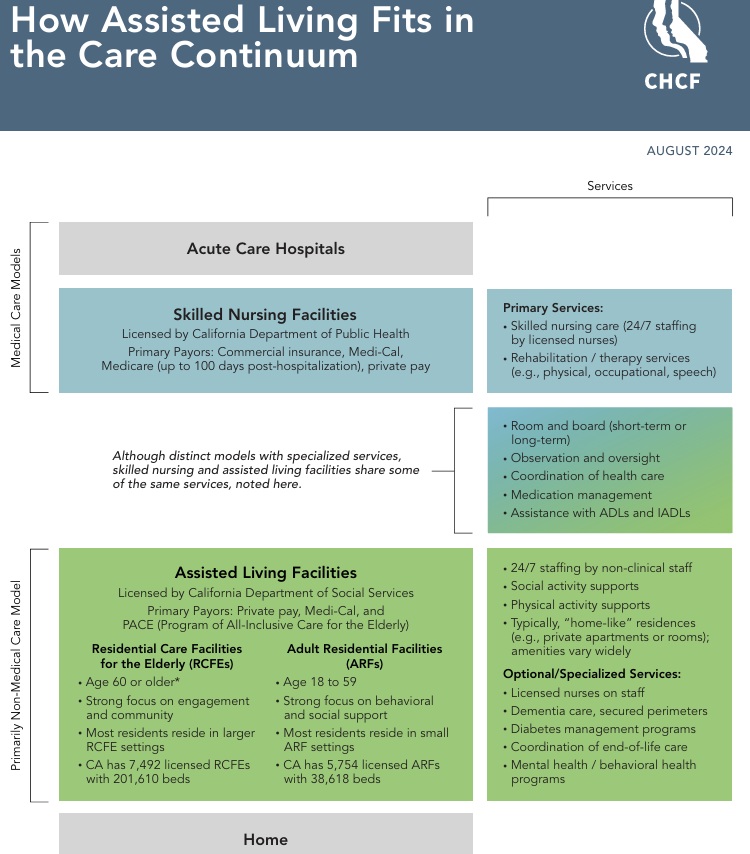
Medicare Coverage Comparison: Skilled Nursing vs Home Health vs Long-Term Care
| Type of Care | Skilled Nursing Facility (SNF) | Home Health Care | Long-Term Care (Custodial) |
|---|---|---|---|
| Where Care is Provided | Nursing facility / rehab center | Your home | Home, assisted living, or nursing home |
| Main Purpose | Short-term recovery after hospital stay | Medical care at home (nurse or therapy) | Help with daily living over time |
| Requires Hospital Stay? | Yes (typically 3+ inpatient days) | No (in many cases) | No |
| Type of Care | Skilled (therapy, IV meds, wound care) | Skilled (nurse visits, therapy) | Custodial (bathing, dressing, eating) |
| Medicare Coverage | Days 1–20: 100% Days 21–100: Copay After 100: Not covered |
Usually covered if medically necessary and homebound | Not covered by Medicare |
| Length of Coverage | Up to 100 days per benefit period | Intermittent / part-time visits | Ongoing / long-term |
| Key Limitation | Stops when skilled care is no longer needed | Must meet “homebound” and medical criteria | Must be paid out-of-pocket or insured |
| Common Misunderstanding | People think it covers long-term stays | People think it includes full-time caregivers | People think Medicare will pay — it won’t |
Bottom line: Medicare is designed for short-term medical care, not long-term living assistance.
Not sure which type of care applies to your situation?
✔ Get help understanding Medicare coverage
✔ Review long-term care planning options
✔ Compare Medicare Supplement plans
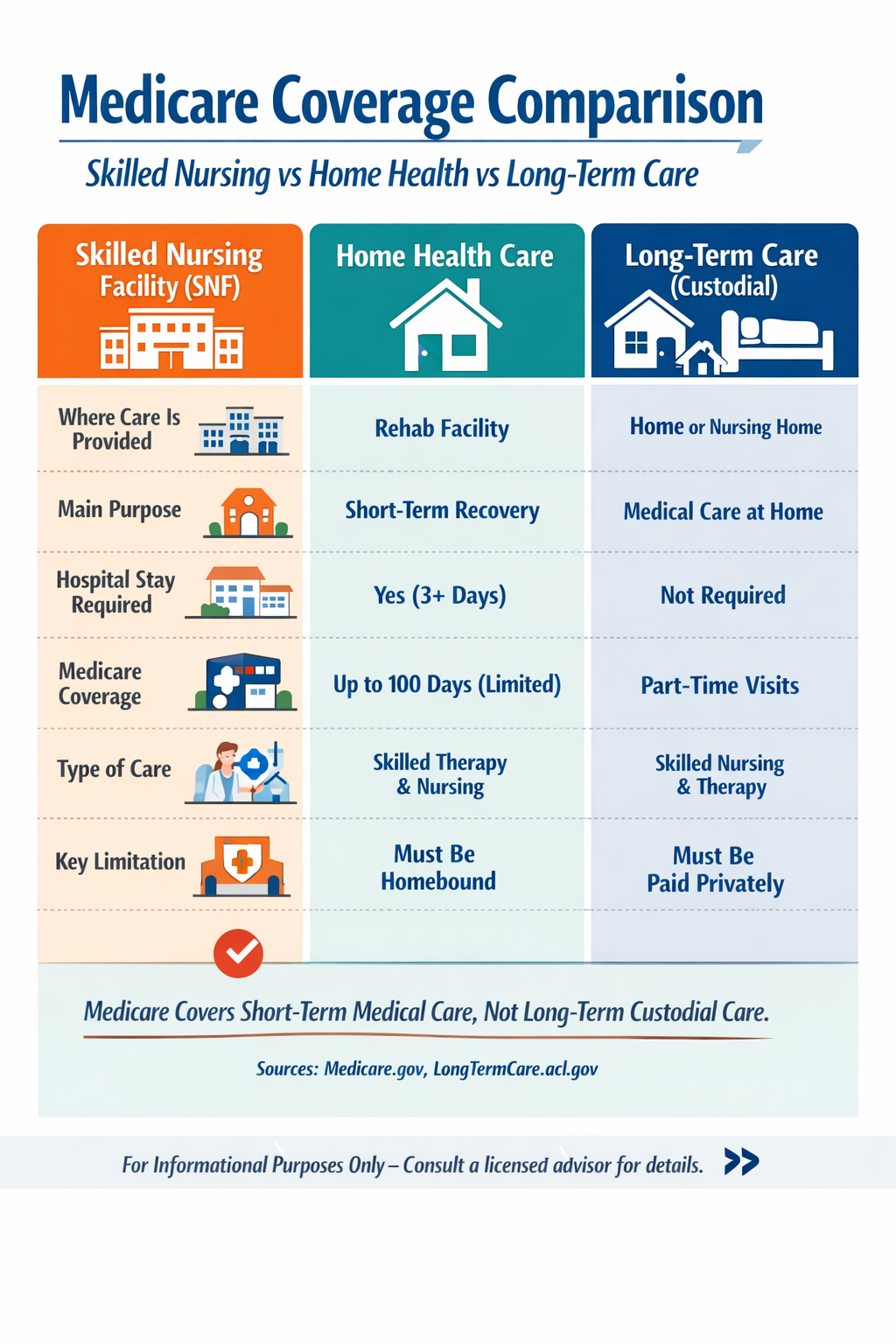
How Assisted Living Fits in the Care Continuum chcf 8/2024
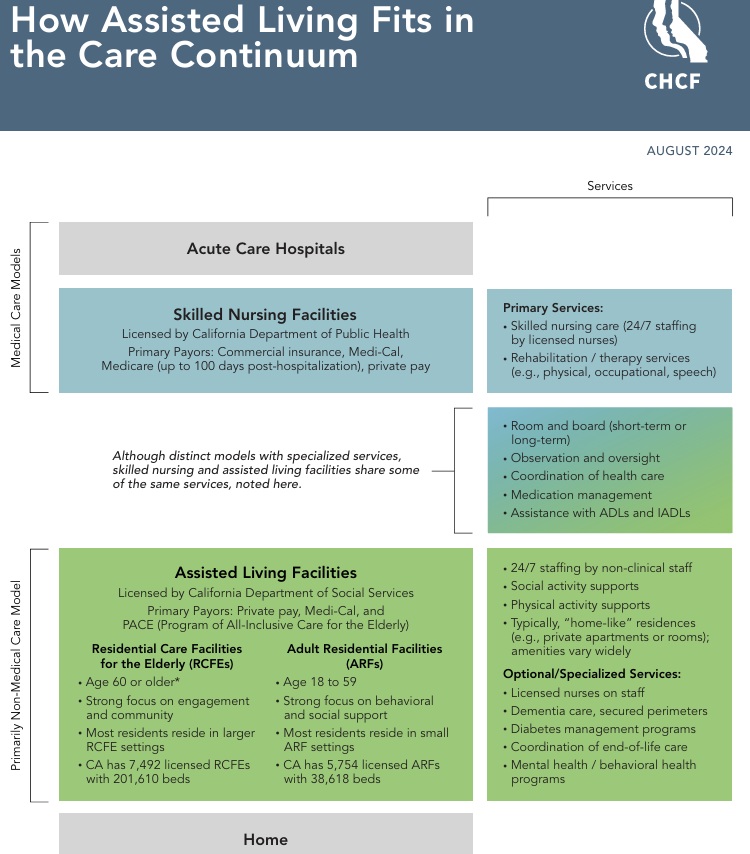
- What is Assisted Living Opportunities to Advance Community-Based Care for Medi-Cal Enrollees CHCF 8/2024
https://cahealthadvocates.org/pace-a-comprehensive-care-option-that-helps-older-adults-stay-in-their-communities/?mc_cid=614e35cc56&mc_eid=d8ceac2e29
https://share.google/aimode/xm21JjsWd6SAwGUmX
https://harborterraceretirement.com/