
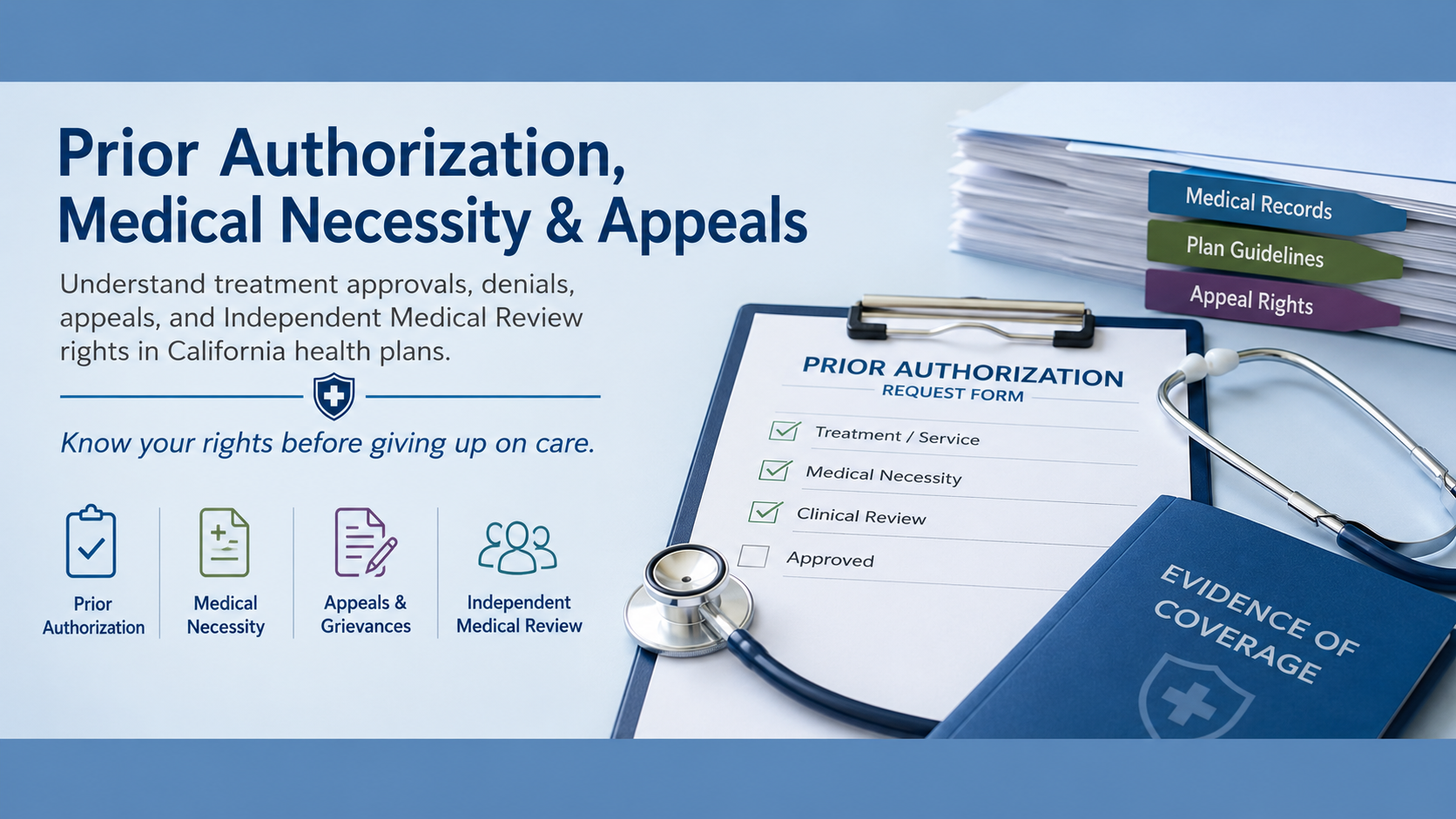
Prior Authorization:
What It Means and What To Do If Care Is Delayed or Denied
- Prior authorization, also called preauthorization, prior approval, or precertification, means your health plan wants approval before certain services, treatments, prescription drugs, medical equipment, surgeries, tests, or facility stays are covered. It is often where medical necessity disputes begin.
- A prior authorization request is not always a denial. But if the insurance company delays the request, asks for more records, or says the treatment is not medically necessary, you may need to review your plan documents, ask your doctor for help, and consider an appeal or Independent Medical Review.
Important: Preauthorization is not always a guarantee that the insurance company will pay the claim. Your Evidence of Coverage, policy, medical records, provider network rules, and the plan’s medical necessity criteria may still matter.
Common Services That May Require Prior Authorization
- MRI, CT scans, PET scans, and other advanced imaging
- Surgeries and hospital procedures
- Skilled nursing facility care , rehab, home health, or extended inpatient care
- Mental health or substance use treatment
- Specialty drugs, high-cost prescriptions , or step therapy exceptions
- Durable medical equipment such as wheelchairs, oxygen, or hospital beds
- Out-of-network referrals or specialist care
- One major carrier will no longer require prior authorization for 1,700 medical procedures starting October 2026 wallst.com
Why Prior Authorization Requests Get Delayed or Denied
- Many prior authorization problems are really medical necessity problems. The insurance company may say the records do not show enough medical evidence, the treatment does not meet the plan’s clinical criteria, a less intensive setting should be used, the service is excluded, or the request was not submitted correctly.
- That is why the denial letter, the doctor’s records, and the Evidence of Coverage are so important. The dispute is often not just whether your doctor recommends treatment. The question may be whether the request fits the exact plan language and medical policy criteria.
- NBC News about a woman that needed spinal surgery…denied until NBC news contacted the Insurance Company Learn more: NBC News.com
What To Do If Prior Authorization Is Denied
- Ask for the denial reason in writing. Do not rely only on what someone says over the phone.
- Request the criteria used. Ask what medical necessity guideline, policy, or plan rule was used to deny the request.
- Review your Evidence of Coverage. Look for prior authorization, medical necessity, exclusions, appeals, and grievance sections.
- Ask your doctor to respond directly. The doctor may need to submit chart notes, test results, treatment history, failed alternatives, or a letter of medical necessity.
- File an appeal if appropriate. Many denials must go through the plan’s appeal process before outside review is available.
- Consider Independent Medical Review. If the denial involves medical necessity, experimental or investigational treatment, or certain urgent/emergency issues, an IMR may apply.
Tip: Save every denial letter, Explanation of Benefits, doctor letter, referral request, medical record, prescription history, and plan notice. These documents can make the difference in an appeal or IMR.
Need Help Understanding a Prior Authorization Problem?
- If you are in California and are confused by a prior authorization delay, denial letter, medical necessity issue, or appeal notice, I may be able to help you sort out what the notice is saying and what page or agency resource may apply.
- I cannot promise that an insurance company will reverse a decision, and this page is not legal or medical advice. But I can often help explain the insurance wording, point you toward the right plan documents, and help you understand whether the issue looks like a coverage question, a medical necessity dispute, an appeal, or a possible IMR matter.
FAQ
- Is prior authorization a guarantee of payment?
- Usually, no. Prior authorization may approve the service in advance, but the claim may still depend on eligibility, plan rules, coding, provider network status, and whether the service matches what was authorized.
- Can emergency care require prior authorization?
- Emergency care or urgent care is generally treated differently from scheduled care. If a plan later denies payment for emergency or urgent services, review the denial letter and appeal rights carefully.
- What if my doctor says I need the treatment?
- Your doctor’s support is very important, but the plan may still ask whether the request meets the policy’s medical necessity rules and clinical criteria. A stronger doctor letter with records and specific criteria can sometimes help.
- When should I look at Independent Medical Review?
- IMR may be relevant when the dispute involves medical necessity, experimental or investigational treatment, or certain urgent/emergency medical-service disputes. It is usually not for every billing or coverage issue.
Related Pages That May Help
Prior authorization is only one part of the bigger coverage-denial process. These related pages may help you understand the next step:
- Medical Necessity — what the plan may require before approving care
- Appeals and Grievances — where to start if coverage or treatment was denied
- Independent Medical Review IMR — outside review for certain medical disputes
- Evidence of Coverage EOC — where the plan rules are usually found
- Continuity of Care — when changing plans or providers may affect ongoing treatment
News, References, Links and Proposed or Pending Legislation
- Prior Authorization Updates for 2026 Becker’s Payer Issues 1/2026
- Medicare Advantage Insurers Made Nearly 53 Million Prior Authorization Determinations in 2024 Kff.org 1/2026
- How Health Insurance Coverage Denials Affect Americans Commonwealth Fund 6/2026
- Medicare trial use of Prior Authorization Kff.org 2/2026