
Fact Sheet for those eligible for Medi Cal & Medicare
Medi-Medi (Dual Eligible): Medicare + Medi-Cal Explained
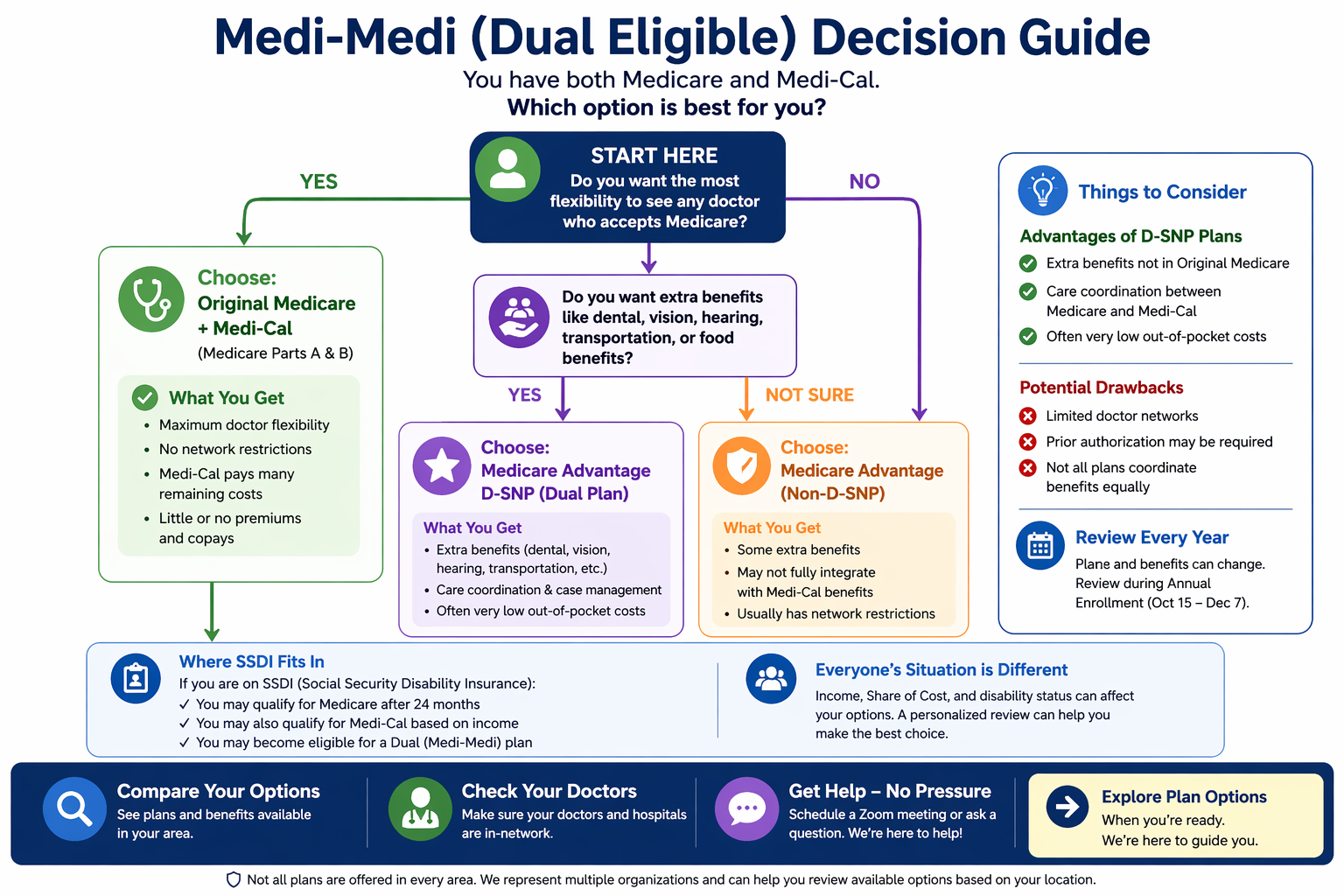
If you qualify for both Medicare and Medi-Cal, you may hear the term “Medi-Medi” or Dual Eligible.
This combination can significantly reduce your healthcare costs — but choosing the right way to use both programs is where many people get confused.
This page will help you understand your options, avoid common mistakes, and decide whether a Dual Special Needs Plan (D-SNP) or staying with Original Medicare + Medi-Cal makes more sense for your situation.
What Does Medi-Medi Cover?
When you have both programs:
- Medicare pays first (primary insurance)
- Medi-Cal pays second (covers many remaining costs)
In many cases, this means:
- ✔ Little or no premiums
- ✔ Little or no copays
- ✔ Extra benefits depending on your plan
Your 3 Main Coverage Choices
1. Original Medicare + Medi-Cal
You keep Medicare Parts A & B and use Medi-Cal as secondary coverage.
- ✔ Maximum flexibility (see most doctors who accept Medicare)
- ✔ No network restrictions
- ✖ No extra benefits (dental, vision, etc.) unless added separately
2. Medicare Advantage D-SNP (Dual Plan)
A private plan designed specifically for people with both Medicare and Medi-Cal.
- ✔ May include dental, vision, hearing, transportation, food cards
- ✔ Coordinated care and case management
- ✖ Usually requires staying within a network
3. Medicare Advantage (Non-D-SNP)
A regular Medicare Advantage plan without full dual coordination.
- ✔ Some extra benefits
- ✖ May not fully integrate with Medi-Cal benefits
Advantages of a Dual (D-SNP) Plan
- ✔ Extra benefits not included in Original Medicare
- ✔ Care coordination between Medicare and Medi-Cal
- ✔ Often very low out-of-pocket costs
Disadvantages to Watch For
- ✖ Limited doctor networks
- ✖ Prior authorization requirements
- ✖ Not all plans coordinate benefits equally well
Simple Decision Path
Use this quick guide:
- Want maximum doctor flexibility? → Stay with Original Medicare + Medi-Cal
- Want extra benefits and coordinated care? → Consider a D-SNP
- Already have doctors you trust? → Check if they accept the plan before switching
Where SSDI Fits In
If you are on SSDI (Social Security Disability Insurance), you may:
- Qualify for Medicare after 24 months
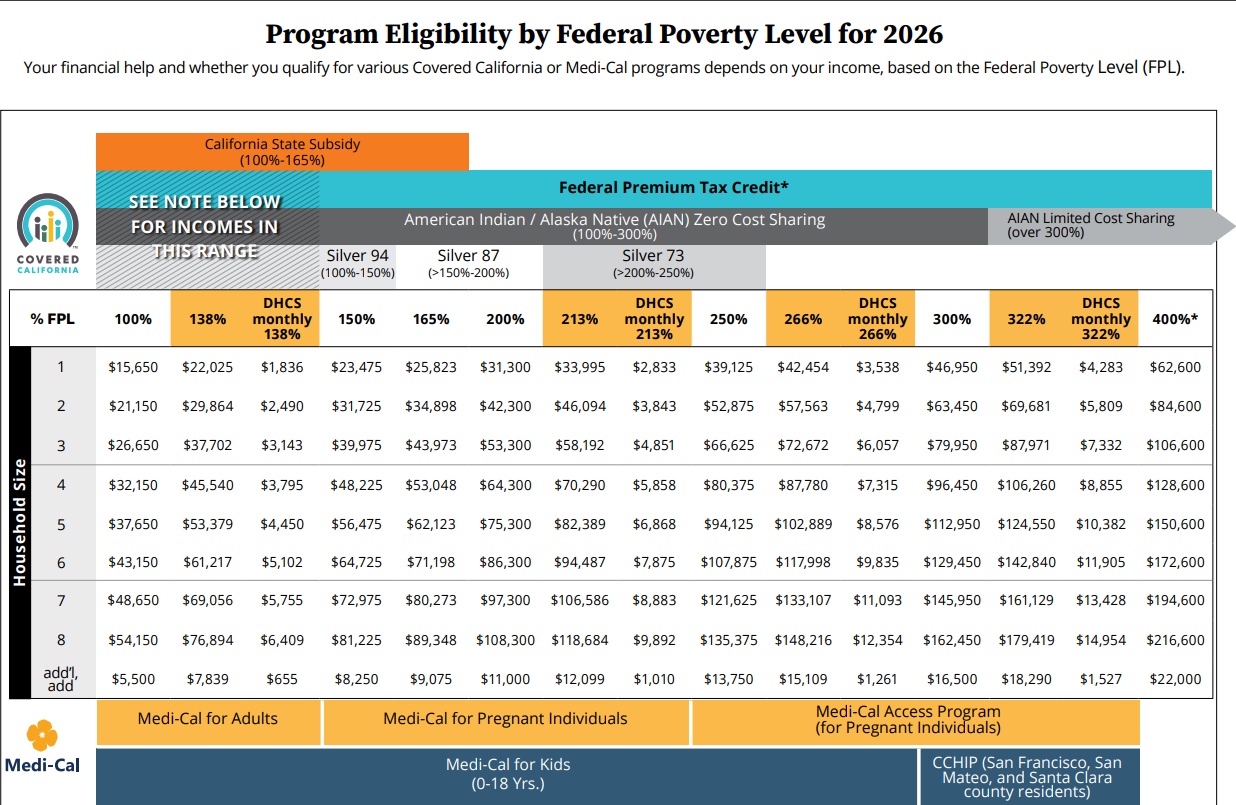
- Also qualify for Medi-Cal based on income
- Become eligible for a Dual (Medi-Medi) plan
Each situation is different, especially when income, Share of Cost, or disability status changes.
Start Here (No Pressure)
If you want to explore your options:
- ✔ Compare plans and benefits
- ✔ Check if your doctors are in-network
- ✔ See what extra benefits you may qualify for
→ View Medicare Advantage Plan Options
- Anthem Blue Cross Select HMO MediBlue Plus & SNP
- Blue Shield 65 Plus – Inspire HMO 2025
- UnitedHealthCare
- SCAN MAPD Medicare Advantage
→ Schedule a Zoom Meeting or Ask a Question
Note: Not all plans are offered in every area. We represent multiple organizations and can help you review available options based on your location.


This is INFORMATIONAL ONLY, not intended as Marketing Material!
Email us [email protected] for actual brochure, benefits, premiums, deductibles, etc.
- Dental, Vision, Hearing: Comprehensive coverage for services and materials (like glasses or hearing aids) often not covered by Original Medicare.
- Over-the-Counter (OTC) & Food: Monthly allowances (often on a flex card) for OTC health items, personal care, and healthy groceries.
- Transportation: Rides to doctor’s appointments and other health-related locations.
- Meals: Post-hospitalization or ongoing meal delivery benefits for some plans.
- Care Coordination: Integrated care teams and better communication between your Medicare and Medi-Cal benefits, especially with “Medi-Medi” plans in California.
- Lower Costs: Often includes $0 premiums, copays, and deductibles for medical services, keeping your out-of-pocket costs down.
- Specialized Support: May include in-home support, personal emergency response systems, or extra therapy services. [1, 2, 3, 4, 5, 6, 7, 8, 9, 10]
Our Webpages for Medicare Advantage Plan
- Medi-Medi Plans include:
- A Medi-Medi Plan is a type of Medicare Advantage plan. It is for people who have both Medicare and Medi-Cal, and combines Medicare and Medi-Cal benefits into one plan.
- All Medicare Part A, B, and D benefits. Also, Medi-Cal benefits.
- One care team to coordinate care.
- One health plan to coordinate delivery of services, including medical supplies, transportation, and long-term services and supports.
- One set of benefits and a network of providers, including doctors, hospitals, clinics, labs, pharmacies, and medical equipment suppliers.
- You may have extra benefits like dental, hearing, or vision coverage, in addition to what Medi-Cal covers. DHCS.CA.Gov
- DHCS Explanation Flyer
- Dual Eligible Special Needs Plans in California
- Medi Medi Plans DHCS.Gov * CMS.Gov *
- Dual Eligible Special Needs Plans (D-SNPs) enroll individuals who are entitled to both Medicare (title XVIII) and medical assistance from a state plan under Medi Cal Medicaid (title XIX DHCA.CA.Gov ).
In this video,
I address a question from a viewer regarding Medicare Part D enrollment for those with low income and Medi-Cal.
I clarify that while the annual open enrollment period is from October 15th to December 7th, individuals on Medi-Cal can switch their Part D plans more frequently, once a calendar month.
I also share resources for checking eligibility and applying for Medi-Cal benefits, emphasizing the importance of using the Benefits Cal website for a thorough application process.
If you have any questions about your Medicare or Medi-Cal options, feel free to reach out for assistance.
#My Medi-Cal
How to get the Health Care
You Need
24 pages
Smart Phones - try turning sideways to view pdf better


More Links & Resources
- Medi-Medi Plan 2026 Expansion dhcs.ca.Gov flyer
- Integrated Care dhcs.ca.gov
- Dual Special Needs Plans Contract and Policy Guide dhcs.ca.gov
- Coordinated Care Initiative and Cal MediConnect dhcs.ca.gov
- Fixing the FIDE-SNP – Redefining “Fully Integrated” ati advisory.com
Medi-Cal Managed Care HMO – Health Care Options
Here you can review and choose the HMO that you want to deliver your Medi-Cal health Care.

- Get a lot more detail & analysis on Medi Cal HMO providers see our webpage on that
AI Summary
Medicare co ordination with Medi Cal
- Primary vs. Secondary: Medicare pays first for covered services (like hospital & doctor visits); Medi-Cal pays the remaining balance, including your Medicare premiums and cost-sharing (copays/deductibles) if you’re eligible for full Medi-Cal.
- Coverage Gaps: Medi-Cal fills gaps by covering services Medicare doesn’t, such as dental, vision, and essential long-term care, but typically only if you use providers who accept Medi-Cal.
- Integrated Plans: Many dual-eligibles enroll in Dual Eligible Special Needs Plans (D-SNPs), a type of Medicare Advantage plan that combines both benefits into one plan, simplifying care.
- Crossover Claims: For those in Original Medicare, claims “crossover” from Medicare to Medi-Cal for secondary payment without you needing to file.
- Matching Plan Policy (California): In California, your Medi-Cal plan follows your Medicare Advantage plan choice to create coordinated care. [1, 2, 3, 4, 5, 6, 7, 8]
- You see a provider: Medicare pays its share first.
- Remaining costs: Medi-Cal pays the rest (deductibles, copays) for Medicare-covered care, or covers non-Medicare services if using a Medi-Cal provider.
- Premium Help: Medi-Cal can pay your Medicare Part B premiums and help with Part A costs.
- D-SNPs Simplify: Choosing a D-SNP consolidates everything into one plan and network, often with extra benefits like dental and vision. [1, 3, 4, 5, 6, 9]
#Understanding Medicare Advantage Plans (PDF) #12026

- Set a Zoom Meeting
- We can now do SOC Scope of Appointment, before the Meeting via a 3 minute recorded meeting 2 days before. AHIP Training Module 4 Page 14 *
- #Intake Form - Please email us [email protected] for the form - That way we can better analyze your situation to give you the answers to your needs and questions.
- Get Quotes, Full Information and Enroll
- MANDATED wording!: Think Advisor * ‘‘We do not offer every plan available in your area. Any information we provide is limited to those plans we do offer in your area. Please contact Medicare.gov or 1–800–MEDICARE to get information on all of your options.’’
- We disagree with the above wording, as we can use the same tools on Medicare.gov as they do!
- Visit our general webpage on Medicare Advantage for much more detail and information.
#Medicare10050 and You 2025
Spanish
Everything you want to know

- Steve's Video Seminar Introduction to Medicare & You
- Clear View to Medicare Patient Advocate.org - 36 pages
- Get Ready for Medicare * Spanish



***********
- Your Medicare #Benefits # 10116
- Inpatient ONLY - How Medicare Pays for your Surgery Part A vs Part B Very Well Health.com
- 2026 Updates CMS.gov
- Enroll in Blue Cross
- Use our scheduler to Set a phone, Skype or Face to Face meeting
- #Intake Form - We can better prepare for the meeting (National Contracting Center)
- Get more information and FAQ's
- #Intake Form - We can better prepare for the meeting (National Contracting Center)
Medicare #DualCoverage
Publication - 02179

-
VIDEO how two plans coordinate and pay your claim.
- Medicare.Gov on how Medicare works with other insurance.
- Employer obligation to report # of employees to Medicare
- Explanation from Cal Broker Magazine Sept 2019
- Sample Small Employer Group Health Plan
- Medicare & Other Insurance CA Health Care Advocates Fact Sheet pdf
#Subrogation
Medicare's Right to collect from other Coverage
- You're Medicare Advantage plan has the right and responsibility to collect - subrogate for covered Medicare services for which Medicare is not the primary payer.
- According to CMS regulations at 42 CFR sections 422.108 and 423.462, Anthem MediBlue Access (PPO), as a Medicare Advantage organization, will exercise the same rights of recovery that the Secretary exercises under CMS regulations in subparts B through D of part 411 of 42 CFR and the rules established in this section supersede any state laws. Anthem MediBlue Access (PPO) Evidence of Coverage
- Medi-Cal (for People with Medicare) – 04-19-23 Hi Cap CA Health Care Advocates
https://justiceinaging.org/how-h-r-1-impacts-people-dually-eligible-for-medicare-and-medicaid