Why Health Insurance Prices Change by ZIP Code, Age, County & Group Location
People often land on this page because they are trying to figure out why one health insurance premium is different from another. The short answer is that insurance companies do not usually charge everyone the same price. Rates can change based on where you live, your age, the type of coverage, and whether the policy is individual, Medicare, or small business coverage.

Start here: are you looking for individual/family coverage, Medicare coverage, or small business group insurance?
Quick Answer: What Rating Factors Usually Matter?
For individual and family health insurance, the most common rating factors are your ZIP code, your age, the people covered on the policy, and the plan you choose. Covered California and off-exchange individual plans may use different rating areas and age-based premiums, so two people in different parts of California may see different prices even when they are looking at similar coverage.
For Medicare Advantage and Part D plans, the issue is often county or service area. Moving from one county to another can change which Medicare Advantage plans are available, which doctors and hospitals are in-network, and what drug coverage is included.
For small business group health insurance, rates may depend on the employer location, employee ages, family composition, carrier rules, participation, and employer contribution. That is why a business quote usually needs census information before rates can be compared accurately.
Important: The same ZIP code or county question can mean different things depending on whether you are talking about Covered California, Medicare Advantage, Medicare Part D, Medigap, or small group insurance.
Did You Move or Are You Comparing ZIP Codes?
A move can affect more than just the monthly premium. It can also change the plan choices available to you, the provider network, medical group access, prescription drug coverage, and whether you qualify for a special enrollment period. This is especially important for Medicare Advantage and individual/family plans.
Before changing plans, it is smart to check the premium, doctors, hospitals, prescriptions, and total out-of-pocket exposure. A cheaper premium may not be cheaper if your doctor, medical group, hospital, or medication is not covered the same way.
Common Questions
Why did my premium change after I moved?
Your new ZIP code, county, or rating area may have different plan choices, networks, and premiums. For Medicare Advantage, moving counties can be especially important because plans are usually tied to a service area.
Are California rating regions the same for every type of insurance?
No. Individual/family plans, small group plans, Medicare Advantage, Part D, and Medigap can follow different rating or service-area rules. That is why a general rating map may not answer the whole question.
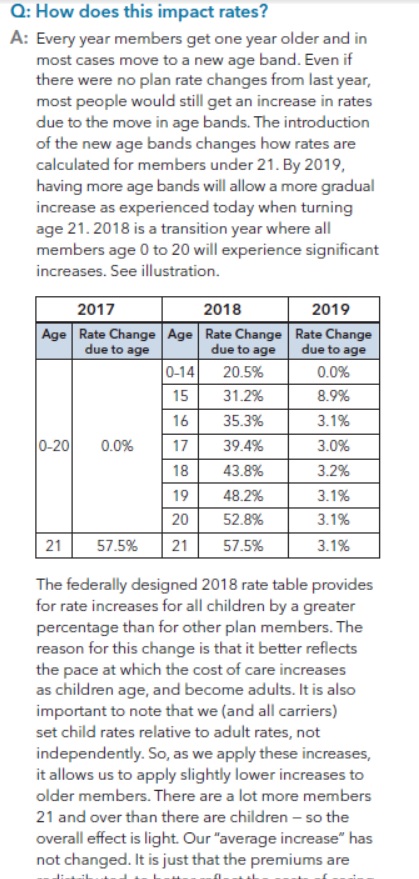
Does age affect health insurance premiums?
For most individual/family and small group health plans, age is an important rating factor. Medicare Advantage premiums work differently, but age can still matter indirectly when comparing Medicare Supplement, prescription drug coverage, and total costs.
Why do small business quotes need employee information?
Small group rates usually require a census because the carrier needs the employee ages, dependent information, employer location, and plan choices before giving an accurate quote.
Can an agent help compare more than just the premium?
Yes. The premium is only one part of the decision. Doctor networks, hospitals, prescriptions, deductibles, copays, coinsurance, maximum out-of-pocket limits, and eligibility rules can matter just as much.
Need help figuring out which rating rules apply to you?
Send your ZIP code, age, county, and whether you need individual, Medicare, or small business coverage.
Detailed Rating Region, Legal & Reference Materials
The material below is for people who want the technical background, rating region information, California insurance law references, or historical rating area documents. Most consumers should start with the simple explanation above and then request a quote based on their own ZIP code, county, age, and coverage type.
Health Care Reform has
very few legal Rating – Premium Factors
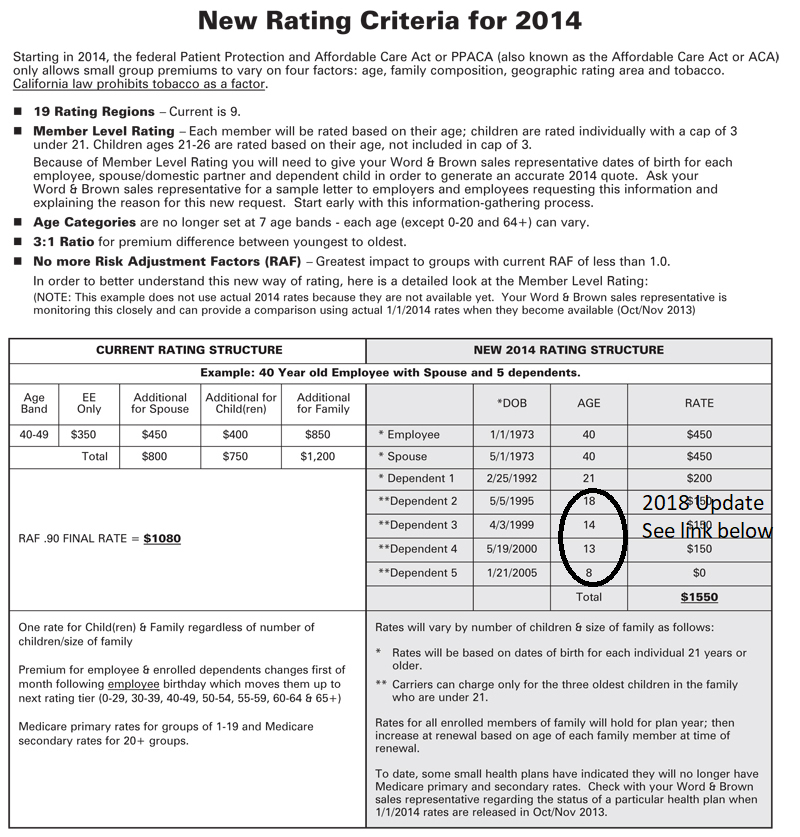
Under Health Care Reform in California you can only be charged a different premium for the following factors:
- Age
- shall not vary by more than three to one premium difference for adults.
- 19 Zip Code (Geographic Regions) View Chart and if your coverage is for
- Individual or family CMS.gov * Commonwealth Fund * 42 U.S. Code § 300gg – Fair health insurance premiums * Insurance Code §10753.14.
New Advantages
- (a)No more charge for claims experience – §10753.16. RAF Factors
- nor medical questions asked – No Pre X Clause
- CFR §146.121 Prohibiting discrimination against participants and beneficiaries based on a health factor.
- Nor genetics §146.122 Additional requirements prohibiting discrimination based on genetic information.
- Contrast this with “Wellness” Discounts of 30% and 50% to stop smoking.
- No extra charge for using an Agent or Broker
- 12 additional reasons to get your coverage thru Steve Shorr Insurance
- There was no extra charge for our services prior to ACA/Obamacare either.
- More on Rate Regulation & Filings with CA Dept. of Insurance
19 Geographic Regions
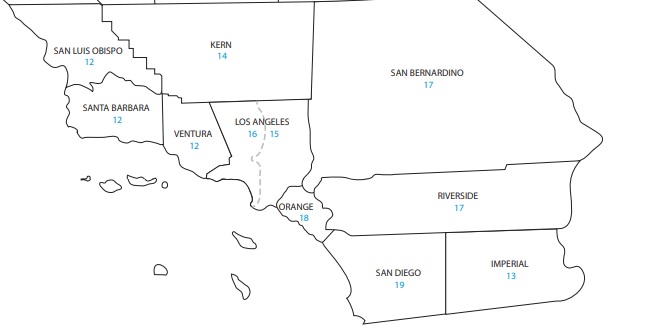
Rating Zip Codes, Counties – #Geographic Region
Graphic Map of NEW Rating Regions
10753.14 (2) (A) Geographic region. [Zip Code]
The geographic regions for purposes of rating shall be the following:
(xv) Region 15 shall consist of the ZIP Codes in Los Angeles County starting with 906 to 912, inclusive, 915, 917, 918, and 935.
(xvi) Region 16 shall consist of the ZIP Codes in Los Angeles County other than those identified in clause (xv).
(xvii) Region 17 shall consist of the Counties of San Bernardino and Riverside.
(xviii) Region 18 shall consist of the County of Orange.
(xix) Region 19 shall consist of the County of San Diego.
(i) Region 1 shall consist of the Counties of Alpine, Del Norte, Siskiyou, Modoc, Lassen, Shasta, Trinity, Humboldt, Tehama, Plumas, Nevada, Sierra, Mendocino, Lake, Butte, Glenn, Sutter, Yuba, Colusa, Amador, Calaveras, and Tuolumne.
(ii) Region 2 shall consist of the Counties of Napa, Sonoma, Solano, and Marin.
(iii) Region 3 shall consist of the Counties of Sacramento, Placer, El Dorado, and Yolo.
(iv) Region 4 shall consist of the County of San Francisco.
(v) Region 5 shall consist of the County of Contra Costa.
(vi) Region 6 shall consist of the County of Alameda.
(vii) Region 7 shall consist of the County of Santa Clara.
(viii) Region 8 shall consist of the County of San Mateo.
(ix) Region 9 shall consist of the Counties of Santa Cruz, Monterey, and San Benito.
(x) Region 10 shall consist of the Counties of San Joaquin, Stanislaus, Merced, Mariposa, and Tulare.
(xi) Region 11 shall consist of the Counties of Madera, Fresno, and Kings.
(xii) Region 12 shall consist of the Counties of San Luis Obispo, Santa Barbara, and Ventura.
(xiii) Region 13 shall consist of the Counties of Mono, Inyo, and Imperial.
(xiv) Region 14 shall consist of the County of Kern.
[Calif. Insurance Commissioner 2.20.2013 Proposal to divide into 18 Regions Los Angeles Times]
[Employer zip code, determines rates, however, residential zip by each employee is still needed on census to establish network availability, per Heide S email dated 9.9.2015]
(B) No later than June 1, 2017, the department, in collaboration with the Exchange and the Department of Managed Health Care, shall review the geographic rating regions specified in this paragraph and the impacts of those regions on the health care coverage market in California, and make a report to the appropriate policy committees of the Legislature.
Health Coverage #Guide
Art Gallagher
Health Care Reform FAQ's
Understanding Health Reform
***********************************
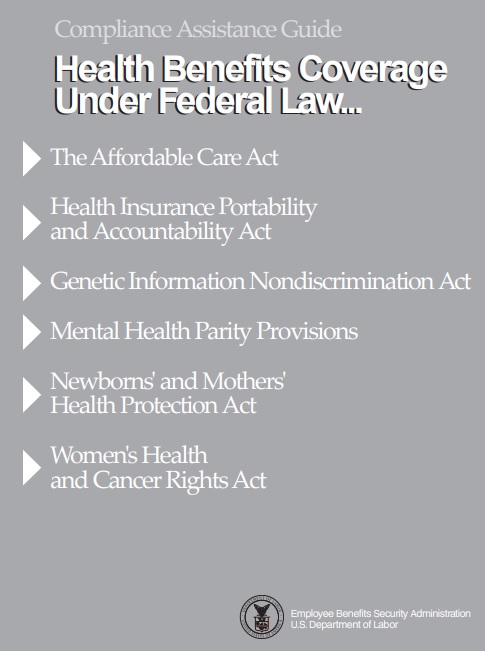
Compliance #Assistance Guide from DOL.Gov Health Benefits under Federal Law
- Health Care Reform Explained Kaiser Foundation Cartoon VIDEO
- Choosing a Health Plan for Your Small Business VIDEO DOL.gov
- ACA Quick Reference Guide California Small Group Employers Revision 2020 Word & Brown
- kff.org/health-policy-101/
- Health Savings Accounts
What justification is there for Insurance Companies to charge different rates in different Counties or to even have 19 different rating area’s in CA?
The ACA Health Reform allows insurers to use geographic rating factors to adjust premiums to reflect variations in medical costs across rating areas attributable to such factors as differences in labor and other operating costs, the relative strength of their network/provider agreements in a given area, and/or cost shifts associated with high Medicare or Medicaid enrollment and lower payments from these sources. The benefit of geographic rating is that it provides insurers with marketing flexibility and can help ensure that insurance purchasers in low cost areas benefit from the efficiencies of their local health care system. It may also encourage more insurers to offer plans in high cost areas that they would otherwise avoid if these costs could only be recouped across their entire coverage area. On the other hand, geographic rating may also undermine the incentives for health plans to encourage efficiency among health care providers in high-cost areas.
The cost of delivering care varies dramatically from one area to another, and insurers often vary their rates by county or by ZIP code using the employer’s business address in the small group market, or the applicant’s home address in the individual market. Safe harbors for geography have been set for each state, depending on the variation in medical costs within the state, and range from no variation in the District of Columbia to 1.9:1 in Florida
Insurers must submit data that demonstrates a correlation between case characteristics (e.g., geographic area) and
increased medical claims costs
NIH.gov * NAIC.org *
risk screening – insurers could avoid entering counties that have a higher share of unhealthy consumers.
market segmentation – segment a market and avoid competition
entry cost hypothesis – meeting network adequacy standards and establishing a competitive network could be significant for insurers. This will be especially true if an insurer does not have legacy provider networks.
risk selection wpmucdn.com *
Geographic rating areas are units made up of metropolitan statistical areas (MSAs), counties or three-digit zip codes, which are used by insurance carriers to price premiums. An MSA is a geographical region with a relatively high population center and close economic ties throughout the area.
“Variations in health insurance premiums across regions arise due to variations in the cost of health care across regions,” said Insurance Commissioner Marguerite Salazar in a news release. “These variations are not new, but the transparency brought by the Affordable Care Act is new.” CMS.org *
Bibliography, Links & Resources

View archives, old versions and Historical on Archive.org