SEP IRA / Simplified Employee Pension Plans
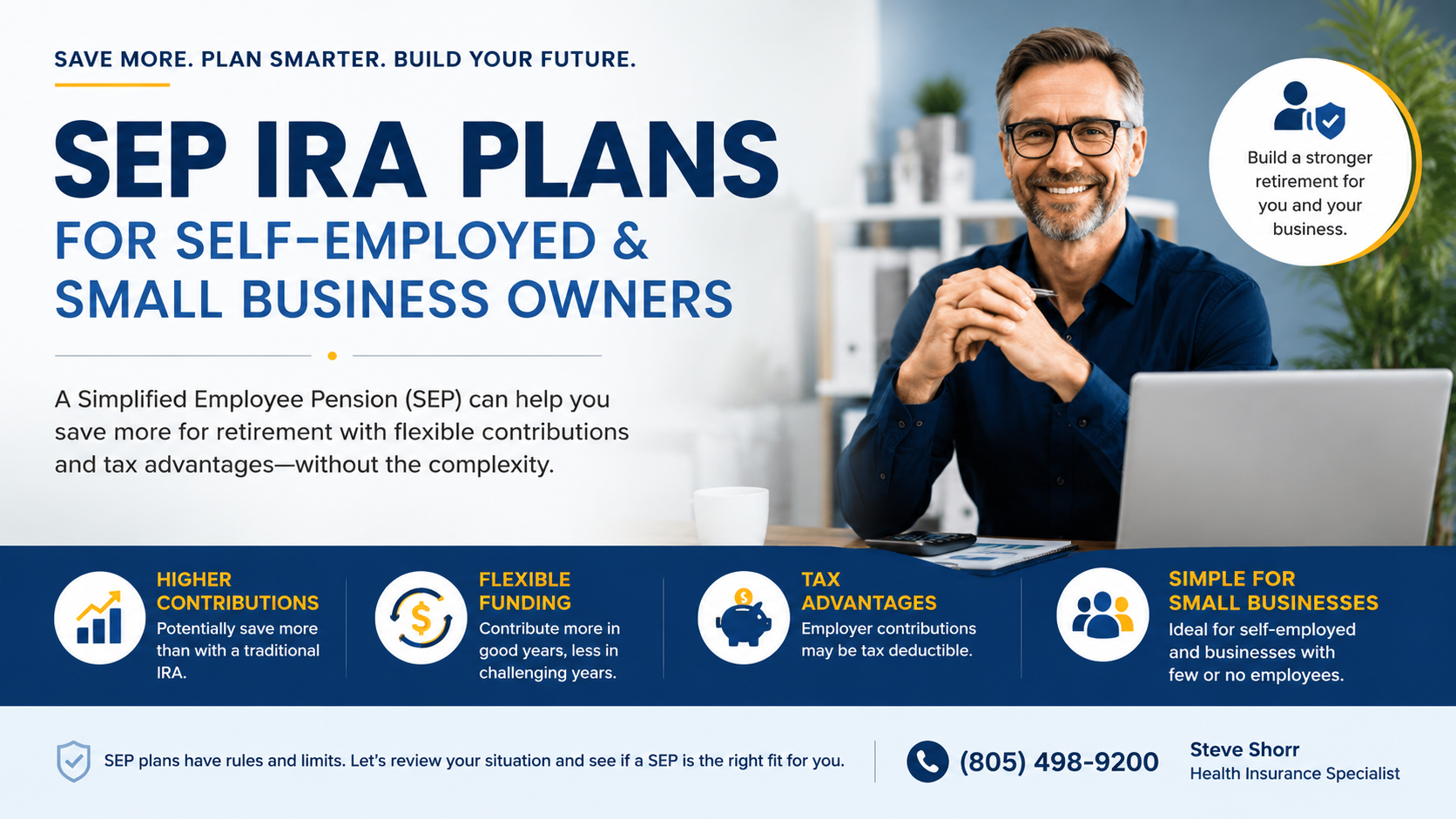
A SEP IRA can be a practical retirement plan for self-employed people, independent contractors, and small business owners who want higher contribution limits without the complexity of a full 401(k) plan. It is often attractive when the owner wants flexibility: some years you may contribute more, some years less, and some years nothing, depending on cash flow and tax planning.
Quick answer: A SEP is funded by the employer, not by employee salary deferrals. For many owner-only or very small businesses, it can be one of the simplest ways to shelter more money for retirement than a regular IRA.
How much can be contributed? IRS rules generally allow SEP contributions up to 25% of compensation. For 2026, the maximum contribution is the lesser of 25% of compensation or $72,000. Self-employed people have a special calculation because the contribution is based on net earnings after certain adjustments, so the “25%” headline usually works out differently on Schedule C income.
Who is a SEP best for? A SEP may fit a sole proprietor, consultant, independent contractor, corporation owner, or small business with few or no employees. It may be especially useful when income varies from year to year and you want a retirement plan that does not require annual funding.
Where SEP plans can surprise business owners: If you have eligible employees, you generally cannot just contribute for yourself and skip them. Contributions usually must be made on a comparable percentage basis for eligible employees. That is why SEP plans are often easiest for owner-only businesses, husband-and-wife businesses, or very small firms where the employer understands the employee cost.
SEP IRA vs. SIMPLE IRA vs. Solo 401(k)
SEP IRA: Often simplest. Employer contributions only. Good for flexibility and higher potential contributions.
SIMPLE IRA: May work better when employees want payroll salary deferrals and the employer is comfortable making required matching or nonelective contributions.
Solo 401(k): May allow larger contributions for some owner-only businesses because it can combine employee deferrals with employer contributions, but it usually involves more administration than a SEP.
Planning point: The “best” plan is not just the one with the largest advertised contribution limit. The right choice depends on your business income, age, employees, tax bracket, cash flow, and whether you want simple administration or maximum retirement sheltering.
Questions This Page Answers
Can a self-employed person set up a SEP? Yes. SEP plans are commonly used by sole proprietors, independent contractors, and small business owners.
Do employees contribute to a SEP? Generally no. SEP contributions are employer contributions. Employees own their SEP IRA accounts, but the employer funds the plan.
Do I have to contribute every year? No. One of the attractions of a SEP is contribution flexibility.
Can I use a SEP if I already have another retirement plan? Sometimes yes, but the limits and coordination rules can get technical. This is where your tax preparer, plan custodian, or financial advisor should be involved.
Is this tax advice? No. This page is general education. Your CPA or tax advisor should confirm the deductible contribution and filing deadlines for your situation.
Email Steve for more information and help setting up a plan. [email protected]
Have questions about health insurance, Medicare, or small business benefit planning?
Steve Shorr has been helping Californians with insurance decisions for decades. SEP planning is usually coordinated with your tax advisor, but your health insurance, Medicare, and small business benefit choices often connect with the same overall planning picture.
Official reference: For current SEP contribution limits and IRS rules, see the IRS SEP retirement plan pages and IRS Publication 560. Contribution limits change over time, so verify the current year before making a contribution.


Introduction
Simplified Employee Pension (SEP)
A simplified employee pension (SEP) retirement plan, is a written plan that allows you to make contributions toward your own (if you are self-employed) and your employees’ retirement without getting involved in a more complex qualified plan.
Under a SEP, you make the contributions to a traditional personal retirement arrangement (called a SEP-IRA) set up by or for each eligible employee. SEP-IRAs are owned and controlled by the employee, and you make contributions to the financial institution – Insurance Company where your SEP-IRA growing in value.
SEP-IRAs are set up for, at a minimum, each eligible employee (defined later). A SEP-IRA may have to be set up for a leased employee (defined earlier under Definitions You Need To Know), but does not need to be set up for non eligible excludable employees (defined later).
Will you have #enough for retirement?
Click on image to enlarge
Source = Money.com
Retirement #Calculators
- 360 Degrees of Financial Literacy
- American Institute of Certified Public Accountants - 401(k) plans
- American Institute of Certified Public Accountants - Retirement Planning Basics
- Blueprint Income - Build A Personal Pension Calculator
- Choose-to-Save - Ball Park E$timate
- Financial Calculators: Retirement Savings
- ssa.gov/estimator
- Estimate Your Life Expectancy
- Other Benefit Calculators
- When to Start Receiving Retirement Benefits #10147 SSA.Gov
- Other Things To Consider
- Retirement Toolkit DOL
- my Social Security account
- fairly geeky, there are good spreadsheets at www.analyze now/ but they are not easy
- Forbes 5 calculators
- Smart Asset.com Social Security Calculator
#Pension & Annuity Income
Publication 575 pdf * HTML
- VIDEO Basic taxation of annuities BROKER ONLY
- About 1099-R
- Required Minimum Distributions FAQ’s IRS.Gov
- Lifetime Income – Annuity Calculator
- Get your annuity from [email protected] just use the tool to get an instant idea of what the market is.
Business #Retirement Plans # 3998 Rev 11/2023
- What you should know about your retirement plan dol.gov pdf
- Choosing a Retirement Solution for Your Small Business dol.gov
- Taking the Mystery Out of Retirement Planning dol.gov
- Top 10 Ways to Prepare for Retirement dol.gov
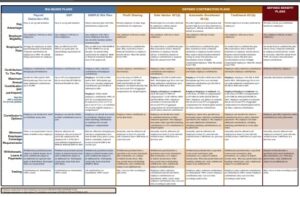
- Side by Side Chart of various retirement plans

- Retirement Plans for Small Biz
- irs.gov/retirement-plans/types-of-retirement-plans
IRS Publication 560- Profit Sharing Plans for Small Biz Publication # 4806 Irs.gov pdf Website DOL.gov
- Profit-Sharing Plans Defined Benefit Plans
- Money Purchase Plans
- Employee Stock Ownership Plans (ESOPs)
- Governmental Plans 457 Plans
- Help with Choosing a Retirement Plan
- What you should know about your Retirement Plan DOL.Gov
401 K Plans for Small Business – IRS # 4222
- Retirement Toolkit dol pdf

- Retirement Plans that don’t have tax benefits – you can pick and choose who gets in!


- Lots of Benefits when you participate or set up an employee retirement plan Publication # 4118
- irs.gov/retirement-plans
- saving matters.dol.gov
- dol.gov/choosing-a-plan
- irs.gov/retirement-plans-for-small-entities-and-self-employed
- dol.gov/ask-a-question
- Small Business Retirement Savings Advisor DOL.gov
- QDROs The Division of Retirement Benefits Through Qualified Domestic Relations Orders Dol.gov pdf
- Get a Retirement Plan Proposal
- Department of Labor, Social Security & Medicare – Retirement Toolkit 9 pages
- BROKER ONLY iamsinc.com
- Our Web pages on:
Related Pages in Pension and Retirement