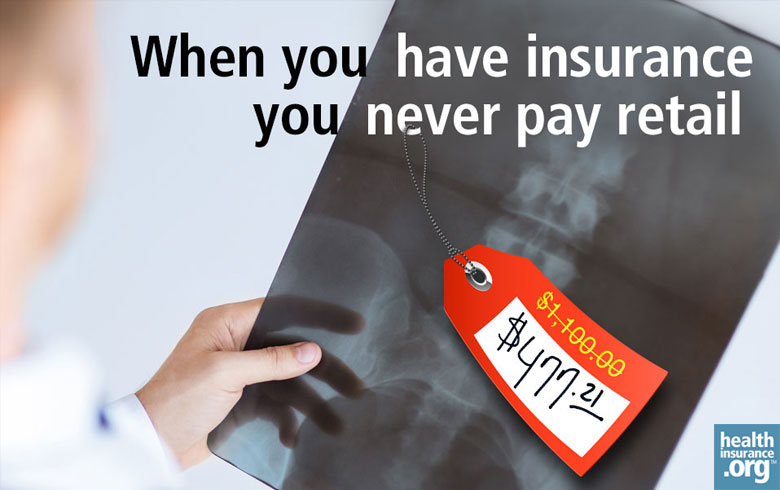
Surprise Medical Bills, Balance Billing & Negotiated Rates in California
Received a Surprise Medical Bill?
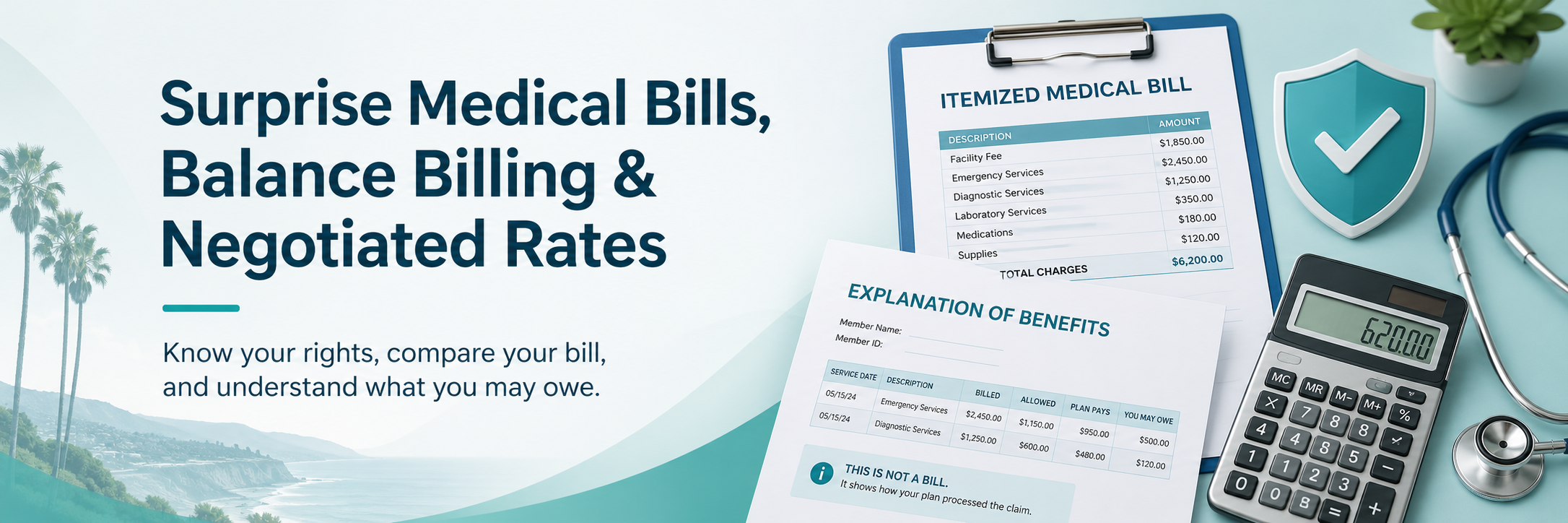
Do not assume that the entire amount is correct simply because a bill arrived. First compare the provider’s bill with your insurance company’s Explanation of Benefits (EOB). The EOB is not a bill. It shows how the claim was processed, the amount allowed by the plan, what the plan paid and the amount the plan believes you may owe.
- Check the patient responsibility amount. The amount on the provider’s bill should normally agree with the patient responsibility shown on the EOB.
- Ask for an itemized bill. Request the dates, services, quantities and billing codes included in the total.
- Call the insurance company. Ask whether the provider and facility were in-network, whether the claim was processed correctly and whether any part of the bill may be prohibited balance billing.
- Call the provider’s billing department. Explain that the amount is disputed and ask them to place the disputed balance on hold while the insurance company reviews it.
- Keep copies. Save the bill, EOB, insurance card, letters, emails, reference numbers and the names and dates of everyone you speak with.
If the insurance company or provider does not correct the problem, you may need to file a written appeal or grievance. Do not wait until the bill has been sent to collections before asking for help.
What Are Negotiated Rates and Balance Billing?
An in-network provider has an agreement with your insurance company or health plan. That agreement normally establishes a negotiated or contracted rate for covered services. The provider generally agrees to accept the contracted amount, together with your valid deductible, copayment or coinsurance, as payment in full.
Balance billing occurs when a provider attempts to collect the difference between the provider’s full charge and the amount recognized or paid by the insurance plan. Balance billing may be prohibited when the provider is in-network or when California or federal surprise-billing protections apply.
Example: A provider charges $1,000. The insurance company’s negotiated rate is $400. The plan pays $300 and the EOB says that you owe $100. For a covered in-network service, you would generally owe the $100 shown on the EOB—not the remaining $600 that was removed by the provider discount.
Different rules may apply when a service is excluded, was not properly authorized, was received outside the network or is not protected by surprise-billing law. Your own Evidence of Coverage explains your plan’s rules for covered services, networks, prior authorization and member cost sharing.
Your deductible, copayments and coinsurance for covered in-network care generally count toward your plan’s out-of-pocket maximum. Amounts you pay for excluded services or ordinary out-of-network balance bills may not count.
California Surprise Medical Bill Protections
California’s surprise medical bill protections generally limit what a consumer must pay when the consumer receives nonemergency services at an in-network facility but unknowingly receives care from an out-of-network physician or other professional.
When California’s protection applies, the consumer is generally responsible only for the deductible, copayment or coinsurance that would have applied if the professional had been in-network. The out-of-network professional and the insurance company must resolve their payment disagreement without transferring the disputed balance to the patient.
- The facility must be in your plan’s network.
- The service must be covered by your plan.
- The out-of-network professional generally must have been someone you did not knowingly choose.
- Your required cost sharing should generally be treated as in-network cost sharing.
California has also adopted separate ground ambulance balance-billing protections for many state-regulated health plan members. The precise protection and complaint agency depend on the type of health plan you have.
California law does not mean that every out-of-network service must be covered. Different rules can apply to self-funded employer plans, Medicare, Medi-Cal, services received at an out-of-network facility and services that are not covered under your policy. Review your EOB and file an appeal or grievance if the plan processed protected care as ordinary out-of-network care.
Federal No Surprises Act Protections
The federal No Surprises Act took effect January 1, 2022. It protects people enrolled in most individual and employer health plans from many unexpected out-of-network medical bills.
The federal protections generally apply to:
- Most emergency services, even when the emergency facility or treating provider is outside your plan’s network.
- Certain nonemergency services provided by an out-of-network professional during a visit to an in-network hospital, hospital outpatient department, critical access hospital or ambulatory surgical center.
- Covered air ambulance services provided by an out-of-network air ambulance company.
When the law applies, your cost sharing generally cannot be higher than the in-network amount. The provider and insurance plan must resolve their disagreement over the remaining payment without balance billing you.
Federal protections generally do not apply to ordinary nonemergency treatment received at an out-of-network facility or to ground ambulance services. California law may provide additional ground ambulance protection for some California plans.
In limited nonemergency situations, an out-of-network provider may give you a notice asking you to consent to out-of-network treatment and waive federal protections. Do not sign a waiver unless you understand which provider is out-of-network, why that provider is being used and approximately how much you may owe.
People who are uninsured or who choose not to use insurance can generally request a written Good Faith Estimate. A federal patient-provider dispute process may be available when a bill from a provider or facility is at least $400 above that provider’s estimate.
Negotiated Rates, Itemized Bills and Your EOB
A negotiated rate, sometimes called a contracted or allowed rate, is the amount an insurance company and an in-network provider have agreed to recognize for a covered service. It is frequently much lower than the provider’s original billed charge.
Your Explanation of Benefits may show:
- The amount originally billed by the provider.
- The network discount or adjustment.
- The allowed or negotiated amount.
- The amount paid by the insurance plan.
- The deductible, copayment or coinsurance assigned to you.
- Any service that was denied or excluded.
An EOB is not a bill. Compare it with the provider’s itemized medical bill. Check for duplicate charges, services you did not receive, incorrect dates, incorrect quantities and a patient-responsibility amount that does not match the EOB.
If the claim was denied, read the explanation or denial code on the EOB. A denial does not always mean that the service is permanently excluded. The provider may have used an incorrect billing code, omitted information or failed to obtain required authorization. Ask whether the provider can correct and resubmit the claim before you pay the full amount.
Your own Evidence of Coverage controls the detailed rules for covered services, exclusions, prior authorization, networks and cost sharing. It is more useful for your personal dispute than a general description of how another insurance policy works.
Where to File a Complaint
Start by filing a written appeal or grievance with your insurance company. Explain what happened, identify the claim and dates of service, state why you believe the amount is incorrect and include copies of your bill and EOB.
If the problem is not resolved, the correct government agency depends on who regulates your plan:
- California Department of Managed Health Care: Many California HMO and managed-care plans are regulated by the DMHC Help Center. DMHC generally asks consumers to file a grievance with their health plan before filing a state complaint.
- California Department of Insurance: Many PPO insurance policies are regulated by the California Department of Insurance.
- Federal No Surprises Act: You may submit a complaint to the No Surprises Help Desk or call 1-800-985-3059.
Include as many supporting documents as possible, including the medical bill, EOB, insurance card, your written appeal, the plan’s response, relevant pages from your Evidence of Coverage and any notice or consent form you were asked to sign.
If the account has already been sent to a collection agency, review our information about medical debt, debt collection and forgiven medical bills. Continue disputing an incorrect bill in writing and keep copies of everything you send.
Not sure who regulates your plan? Email Steve Shorr with the name of the insurance company, the type of plan and a brief description of the issue. Do not email your Social Security number or detailed confidential medical records.
Medical Price Estimates and Transparency Tools
Before scheduling nonemergency care, use your insurance company’s online price-comparison or cost-estimator tool. Most health plans must make personalized cost-sharing estimates available for covered services.
Ask the doctor or facility for the billing code, commonly called a CPT or HCPCS code, that they expect to use. Then ask your insurance company:
- Is the doctor in-network for my exact plan?
- Is the hospital, laboratory, imaging center or surgery center in-network?
- Will there be a separate facility fee?
- Could I receive separate bills from an anesthesiologist, radiologist, pathologist, assistant surgeon or laboratory?
- Is prior authorization required?
- What amount should apply to my deductible and other cost sharing?
Always confirm the provider network directly with both the provider and the insurance company. A doctor may participate in one plan offered by an insurance company but not another plan offered by the same company.
Federal Hospital Price Transparency rules require hospitals to post standard-charge information and provide consumer-friendly pricing information for shoppable services. Health plans must also publish large machine-readable pricing files. These technical files are primarily useful to researchers and software developers; your insurer’s personalized estimator is usually more practical.
Prices shown online are estimates rather than guarantees. The final amount can change when a different service or billing code is used, complications occur, additional professionals become involved or your deductible changes before the claim is processed.
If you are uninsured or will not submit the claim to insurance, request a written Good Faith Estimate from each provider and facility expected to participate in your care.
2026 Update: Provider–Insurer Arbitration
The Federal Independent Dispute Resolution process, often called IDR or arbitration, is used when an out-of-network provider and a health plan cannot agree on the amount the provider should be paid for a claim protected by the No Surprises Act.
This is generally a dispute between the provider or facility and the insurance plan. It is not supposed to become a bill for the protected balance sent to the patient. The consumer may still owe the legitimate in-network deductible, copayment or coinsurance shown by the plan.
In May 2026, federal agencies issued a final rule updating the IDR process. The changes are intended to improve communications, clarify deadlines, address the grouping or batching of related claims and reduce the number of disputes that are found to be ineligible after entering the system.
For disputes initiated on or after June 11, 2026, the federal administrative fee was reduced from $115 to $15 for each party. CMS reported that the IDR system had received more than five million disputes since it began operating in April 2022.
The large number of disputes may affect administrative costs and negotiations between providers and insurers, but it does not eliminate the patient protections established by the No Surprises Act. Consumers should continue to review the EOB and challenge any attempt to collect more than the protected cost-sharing amount.
For additional industry discussion, see the Modern Healthcare report on No Surprises Act billing disputes.


Quotit - #Find Provider - ALL Companies

Get Quotes:
How to see MD list when using our quote engine
- Which plan is right for you?
- Covered CA Provider VIDEO - How to use it Steve's video
- Can’t Find A Doctor? Look at Low Star Rated Docs InsureMeKevin.com
Negotiated Fees
The #Negotiated Fee – Rate is the amount of payment that an Insurance Company has negotiated with the Participating Provider as the maximum they can charge both the Insurance Company and YOU! hioscar.com/negotiated-rate * Page 42 Blue Cross EOC & 167 More explanation calhealth.net
So, NO a doctor on the Insurance Companies Participating Provider list, can NOT make you pay the difference! That’s why it’s important to double check with the doctor and the LIST!
Excerpt from Blue Shield Explanation
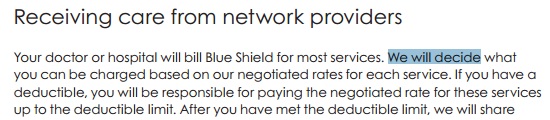
It’s the secret number the insurance company and the provider have worked into their contract. The industry often calls that number the “adjusted rate” or the “negotiated rate.” NPR.org
View an actual Specimen Policy Explanation EOC Evidence of Coverage – Page 42 Blue Cross EOC & 167 More explanation calhealth.net–
Some insurers pay their own physician groups more than outside groupts Stat News *
How do I know that the amount I’m being billed
is the correct amount?
Once your insurance carrier pays their portion of the bill, they will send you an explanation of benefits (EOB) to show how the claim was paid. You can compare your EOB to the statement sent by the hospital. How the carrier paid the claim is based on their contract with us and their contract with you. If you feel the insurance company should have paid a higher amount, please contact them directly for resolution. Scripts.org Patient Billing FAQ’s
Todd Friedman, Esq. can help if debt collectors are harassing you when you don’t owe the $$$
Why insurers are paying double for the same procedure in the same hospital
#Out of Network Problems
Updating Online Provider Lists
- Health plans must update their printed directories at least every quarter and their online directories at least every week if providers report changes.
- Provider directories must be posted online and be available to anyone, not just enrollees. Print directories must be available upon request.
- The directories must “prominently” display directions for consumers who want to report inaccuracies. Upon receiving complaints, plans have 30 business days to makes changes, if necessary.
- Providers must inform plans within five business days if they are no longer accepting new patients — or, alternately, if they will start accepting them.
- Health plans can delay payments to providers who fail to respond to attempts to verify information.
- The law also gives consumers recourse. Let’s say you use a provider directory to find a doctor but you’re billed the out-of-network price because the directory was wrong. In that case, health plans must reimburse you the amount beyond what you would have paid to see an in-network doctor. SB 137 Insurance Code §10133.15 Effective 7.1.2016* CA Health Line 8.26.2016
- Insure Me Kevin.com on MD’s using bait and switch to mess with the networks 6.18.2016
- Bay Area – Blue Cross – virtually no providers – Insure Me Kevin.com 8.25.2016
- Out of Network Provider
- The use of health care providers who have not contracted with the health plan to provide services. HMO members are generally not covered for out-of-network services except in emergency situations. Members enrolled in preferred provider organizations (PPO) and point-of-service (POS) coverage’s can go out-of-network, but will pay some additional costs. Learn More ==> Specimen Policy Definition page 168
-
…Then in October, they were told Dignity Health was out of network.
“What we were faced initially when the problem came to our mailbox, even though it had been going on for probably five months prior to us being made aware, we were faced with about $100,000 of medical bills,” Read more *
-
Does the negotiated rate apply to #prescriptions Rx too?
That is, if I have Blue Shield Bronze Plan with no Rx coverage till the $7k OOP Out of Pocket Maximum has been met, do I get the lower negotiated – contracted rates?
- Yes, see excerpts from Blue Shield Bronze PPO EOC below
- Blue Shield Participating Providers include primary care Physicians, specialists, Hospitals, and Alternate Care Services Providers that have a contractual relationship with Blue Shield to provide services to Members of this Plan. Participating Providers are listed in the Participating Provider directory.
- Participating Providers agree to accept Blue Shield’s payment, plus the Member’s payment of any applicable Deductibles, Copayments, and Coinsurance or amounts in excess of specified Benefit maximums as payment-in-full for Covered Services, except… Page 2 of EOC
- Blue Shield negotiates contracted rates with Participating Pharmacies for Drug. If the Member’s Plan has a Calendar Year Pharmacy Deductible, the Member is responsible for paying the contracted rate for Drugs until the Calendar Year Pharmacy Deductible is met.
- The Member must pay the applicable Copayment or Coinsurance for each prescription when the Member obtains it from a Participating Pharmacy. When the Participating Pharmacy’s contracted rate is less than the Member’s Copayment or Coinsurance, the Member only pays the contracted rate. Page 25 of EOC
- Learn More===> EOC explains all about Rx benefits
- Here’s how Medicare under Part D handles it. I grant you, that I don’t understand what CMS is saying here…
- Part D Definitions 42 CFR 423.100
- The Blue Cross Specimen Policy explains Rx coverage starting on page 120.
- SHRM Article
- Insure Me Kevin.com on Bronze Deductible….
- Shop & Compare Tools Part D Rx
- Part D Rx Low Income Subsidy – LIS – Extra Help
- Prescriptions Drugs – Rx – Including under 65 ACA
Miscellaneous
- Yes, see excerpts from Blue Shield Bronze PPO EOC below
What’s on this page?
Hospitals will be required to #post online their standard charges!
- Transparency rules have been around for a while. Cal Broker 8.7.2018 * The Hill * CMS is looking for a contractor to create a price comparison tool. Modern Health Care 8.28.2018 LA Times 6.10.2016
- the top 10 hidden facts about hospital prices that answer questions about why it is so expensive and why the bills are so complicated Read More Med City News.com *
- Health insurance prices for care are now out there, but finding them is an ordeal
- Study finds hospitals are still not posting prices 1/2023
- Health Insurance Price Data: It’s Out There, but It’s Not for the Faint of Heart
- New price transparency regulations for hospitals, insurers empower patients
- More Consumers Find Transparency Tools Accessible, Useful in 2022
- Few hospitals are posting the prices of their common procedures online, despite a federal law that went into effect more than a year ago
- Many hospitals are required to provide an itemized bill upon request
- Pre-service cost estimates: A tale of two patient journeys
- Where consumers look for health care pricing information, charted
- cms.gov/health plan-price-transparency/consumers
Trump Executive Order
Trump Executive order directs federal agencies to issue guidance that would:
- Require hospitals to disclose information about negotiated rates in a format that’s understandable and usable by patients and consumers.
- Require insurance companies to provide patients with information about the cost of their care, including out-of-pocket costs before they receive services.
- Develop a comprehensive roadmap for consistent, limited, and consumer-centric quality metrics.
- Expand the availability and use of HSAs to cover direct primary care arrangements and healthcare sharing ministries. It also seeks to include more preventive services that can be covered in the deductible period.
- Rules issued – Modern Health Care 11.15.2019 * HHS.gov *
- cms.gov/hospital-outpatient-prospective-payment-system-opps-policy-changes-hospital-price
- cms.gov/newsroom/fact-sheets/transparency-coverage-proposed-rule-cms-9915-p
- The final rule (CMS-1717-F2)
- The proposed rule (CMS‑9915‑P)
Healthcare Payments Database,
Some argue that negotiated prices are proprietary — that is, legally protected trade secrets — and that their disclosure could foster collusion between providers. Other observers maintain that disclosure could help policymakers understand what is driving cost increases and how best to target efforts to make care more affordable.
The Secret of Health Care Prices: Why Transparency Is in the Public Interest, analyzes, for the first time, the legal and economic implications of collecting and releasing this data, including a review of trade secret statutes and case law regarding the protection of negotiated prices as trade secrets and data dissemination practices from the 18 states with mandatory APCD collection programs.
Accompanying the report, a blog post examines recent developments in price transparency policy, the arguments for and against the release of proprietary price information, and steps California could take to help ensure its new database is a success
hospitals have asked the courts to through the rule out! Modern Health Care 5.7.2020 * New York Times 12.4.2019 *
Links & Resources
- californiahealthline.org/dont-try-it-at-home/
- LA Times itemized bill should be the norm.
- Health Affairs.org 1.19.2021
- Heath Care Dive.com 12.8.2020
- Denver Channel.com
- latimes.com/white-house-seeks-healthcare-price-disclosure
- California health foundation on why we need Price transparency
- npr.org/trump-teams-bid-to-make-hospital-costs-more-transparent-is-data-heavy
- chcf.org/whats-behind-hospital-prices (looking glass)
- Health plans can do more to improve price transparency for consumers, survey finds
Resources to find out the costs of Medical Services
- 1/2/2025 Update on transparency rules QZ.com
- Charge Master – Coding – Optum 360 – Hospitals must post this starting 1.1.2019 *
- Leaked SoCal hospital records reveal huge, automated markups for healthcare Los Angeles Times 12.10.2021
- fair health consumer.org/
- health care blue book.com
- transplant.org – costs per transplant
- Kaiser Family Foundation – Tons of Information
- fair health consumer.org
- health care blue book.com
- dhs.lacounty.gov/hospital-price-transparency/
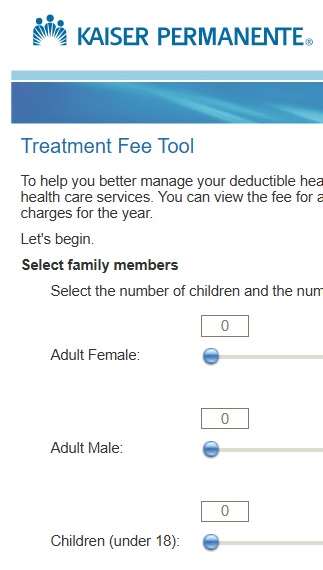
Kaiser Treatment Cost #Estimator Tool
requires sign in kp.org
The tool is for all Kaiser Members that are enrolled on Deductible or Health Savings Account Plans. The cost estimates are for services that are marked “after deductible” to give members an idea of the cost of those services.
- Kaiser Northern CA Sample fee list kp.org
- Southern CA 2024 list kp.org

- How do I know what level of service I will get billed for?
- Northern CA Treatment Fee Tool Kp.org
- Cost Helper.com what people are paying for health services
- If you have questions about the tool, send an email to [email protected]

Mandated Posting of Negotiated Rates
#Transparency-in-coverage regulation
- Here’s the negotiated rate machine readable webpages for the following Insurance Companies:
- Cal Choice
- Anthem Blue Cross
- Blue Shield
- CIGNA
- Centene – Health Net
- Kaiser
- Sharp Health Plan
- Sutter Health
- UnitedHealthcare
- Western Health
- FAQ’s from the United States Departments of Labor, Health and Human Services, and Treasury.
- Most health insurers have released their rates. Now, experts detail what they are doing with the data
- mercer.com/2022-aca-cost-sharing
- kff.org/surprise-medical-bills-2022/
- UHC FAQ’s
- Transparency in Coverage Final Rule Fact Sheet (CMS-9915-F)
- cms.gov/health plan-price-transparency
#Balance Billing
- Balance Billing is when an insurance plan covers less than what a doctor, hospital, or lab service wants to be paid. The health-care provider demands, bills the balance from the patient. Uncertain and fearing the calls of a debt collector, the patient pays up. Business Week 8.27.2008 is NOT allowed in CA for Emergency Care, even if out of network. See our provider finder
The No #Surprises in Medical Bills Act
- No Surprises Act cut patients’ out-of-pocket costs by about $600 a year Medical Economics.com 8/27/2025 *
- No Surprises dispute resolution is creating billions of dollars in extra costs, could raise premiums: analysis
- Providers are turning to the law’s arbitration process in droves to settle out-of-network claims, one factor fueling spending that could cost consumers down the line. Health Care Dive *
- The no surprises act holds consumers harmless from the cost of unanticipated out-of-network medical bills. Surprise bills arise in in emergencies – when patients typically have little or no say in where they receive care. They also arise in non-emergencies when patients at in-network hospitals or other facilities receive care from ancillary providers (such as anesthesiologists) who are not in-network and whom the patient did not choose.
- No Surprises ACT – CMS bans surprise billing! Modern Health Care * 400 page Rule CMS 9909 * HHS.Gov * CMS.Gov * CMS Requirements * Modern Health Care – Ending Surprise Billing won’t solve Medical Debt problem * Providers flexing debt collection muscles * Feds had been looking into CA’s legislation to craft something on a National Level Modern Health Care 8.30.2019 *
- Surprise-Billing Law Loophole: When ‘Out of Network’ Doesn’t Quite Mean Out of Network
- Justice for ER patients ‘ambushed’ by bills
- A Mom Owed Nearly $102,000 for Hospital Care. Her State Attorney General Said to Pay Up
- CMS closes thousands of No Surprises Act complaints, directs $4M in relief
- New No Surprises Act Guidance Builds On Recent Final Rule
- First Colonoscopy Cost $0. Second Cost $2,185. Why? KHN.org
- His-and-Hers Cataract Surgeries, But His Bill Was 20 Times as Much
- The $18,000 Breast Biopsy: When Having Insurance Costs You a Bundle
- 20% of adults say they’ve received a surprise medical bill despite ban
- Providers are calling for more time to implement estimate requirement in surprise bill rule
- Most U.S. hospitals not sharing price information for joint replacement as required
- 51% OF HOSPITALS STILL NOT ADHERING TO PRICE TRANSPARENCY LAWS
- cms.gov/fact-sheets/surprise-billing
- HHS Announces Rule to Protect Consumers from Surprise Medical Bills
- Federal Agencies Release Interim Final Rule to Implement the No Surprises Act
- LA Times explanation of no surprises act 1.18.2022
- Our webpage on Medical Debt, Bankruptcy & Consumer Guide to Medical Debt
- Providence.org – Difference between Urgent and Emergency Care
- Editorial – East Bay Times 6.23.2016
- dana-farber.org/right to good faith estimate of costs
- stanford health care.org/no-surprises-act * VIDEO *
Citations
- 1986 Emergency Medical Treatment and Active Labor Act (EMTALA) CMS.gov (Definition Emergency 2014 Evidence of Coverage Page 80) requires any hospital participating in Medicare (which nearly all do) to provide emergency care to anyone who needs it, the government often indirectly bore the cost of those without the ability to pay.[51][52][53] Wikipedia
- ACA – still problems with balance billing for out of network providers (CA HealthLine 2.18.2015)
- Kaiser Foundation on Balance Billing
- law.uh.edu
- PROSPECT MEDICAL GROUP INC v. NORTHRIDGE EMERGENCY MEDICAL GROUP
- Health & Safety Code 1371.4.
- latimes.com/surprise-medical-bills
- Anthem in some states is not paying for an ER visit if you could’ve gone to urgent care
- Federal Register
Doctors at Hospital #must take hospital negotiated rate
- AB 72, Bonta. on State Website
- Emily Bazar CA Healthline 6.26.2017 Plain Language Explanation
- Pending Legislation to block surprise medical bills 89.3 KPCC 6.20.2016 AB 72
Blue Shield – Announcement
California Assembly Bill (AB) 72 Out-Of-Network Coverage and Member Cost-Sharing
New California law Effective July 1, 2017, this new state law protects individuals from receiving unexpected “surprise or balance” medical bills from an out-of-network (OON) doctor when receiving inpatient and outpatient non-emergency care and services at an in-network healthcare facility such as a hospital, clinic, lab, imaging center or other healthcare facility.
Changes to out-of-network coverage and cost-sharing When individuals go to an in-network facility for care but receive services from an out-of-network doctor or healthcare provider, they only have to pay their in-network cost-sharing amount that counts toward the annual deductible and annual out-of-pocket maximum limits according to their health plan. An out-of-network doctor should only bill individuals after both parties have received a copy of the Explanation of Benefits (EOB) that reflects the correct in-network cost-sharing amount owed for the care received. If for any reason the out-of-network doctor or healthcare provider receives payment that is more than the cost share allowed, the out-of-network doctor must refund the overpayment within 30 days. Below is a list of affected Blue Shield health plans
More explanation from Blue Shield in a private email 8.14.2017
ALL hospitalizations require pre-auth unless they are an emergency. In this pre-auth process, the provider(s) and the Plan are coordinating and acknowledging in-network. This process prohibits people from using out of network providers for procedures ~ If while in the hospital, a person requires additional care that was outside the original scope of the intent, they cannot be charged as out of network. I used anesthesiologist’s as an example in the meeting as it is that issue that we have all been dealing with for years and years.
Members will receive an endorsement letter.
#Advocates Guide to Surprise Medical Bills
- Hidden Cost of Surprise Medical Bills 3.3.2016 Time Magazine
- heart bypass surgery, replacement of one valve and repair of another. raging infection that required powerful IV antibiotics to treat. spent a month in the hospital, some of it in intensive care, before she was discharged home.
- surprise: Bills totaling more than $454,000 for the medical miracle that saved her life. Of that stunning amount, officials said, she owed nearly $227,000 after her health insurance paid its part. Time.com 3.21.2019 *
- heart bypass surgery, replacement of one valve and repair of another. raging infection that required powerful IV antibiotics to treat. spent a month in the hospital, some of it in intensive care, before she was discharged home.
- Newscast about Hospitals being required to post rates - charges VIDEO
- PBS Trump Price Transparency Executive Order VIDEO
- Our webpage on Balance Billing & No Surprises
- Americans often "forced" to pay medical bills they don't owe, feds say CBS News
- Colorado's Supreme Court has ruled in favor of a woman who expected to pay about $1,300 for spinal fusion surgery but was billed more than $300,000 by a suburban Denver hospital that allegedly included charges it never disclosed she might be liable for. Read more: CBS News 5.19.2022
- What the Federal ‘No Surprises Act’ Means in California
- CA Department of Insurance Summary
Specimen Individual Policy #EOC with Definitions
Employer Group Sample Policy
It's often so much easier and simpler to just read your Evidence of Coverage EOC-policy, then look all over for the codes, laws, regulations etc! Plus, EOC's are mandated to be written in PLAIN ENGLISH!
- Find your own Individual EOC Evidence of Coverage
- It' important to use YOUR EOC not just stuff in general!
- Obligation to READ your EOC
- Plain Meaning Rule - Plain Writing Act
- Our Webpage on Evidence of Coverage
- OOP Out of Pocket Maximum - Many definitions are explained there.
After contacting my providers, it isn’t going to make much difference to them what I am on – Grandfathered or ACA Obamacare, because, unbelievably to me, my present Grandfathered costly plan reimburses them less than Medicare does!
This is a complete reversal of the 90s when my husband’s health insurance switched from private individual market to Medicare. After the switchover to Medicare, I had to fight for his treatment and doctors saw him as a one payment body in a bed. You wouldn’t believe how bad it was, all due to the difference in insurance..
Now I am hearing just the opposite — Medicare has less restrictions on authorizations and better reimbursement than private health insurance! Unfortunately for us seniors the anticipated cuts to Medicare due to the newly passed tax bill could put us right back to the 90s Medicare scenario.
Check our site map and visit our pages on Medicare