San Pedro Senior Housing vs. Rehab Debate
Facts, timelines, weekly updates, and care-payment resources — with source links
https://tinyurl.com/Fred-Brown-Weekly-Updates
25th & Western / Serenity Recovery Campus Weekly Update
Week of August 3, 2026
Summary
There were no new public approvals, funding awards, lawsuits, or major regulatory actions related to the proposed Serenity Recovery Campus at the former Little Sisters of the Poor property during the past week.
The most significant recent event remains the California Department of Health Care Services decision, announced on July 17, to rescind the $73.4 million grant that had been expected to finance most of the project. (Los Angeles Times)
What Happened This Week?
-
No new announcements were identified from Fred Brown Recovery Services regarding replacement financing or a revised development proposal.
-
No new city, county, or state actions affecting the proposed project were identified.
-
Community discussion continues, but the conversation has largely shifted from the project’s design to its financial viability following the loss of state funding.
Broader Context
Although it is not specific to the 25th & Western proposal, the broader policy environment continues to emphasize behavioral health treatment. Earlier this summer, the federal government announced additional funding initiatives supporting mental health, substance-use treatment, and homelessness programs. Those announcements do not restore the rescinded California grant or provide funding for this project, but they demonstrate continued governmental support for expanding treatment services nationally.
Analysis
The project now appears to be in a waiting period.
The major questions remain:
-
Will Fred Brown Recovery Services secure another funding source?
-
Will the property owner pursue another buyer or another use for the site?
-
Will senior housing remain part of the property’s future?
-
Will a revised proposal emerge?
Until one of those questions is answered publicly, there is little evidence of forward movement beyond ongoing community discussion.
Facebook Post
25th & Western / Former Little Sisters of the Poor Property Update
There were no major public developments this week regarding the proposed Serenity Recovery Campus.
The biggest recent development remains California’s decision to rescind the $73.4 million state grant that had been expected to fund much of the project.
Current questions include:
-
Can replacement financing be found?
-
What are the property’s long-term plans?
-
What will happen to the current senior residents?
-
Will a revised proposal emerge?
I’ve continued updating my website with timelines, news articles, source documents, and background information as new information becomes available.
Please post comments on the website rather than Facebook so the discussion stays connected to supporting documents and source material:
I encourage respectful, fact-based discussion supported by public records, official documents, and reliable news reporting.
Child Sub Pages


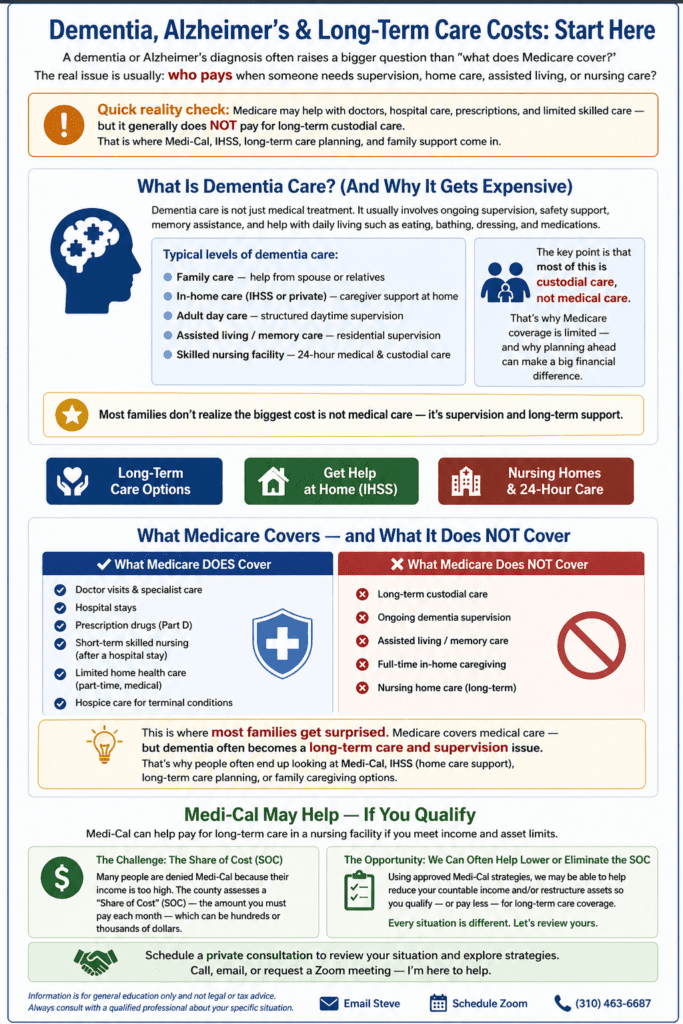
Ways to Pay for Senior Care, Long-Term Care, and Support Services
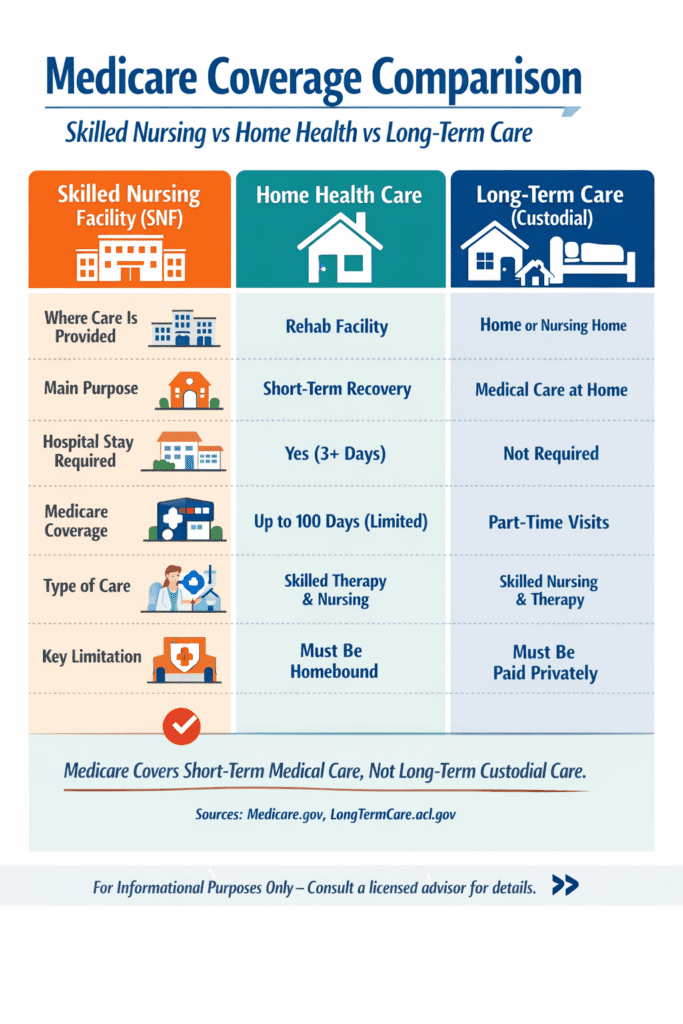
The senior housing debate is not only about zoning or neighborhood concerns. For many families, the real question is how care can actually be paid for. Below are related resources on Medicare, Medi-Cal, long-term care, home health, skilled nursing, IHSS, and senior housing support.
Start here:
- Medicare
- Senior Housing Support and Finding a Place
- Long Term Care Insurance
- Long-Term Care vs. Medicare
- Freedom Blue - Short Term In Home Care
- Retirement Accounts - Planning
- Medi-Cal Long-Term Care, Nursing Home, and Estate Recovery Planning
These pages do not solve every housing problem, but they can help families understand what Medicare covers, what it does not cover, when Medi-Cal may help, and when private or family resources are still needed.
Monday Update: Fred Brown / Serenity Recovery Campus
Monday, July 20, 2026
State Rescinds $73.4 Million Grant for Serenity Recovery Campus
The most significant development this week is that the California Department of Health Care Services has officially rescinded the entire $73,400,878.62 Bond Behavioral Health Continuum Infrastructure Program (BHCIP) Round 2 grant that had been conditionally awarded to Fred Brown’s Recovery Services, Inc. for the proposed Serenity Recovery Campus at 2100 S. Western Avenue, San Pedro. The rescission became effective July 15, 2026.
Why Did DHCS Rescind the Award?
According to DHCS, there were two principal reasons:
1. Matching funds did not satisfy grant requirements
The grant required FBRS to document an acceptable source of matching funds. DHCS determined that the original match relied on the property’s seller, 9 Gem Capital Group LLC, which is prohibited under the BHCIP funding rules. FBRS later submitted revised documentation naming The Ryzman Foundation as the funding source, but DHCS concluded that the revised arrangement still involved the same individual, Brian Dror, in both organizations and therefore continued to present significant legal and financial risks that failed to satisfy program requirements.
2. Appraisal deficiencies remained unresolved
DHCS also stated that the revised property appraisal did not adequately correct discrepancies previously identified by the Department. Although FBRS was given an opportunity to revise the appraisal, DHCS concluded that the remaining concerns had not been resolved.
No Administrative Appeal
Perhaps the most consequential language in the letter is DHCS’s statement that, under the BHCIP Round 2 Request for Applications, California law provides no protest or appeal process for these award decisions, and that all award decisions are final.
This means that this particular conditional award is no longer available through the existing BHCIP Round 2 process.
What This Means
The loss of a $73.4 million state grant represents a major setback for the Serenity Recovery Campus as it was proposed.
It is important, however, to distinguish between two separate questions:
-
The grant has been rescinded. That is now an established fact documented by DHCS.
-
Whether the project itself ultimately moves forward remains unknown. The project could potentially seek other financing sources, restructure the proposal, or pursue different opportunities, but there has been no official announcement confirming any alternative funding strategy.
Broader Community Questions
Regardless of where one stands on the project, several important public policy questions remain:
-
Where will individuals in the San Pedro area receive additional residential substance-use and behavioral health treatment if Serenity is delayed or does not proceed?
-
How will Los Angeles County and the State replace the treatment capacity that this project was expected to provide?
-
If the project included housing for seniors or vulnerable populations, what alternatives exist if the campus is not constructed?
-
Will another organization pursue a similar project at the site, or will the property be used for a different purpose?
These questions are likely to remain central as community leaders, health officials, and neighborhood residents assess the future of behavioral health services in the Harbor Area.
Bottom Line
The July 15 DHCS letter is the most significant development in the Serenity Recovery Campus project since the grant was originally announced. The rescission removes the project’s conditional $73.4 million state award because DHCS concluded that the matching-fund documentation and revised appraisal did not comply with BHCIP requirements, and the agency states that its decision is final under the applicable grant rules.
References
-
California Department of Health Care Services (DHCS). Notice to Rescind Bond Behavioral Health Continuum Infrastructure Program (BHCIP) Round 2: Unmet Needs Conditional Award Funding. Letter to Fred Brown’s Recovery Services, Inc., July 15, 2026. (Copy of official DHCS letter provided by the recipient.)
-
California Department of Health Care Services – Behavioral Health Continuum Infrastructure Program (BHCIP) – Official BHCIP program information, grant rounds, and resources. (DHCS)
-
DHCS BHCIP Data Dashboards – Official dashboards showing BHCIP and Bond BHCIP projects and award information. (DHCS)
-
DHCS Stakeholder News – March 15, 2026 (Bond BHCIP Round 2 Awards) – Announcement of the original Bond BHCIP Round 2 conditional awards. (DHCS)
25th & Western / Serenity Recovery Campus Weekly Update
Published: June 22, 2026 • 12:00 PM PDT
Summary of New Information
San Pedro Today Article Continues to Draw Attention
One of the most significant recent developments remains the May 28 San Pedro Today article, “Uncertain Days at Ocean View.” Rather than focusing on grants, zoning, or politics, the article focused on current Ocean View residents and their concerns regarding the future of the former Little Sisters of the Poor property.
The article documented resident experiences following the 2021 sale of the property and highlighted uncertainty regarding future ownership and operations. This coverage continues to be shared in local discussions because it presents the issue from the perspective of current senior residents rather than project advocates or opponents.
Community Discussion Remains Active
Discussion continues across neighborhood Facebook groups, homeowner networks, and community organizations.
The most frequently discussed topics include:
• Future use of the property
• Impact on existing residents
• Number of residential treatment beds proposed
• Outpatient treatment volume
• State funding and oversight
• Community compatibility concerns
No Major New Approval Announced
No major public announcement was identified this week indicating final approval, final denial, or cancellation of the proposed Serenity Recovery Campus project.
Public discussion continues to focus on the project’s future regulatory path and implementation timeline.
Project Documentation Continues to Expand
Project supporters and opponents continue publishing information, including:
• News articles
• Public statements
• Project descriptions
• Community commentary
• Historical information about the Little Sisters property
As a result, keeping a centralized document repository remains increasingly valuable.
Analysis
The public conversation appears to be evolving.
Earlier discussions focused primarily on:
• State funding awards
• Project size
• Addiction treatment services
• Community opposition
Recent coverage increasingly focuses on:
• Existing senior residents
• Property transition issues
• Resident displacement concerns
• Long-term neighborhood impacts
This shift may prove important because residents who previously had little interest in the project may become engaged when the discussion centers on people rather than facilities.
At present, there is still considerable confusion regarding project size, operational details, and future occupancy plans. The most reliable information continues to come from official documents, news reporting, and public records rather than social media commentary.
Broader Policy Environment
On June 18, 2026, the U.S. Department of Health and Human Services announced approximately $800 million in funding for programs addressing mental illness, substance use disorders, and homelessness. While the announcement was not specific to the proposed Serenity Recovery Campus at 25th & Western, it reflects continued federal support for expanding behavioral health and addiction treatment services nationwide. hhs.gov/ kennedy-announces-new-funding-mental-illness-addiction-homelessness
Key Documents and Information Hub
For source documents, timelines, news articles, public records, project history, and analysis, visit:
Please note that older links shared on social media may point to outdated URLs that can generate 404 errors.
25th & Western / Fred Brown Recovery Services Weekly Update
New Developments
1. ABC7 Coverage Expanded Public Attention
ABC7 Los Angeles aired a report on May 30 focusing on opposition to the proposed conversion of the former Little Sisters of the Poor property into a recovery campus. The report highlighted concerns raised by current residents and local community members regarding the future of the site. (ABC7 Los Angeles)
2. San Pedro Today Spotlighted Current Residents
A recent San Pedro Today article, “Uncertain Days at Ocean View,” focused on residents currently living at the facility and their concerns about future ownership and operations. The article shifted the discussion away from zoning and funding issues and toward the impact on seniors currently residing on the campus. This is significant because it introduces a human-interest angle that may influence public opinion. (Previously identified source.)
3. Project Information Website Remains Active
Fred Brown Recovery Services continues to maintain its Serenity Recovery Campus project website, describing the proposal as a licensed, state-regulated addiction treatment campus at the former Little Sisters property in San Pedro. (Serenity Recovery Campus)
4. Community Opposition Continues Online
Community groups, neighborhood associations, Facebook discussions, Instagram posts, and homeowner-oriented websites continue to circulate information about the proposal. Opposition remains focused on location, proximity to residential neighborhoods, schools, and community facilities rather than opposition to addiction treatment itself. (Los Angeles Times)
Current Facts Worth Monitoring
Facility Size Discrepancies
Different sources continue to cite different numbers:
- 122 inpatient beds appears in Los Angeles Times reporting. (Los Angeles Times)
- Approximately 106 residential beds were referenced in other reporting and project materials.
- Outpatient service estimates range from roughly 175–200 daily visits to approximately 1,000 service encounters depending on how visits are counted. (ABC7 Los Angeles)
These differences remain one of the most common points of confusion in public discussions.
Funding and Approvals
No major new public funding award announcements or regulatory approvals were identified during this review. Public discussion continues to focus on previously announced state behavioral health funding and the project’s future entitlement and implementation process. (South Shores Community Association)
Analysis
The conversation appears to be entering a new phase.
Earlier coverage focused on:
- Grant funding
- Project descriptions
- Community meetings
- Political opposition
Recent coverage is increasingly focused on:
- Current senior residents
- Property ownership transitions
- What happens to existing occupants
- Long-term community impacts
That shift may make the issue more relatable to residents who previously viewed it as simply another development proposal.
For those tracking the project, the most useful documents remain:
- State funding records
- Property ownership records
- Operator agreements
- Licensing applications
- Any future city, county, or state approvals
These will likely provide more definitive answers than social media discussions.
Facebook-Ready Post
25th & Western Update – What Has Changed?
Recent media coverage has shifted from funding and politics to the people currently living at the former Little Sisters of the Poor property.
ABC7 recently covered community concerns regarding the proposed Fred Brown Recovery Services Serenity Recovery Campus. Meanwhile, San Pedro Today published a story focusing on current Ocean View residents and their concerns about the future of the facility.
Several questions remain unresolved, including:
• Future use of the property
• Number of residential beds proposed
• Outpatient service levels
• Long-term impact on current residents
• Funding and approval status
I’ve compiled links, timelines, grant information, public records, and source documents on my website so residents can review the information directly rather than relying on rumors or social media posts.
Please keep comments and discussion on the website so information can be organized and sourced:
As always, I encourage fact-based discussion supported by documents, news reports, and public records.
25th & Western / Serenity Recovery Campus Update
Published: June 8, 2026 • 12:00 PM PDT
Subject: Former Little Sisters of the Poor Property, Fred Brown Recovery Services, and Serenity Recovery Campus
What Happened This Week?
1. Discussion Continues to Focus on Whether the Project Will Ultimately Move Forward
No public announcement has been found indicating final approval of the proposed Serenity Recovery Campus. Public discussions continue to focus on the project’s funding, regulatory review, and community opposition. The proposal remains one of the most discussed local issues in San Pedro social media groups and neighborhood organizations. (Serenity Recovery Campus)
2. Community Opposition Remains Active
Community organizations and residents continue to circulate opposition materials, petitions, and project documents. The South Shores Community Association continues maintaining a project information page that includes news articles, opposition letters, meeting information, and background documents related to the proposal. (South Shores Community Association)
3. Ongoing Debate About Project Scale
Conflicting descriptions of the project’s size remain a major issue.
Previously reported figures have included:
-
122 residential treatment beds
-
Approximately 1,000 outpatient participants
while project materials from Serenity Recovery Campus describe a phased, state-regulated treatment campus and present different operational descriptions. The exact final operating capacity remains a key question for residents. (Los Angeles Times)
4. Supporters and Opponents Continue Public Outreach
Recent opinion pieces and social media activity show both support and opposition.
Supporters emphasize:
-
Fred Brown Recovery Services’ more than 40-year history in San Pedro
-
The need for addiction treatment resources
-
State licensing and regulation of treatment facilities
Opponents continue expressing concerns regarding:
-
Neighborhood compatibility
-
Proximity to schools and other sensitive uses
-
Loss of senior housing opportunities
-
Project size and concentration of services in San Pedro
These viewpoints continue to dominate local discussion. (Serenity Recovery Campus)
5. Senior Housing Concerns Remain Central
Questions regarding the future use of the former Little Sisters of the Poor property and the availability of assisted living resources in San Pedro remain among the most frequently raised concerns by residents and community organizations. (South Shores Community Association)
Analysis
This week’s review did not reveal any major new government approvals, denials, or funding announcements.
Instead, the project remains in a holding pattern where:
-
Community advocacy continues.
-
Supporters continue promoting the project.
-
Opponents continue organizing and publishing information.
-
Residents continue seeking clarification regarding project size, operations, and oversight.
The most significant future development to watch remains any official action involving state funding, licensing, land-use review, or formal governmental determinations affecting the project. (Serenity Recovery Campus)
Facebook-Ready Post
25th & Western / Serenity Recovery Campus Update
June 8, 2026 – 12:00 PM PDT
This week did not bring any major public announcements regarding final approval or denial of the proposed Fred Brown Recovery Services project at the former Little Sisters of the Poor property.
However, the debate remains active.
Current discussion continues to focus on:
• Project size and capacity
• Future use of the property
• Availability of senior housing in San Pedro
• Community compatibility concerns
• State funding and regulatory review
Both supporters and opponents continue publishing information and sharing updates, but no major governmental action was identified this week.
For source documents, timelines, news coverage, public records, project materials, and analysis, please visit:
Please post comments on the website so they remain attached to the supporting documents and citations rather than becoming lost in social media discussions.
25th & Western / Fred Brown Recovery Services Weekly Update
Key Developments
1. Tim McOsker Says the Project Is Not Approved
The biggest development this week is a public update from Tim McOsker stating that the proposed Fred Brown Recovery Services project at 2100 S. Western Avenue is not a done deal and remains under state review. According to McOsker, the Behavioral Health Continuum Infrastructure Program (BHCIP) award remains conditional and DHCS can still rescind funding if requirements are not met. (South Shores Community Association)
McOsker also reiterated concerns regarding:
-
Project scale
-
Applicant capacity
-
Compatibility with the surrounding neighborhood
-
Protection of current senior residents
-
Environmental and land-use issues
These statements represent the strongest opposition yet from an elected official directly involved in the process. (South Shores Community Association)
2. ABC7 Coverage Focuses on Current Senior Residents
ABC7 recently reported on concerns raised by residents currently living at Ocean View Assisted Living. Residents expressed uncertainty about their future housing situation if the project ultimately proceeds. The report also highlighted ongoing community opposition and concerns about the proposed conversion of the former Little Sisters of the Poor property. (ABC7 Los Angeles)
3. Continuing Dispute Over Project Size
One of the largest unresolved issues remains the actual scale of the proposed campus.
Public descriptions continue to differ:
-
LA Times reported approximately 122 residential beds and roughly 1,000 outpatient participants. (Los Angeles Times)
-
The current Serenity Recovery Campus website describes up to 106 residential beds and approximately 175–200 outpatient clients per day, phased in over time. (Serenity Recovery Campus)
The discrepancy between these descriptions continues to be a major point of discussion and underscores the importance of relying on official application materials rather than social media summaries. (Los Angeles Times)
4. South Shores Continues Posting New Materials
The South Shores Community Association project page added links to:
-
McOsker updates
-
Opposition letters
-
Town hall recordings
-
Application documents
-
Contact information for agencies involved in the review process
The association continues serving as a central repository for project-related documents and community updates. (South Shores Community Association)
5. State Review Still Appears to Be the Critical Stage
Multiple sources continue to indicate that final approval authority rests largely with the California Department of Health Care Services under the BHCIP process. The review remains ongoing and no final state determination has been publicly announced. (South Shores Community Association)
Fact-Based Analysis
What changed this week?
The most significant change is that the discussion has shifted from speculation about whether the project was already approved to a clearer understanding that the state review process is still active. Public attention is now focused on whether DHCS will convert the conditional award into a final award. (South Shores Community Association)
What remains unresolved?
-
Final facility size
-
Final outpatient capacity
-
Licensing structure
-
Senior resident transition plans
-
Local regulatory authority
-
Timing of any final state decision
These questions remain unanswered in publicly available records. (Los Angeles Times)
What should residents watch next?
The next major milestone will likely be any announcement from DHCS regarding:
-
Final BHCIP award status
-
Eligibility verification
-
Funding release
-
Conditions attached to approval
Until that occurs, the project remains in review rather than final approval. (South Shores Community Association)
Facebook-Ready Post
25th & Western / Former Little Sisters Property Update
The biggest development this week is that Councilmember Tim McOsker publicly stated that the proposed Fred Brown Recovery Services project is not a done deal and remains under state review.
Current reporting indicates:
✅ The BHCIP grant remains conditional.
✅ State review is still ongoing.
✅ Final approval has not yet been announced.
✅ Questions remain about project size, outpatient capacity, licensing, and future plans for current senior residents.
ABC7 also recently reported on concerns raised by residents currently living at Ocean View Assisted Living regarding the uncertainty surrounding the proposal.
As always, I am trying to separate verified facts from rumors and social media claims.
For source documents, timelines, official letters, news coverage, and analysis, please comment on the website rather than Facebook so the discussion stays connected to the supporting documents and citations.
#SanPedro #SouthShores #25thAndWestern #FredBrownRecoveryServices #LittleSistersofthePoor #SerenityRecoveryCampus #HarborArea #CommunityUpdate
🕒 Update: May 25, 2026
25th & Western / Serenity Recovery Campus Weekly Update
❗ What’s NEW This Week
1. Petition Activity Appears to Be Accelerating
The Change.org petition opposing conversion of the former Little Sisters of the Poor property continues gaining visibility and signatures.
The petition now focuses heavily on:
- Lack of clarity regarding outpatient volume
- Land-use compatibility
- Proximity to schools
- Preservation of senior-care uses
- Concerns about concentration of treatment facilities in San Pedro
👉 The petition language has become more detailed and documentation-oriented compared with earlier protest messaging.
2. “Scale” Has Become the Central Public Issue
Recent social media discussions and opinion pieces increasingly focus less on whether recovery services are needed and more on:
- Project size
- Operational capacity
- Whether San Pedro already hosts a disproportionate number of recovery-related facilities
A recent local opinion column questioned the cumulative concentration of facilities in San Pedro and discussed concerns regarding the number of existing recovery homes.
👉 The debate is shifting from an emotional neighborhood dispute into a broader policy and planning argument.
3. More Public Discussion About Existing Fred Brown Operations
Additional public attention is being directed toward:
- Existing Fred Brown residential programs
- CARF accreditation
- State licensing
- Current treatment operations already located in San Pedro
https://serenity recovery campus.org/
👉 This suggests both supporters and opponents are increasingly researching the organization itself rather than only the proposed campus.
⚠️ What Has NOT Changed
- No final city approval or denial
- No announced revised project scope
- No confirmed final outpatient volume
- No publicly announced environmental or zoning determination
- No resolution of differing capacity figures reported publicly
Conflicting Public Numbers
| Source | Residential Beds | Outpatient Volume |
|---|---|---|
Serenity Recovery Campus Website |
~106 | 175–200/day |
Los Angeles Times |
122 | ~1,000 |
🧠 Analysis
This week’s biggest development is not a government action — it is the continued evolution of the public argument.
The opposition side is increasingly focusing on:
- Scale
- Transparency
- Cumulative neighborhood impact
- Planning and zoning questions
- Preservation of senior housing
The project side continues emphasizing:
- Licensed treatment
- Structured operations
- Existing recovery experience
- State oversight
- Community engagement
👉 The conversation is becoming more sophisticated and document-driven on both sides.
At this stage, the issue appears to be transitioning from:
“Should this exist?”
to:
“How large should it be, and under what controls?”
That is a significant shift.
🕒 Update: May 18, 2026
📊 25th & Western / Former Little Sisters of the Poor Property
❗ What’s NEW This Week
1. 🆕 Petition Activity and Opposition Organizing Increased
The online petition opposing the proposed conversion of the former Little Sisters of the Poor property into a recovery campus is continuing to gain signatures and circulation. The petition specifically calls for:
- Full city review
- Zoning and land-use investigation
- Transparency regarding outpatient volume
- Evaluation of cumulative neighborhood impacts
👉 This matters because opposition is becoming more formalized and document-driven rather than just social-media discussion.
2. 🆕 Continued Public Messaging From the Project Side
The Fred Brown Recovery Services “Serenity Recovery Campus” site continues emphasizing:
- Up to 106 residential beds
- 175–200 outpatient clients per day
- State-regulated licensing
- Phased rollout over time
- No walk-in/drop-in operation
👉 This remains important because these figures still differ from earlier reporting that referenced approximately 122 inpatient beds and roughly 1,000 outpatient clients.
3. 🆕 More Social Media Coordination
Instagram and Facebook activity tied to “Serenity Recovery Campus” and neighborhood opposition continued this week, including petition sharing and reposting of concerns involving:
- School proximity
- Concentration of treatment facilities
- Loss of senior housing
- Public safety and infrastructure strain
👉 No major new factual claims emerged, but public engagement remains very active.
⚠️ What Has NOT Changed
- No final approval or denial
- No publicly confirmed revised project scope
- No announced city action reversing or approving the proposal
- No resolution of the conflicting capacity numbers
🧠 Analysis
This week shows the issue continuing to evolve into a public-records and messaging battle.
The project side is focusing on:
- State oversight
- Structured treatment
- Regional recovery needs
- Lower operational numbers than initially reported
The opposition side is focusing on:
- Transparency
- Scale
- Land use compatibility
- Preservation of senior-care uses
- Cumulative concentration of rehab facilities in San Pedro
The biggest unresolved issue remains:
❓ “What is the actual operational scale?”
The discrepancy between earlier media reports and current project-site descriptions is still the central factual issue.
Latest Weekly Update
Updated: Monday, May 11, 2026 — 11:30 a.m. Pacific
This week’s summary: Additional project materials, public statements, and community-organizing efforts continue appearing online regarding the proposed Serenity Recovery Campus at the former Little Sisters of the Poor property in San Pedro.
The South Shores Community Association continues expanding its public information section regarding the project, including town hall recordings, opposition letters, project documents, and contact information for elected officials.
Fred Brown Recovery Services also now has a dedicated Serenity Recovery Campus website outlining its proposed phased development plan, treatment model, security measures, and staffing approach.
Recent media coverage by the Los Angeles Times has continued focusing attention on the project, neighborhood concerns, treatment needs, and questions surrounding the future use of the property.
Economic viability question:
One issue increasingly discussed involves the long-term economics of senior-care operations at the former Little Sisters property.
A 2021 Daily Breeze article reported that four prospective operators were reportedly in final negotiations involving the property after the Little Sisters closure announcement. However, no long-term senior-care or skilled nursing operator ultimately completed a transition publicly at that time.
That raises a practical question now being discussed by some community members:
If the economics were difficult enough that no operator finalized a deal several years ago, what has changed financially or operationally that would make a large-scale senior-care operation more viable today?
That question involves broader issues including:
- staffing shortages
- Medi-Cal reimbursement levels
- insurance and liability costs
- construction and renovation expenses
- interest rates and financing
- California skilled nursing economics overall
What to watch next: Continued discussion regarding BHCIP funding, community outreach, environmental and land-use questions, and whether additional details emerge regarding long-term ownership or alternative operator interest.
Weekly Update: 25th & Western / Former Little Sisters Property
Fred Brown Recovery Services • Serenity Recovery Campus • San Pedro
Week of May 4, 2026
Bottom line: The biggest new development is that Fred Brown Recovery Services now has a dedicated Serenity Recovery Campus project website. The website lists different capacity numbers than some earlier public reports, so the most important issue this week is separating current provider statements from earlier news reports and community claims.
What Changed This Week
Fred Brown Recovery Services now has a dedicated project website for
Serenity Recovery Campus.
The website says Fred Brown is proposing a licensed, state-regulated treatment campus at the former Little Sisters site in San Pedro.
The new project website lists the proposal as including up to 106 residential beds and 175–200 outpatient clients per day. It also states that outpatient services would be scheduled and appointment-based, not walk-in or drop-in care.
The same website says the campus would be phased in over several years, would not open at full capacity, would have 24/7 staffing and security, and would use controlled access points.
Why This Matters
Earlier public reporting described different numbers. The Los Angeles Times reported the proposal as a 122-bed inpatient recovery facility that would also serve about 1,000 outpatient clients.
Because the numbers differ, this page will not treat any one number casually. The most accurate wording at this stage is:
reported capacity numbers have varied by source, and the current Fred Brown project website lists up to 106 residential beds and 175–200 outpatient clients per day.
Community / Opposition Updates
South Shores Community Association posted a project page titled
“LSOP Project — FBRS Application Docs”.
That page links to project documents hosted through Google Drive.
South Shores also posted
“LSOP Project — SSCA Resolution on Opposition”.
The post indicates formal opposition activity by the association, though the full resolution text should be reviewed directly from the source document if available.
San Pedro Cares
continues to organize public opposition. Its website describes concerns about the proposed project’s size, traffic, nearby schools, security, and the future of seniors at the property. Because this is an advocacy website, its claims should be read as community opposition material, not as official project documentation.
Local Media / Commentary
San Pedro Today
published an April 30 column titled “Line Drawn in the Sand”. The piece discusses the former Little Sisters property, Fred Brown Recovery Services, the loss of senior care, and community opposition. This is useful for understanding local sentiment, but it should be treated as commentary/opinion rather than an official public record.
Fact-Based Analysis
Confirmed this week: Fred Brown now has a dedicated Serenity Recovery Campus website; the current provider website lists up to 106 residential beds and 175–200 outpatient clients per day; South Shores has posted additional project-document and opposition pages; and local opposition remains active.
Still unclear: the final approved bed count, the exact licensing and approval pathway, how state funding affects local control, what protections or transition plans exist for current senior residents, and whether the proposal will change in response to community concerns.
My takeaway: the discussion has shifted from rumor and protest into a document-and-narrative phase. Fred Brown is now presenting its own project facts directly, while South Shores and San Pedro Cares are organizing opposition materials. The most responsible approach is to keep comparing official/provider claims, news reporting, public records, and community concerns side by side.
Sources
- Serenity Recovery Campus — Fred Brown project website
- Los Angeles Times — San Pedro residents oppose addiction recovery center proposal
- South Shores — LSOP Project / FBRS Application Docs
- South Shores — LSOP Project / SSCA Resolution on Opposition
- San Pedro Today — Line Drawn in the Sand
- San Pedro Cares
Steve,
- Link – Southshoresca.org
- Link – gofundme.com
SNF contacts are with the Councilman’s office.
FBRS independent appraiser states $40,000,000 on up on the highest and best use for costal property. LA County Assessor states $30,000,825 on the tax bill.
The LSOP was not a typical SNF facility. Along with their religious order staffing it with Nuns and volunteers, they had a robust auxiliary fundraiser program holding annual events. In other words it really is distorted matched against the usual SNF industry.
When the Covet and less Nuns recruiting, they went south. They asked Grace Mercado to take over. She failed to develop the former auxiliary program (my wife was a member). So she sells it to 9-Gem Capital Group LLC for $20 million. Keep in mind the assessed value is $30 million. She also is in the ownership of 9-Gem Capital Group in another LLC so she is also holding a mortgage tied to the sale. The current owner is seeking some $45 million from FBRS. (Based on their independent appraiser value),
Stay tuned.
Jerry
Date: May 10, 2026 at 12:26:21 PM PDT
To: Donna Littlejohn <[email protected]>
Subject: FBRS Update
Hi,
- FBRS has established a separate web site promoting their proposed recovery campus trying to answer community concerns. They note it is a five year time schedule with a slow growth schedule on establishing its events for full planned density of recovery activity. They argue there is much state and county oversight over the operation.
https://serenity recovery campus.org/
Their project agreement with the current owner notes that the time line for commitment decisions for purchase runs to October. If FBRS is not fully able to negotiate a sale pending state approval then, the owner is free to put the property on the open market. There are at least two SNF operators with interest there if and when it is available.
***Steve’s CHAT GBT Note
One question that continues to come up involves the long-term economics of senior care operations at the former Little Sisters property.
A 2021 Daily Breeze article reported that four prospective operators were in final negotiations regarding the property after the Little Sisters closure. However, no long-term skilled nursing or senior-care operator ultimately moved forward publicly at that time.
That raises a practical question now being discussed by some community members:
If the economics were difficult enough that no operator ultimately completed a transition several years ago, what has changed financially or operationally that would make a large-scale senior-care operation more viable today?
This is separate from the political debate and goes more to the underlying realities of:
• staffing costs
• Medi-Cal reimbursement
• insurance/liability
• operating expenses
• and California skilled nursing economics overall.
Related background:
Daily Breeze article (2021)
- There is a huge effort to address the proposed project on a legal basis. There is a go-fun-me website as well as a direct outreach by the SSCA to raise money to employ legal advise regarding this issue. This effort should be finalized soon The focus most likely is to challenge the issue on an environmental land use basis in spite of a “by right state issue”, relating to the scale of the project placed within existing uses as a daycare center and an adjacent shopping center.
https://www.gofundme.com/f/stand-with-san-pedro-oppose-fred-brown-lNC-plan
- City Councilman Tim McOsker is seeking a city ordinance based on a case in Costa Mesa to insert distance space between sober living homes and schools and daycare centers. The City Council unanimously approved this effort, asking City attorney approval of it soon. The question is if and when it could apply to the FBRS effort.
- Efforts continue on more letter writing to the state and weekly protest marches at the site. There are several thousand signatures collected so far
- Various elected officials continue to search for a mitigation path to arrange for alcohol and drug recovery programs to be institutioned in other alternate locations with less environmental and pushback issues.
Stay tuned.
Jerry
🕒 Update Timestamp
Monday, May 4, 2026 — 12:10 PM (Pacific Time)
📊 Weekly Update: 25th & Western / Little Sisters Property
❗ What’s Actually NEW (since last report)
1. 🆕 Fred Brown Project Website (Most Important Change)
A dedicated project site is now live:
👉 https://serenityrecoverycampus.org/
What’s new here (and matters):
- States up to 106 residential beds
- States 175–200 outpatient clients per day
- Clarifies:
- No walk-ins
- Appointment-based outpatient care
- Phased rollout (not full capacity immediately)
- 24/7 staffing and controlled access
👉 Why this matters:
This is the first direct, controlled messaging from the developer/provider, not media or opposition.
2. 🆕 South Shores Posted Application Materials
New pages added:
- FBRS Application Docs
👉 https://www.southshoresca.org/2026/04/25/lsop-project-fbrs-application-docs/ - Opposition Resolution
👉 https://www.southshoresca.org/2026/04/25/lsop-project-ssca-resolution-on-opposition/
👉 Why this matters:
- Suggests actual application documents are now circulating
- Opposition is moving from protest → formal documented position
3. 🆕 Local Opinion Piece (Not News — Important Distinction)
- “Line Drawn in the Sand”
👉 https://sanpedrotoday.com/2026/04/30/line-drawn-in-the-sand/
👉 What it is: Opinion column
👉 Why it matters: Shows how narrative is forming locally
⚠️ What Has NOT Changed
- No new approval or denial
- No confirmed final bed count
- No new official city ruling
- Opposition still strong and organized
🔍 Key Contradiction (Still Unresolved)
You now have two competing sets of numbers:
| Source | Residential Beds | Outpatient |
|---|---|---|
| Project Website | ~106 | 175–200/day |
| LA Times | 122 | ~1,000 |
👉 This is now the single most important factual issue
👉 Your site should continue to highlight this discrepancy
🧠 Analysis (Straight Talk)
This week marks a shift in the battle:
Before:
- Rumors
- Facebook posts
- Protest energy
Now:
- 📄 Documents appearing
- 🌐 Official project website live
- 🧾 Organized opposition materials
👉 This is now a documentation war, not just a protest
Timeline: What Actually Happened
Pre-Closure Period (Years Prior)
The Little Sisters of the Poor operated the San Pedro residence for many years as a senior care facility. Like many similar facilities, it faced increasing operational challenges including staffing, regulatory requirements, and long-term financial sustainability.
Advance Notice of Closure
Residents and families were notified in advance that the facility would be closing. According to
Angelus News, relocation options were provided, including placement in other facilities operated by the organization.
Resident Relocation Period
During this phase, families made decisions about where seniors would go next. Options included:
- Other assisted living or skilled nursing facilities
- Facilities outside the immediate San Pedro area
- Family-based care, including ADUs or in-home arrangements
Property Vacancy and Transition
After the facility closed, the property remained unused for a period of time. This reflects a broader issue seen across California where former care facilities are not easily repurposed for the same use due to cost structures and regulatory barriers.
Emergence of New Use Proposals
Years after closure, proposals emerged to repurpose the site, including behavioral health and recovery-related uses. These proposals are occurring within the context of expanded mental health coverage and policy changes such as SB 855.
Current Public Debate
Community discussion has intensified, with some advocating for restoration of senior housing and others supporting alternative uses. A key issue is whether conditions that led to the original closure have meaningfully changed.
This timeline is based on publicly available sources and is intended to provide context for current discussions.
Key Question Going Forward
If the facility was not financially viable as senior housing several years ago, what has changed that would make it viable today?
Understanding that question is central to evaluating any proposal for the site—regardless of position for or against redevelopment.
The April 14 Peck Park town hall showed the central tension in the 25th & Western / former Little Sisters property debate: residents raised strong concerns about safety, scale, neighborhood impact, and location, while Fred Brown Recovery Services continued to frame the project as a needed behavioral health and recovery campus.
The key takeaway is not simply “for rehab” or “against rehab.” It is a collision between community concerns and institutional momentum. The community asked for reconsideration, safeguards, and answers. The provider’s closing message appeared to emphasize continued dialogue while still moving forward.
In plain English: the community is asking for change — the institution is pressing ahead.
Note: This page separates confirmed documents, news coverage, community concerns, and opinion so readers can evaluate the issue from source material rather than Facebook comments alone.
Fred Brown Town Hall – Peck Park (April 14)
🔍 What Fred Brown said at the end (summary)
At the very end—after the public comments, when emotions were already pretty high—Fred Brown’s closing remarks were measured, defensive, and somewhat conciliatory, but also clearly holding the line on moving forward.
🧠 Core message he delivered
1. Acknowledged the community’s concerns (without conceding the project)
-
He emphasized that he heard the fears about safety, scale, and location.
-
Repeated the idea that the organization wants to be part of a “transparent dialogue.”
👉 This aligns with their public statement that they “respect [the community’s] right to express views” and want continued discussion. (Los Angeles Times)
2. Reframed the project as a necessary solution
-
He leaned heavily on the need for addiction and mental health treatment.
-
Framed the facility as helping:
-
veterans
-
unhoused individuals
-
people with co-occurring disorders
-
👉 This matches how the project has been publicly described as serving high-need populations at scale. (Los Angeles Times)
3. Tried to counter fear-based narratives
-
Pushed back (indirectly) on the idea that the facility would bring crime or instability.
-
Suggested that properly run treatment programs improve outcomes, not worsen neighborhoods.
4. Did NOT back down on the project
-
This is key:
He did not indicate any intent to cancel or relocate. -
Instead, the tone was:
“We’re moving forward, but we’ll keep talking.”
5. Emphasized experience and mission
-
Positioned Fred Brown Recovery Services as:
-
experienced
-
mission-driven
-
focused on recovery, not harm
-
⚖️ Tone & takeaway (this is the important part)
The closing wasn’t fiery or confrontational. It was:
-
Calm but firm
-
Empathetic in language
-
Unyielding in direction
Translation in plain English:
👉 “We hear you… but this is still happening.”
🧩 Strategic insight (for you, Steve)
This is actually the most revealing part of the whole meeting:
-
The community dominated the emotional narrative
-
Fred Brown closed with a policy/mission narrative
That mismatch is why the room felt tense.
If you’re using this for your website or Facebook:
-
You can frame it as:
-
“Community concerns vs. institutional momentum”
-
-
Or more bluntly:
-
“Listening—but not changing course”
-
Weekly Update: 25th & Western / Former Little Sisters Property
Fred Brown Recovery Services • Serenity Recovery Campus • San Pedro
Week of April 27, 2026
Bottom line: The issue remains active. The City Council file is still moving, South Shores has posted additional project/contact materials, and the biggest unresolved questions remain the final bed count, approval path, and how much local control exists.
What Changed This Week
South Shores Community Association posted a new update titled
“LSOP Project — People to Contact”,
listing organizations and officials residents can contact regarding the former Little Sisters of the Poor property.
South Shores also posted a page titled
“LSOP Project — FBRS Application Docs”.
That suggests project application documents may now be available or circulating. This is one of the most important items to watch because official application documents should clarify the scope better than social media posts.
City / Official Status
The Los Angeles City Council file for 2100 South Western Avenue remains active under
Council File 26-0275.
The file concerns land use regulatory controls, a state-licensed community care facility, and state/federal regulatory controls. It is listed as pending in the Planning and Land Use Management Committee.
The Coastal San Pedro Neighborhood Council PLUT agenda previously described the Fred Brown Recovery Services proposal as an application for state grant funding through Proposition 1 / BHCIP to acquire and operate the former Little Sisters property as a state-licensed behavioral health campus.
View the PLUT agenda PDF.
News & Community Coverage
The Los Angeles Times
reported that Fred Brown Recovery Services is seeking to acquire the five-acre property at 2100 Western Avenue and develop it as Serenity Recovery Campus, described as a 122-bed inpatient recovery facility with outpatient services.
South Shores reported that an April town hall about the project drew hundreds of residents.
Read the South Shores town hall summary.
There are still different public descriptions of the possible project size. The LA Times reported 122 inpatient beds, while some local sources have described possible higher numbers. Until the official application documents are reviewed, the final number should be treated as unresolved.
Fact-Based Analysis
Confirmed: the project is tied to 2100 S. Western Avenue; Fred Brown Recovery Services is pursuing a behavioral health / recovery use; the City Council file is active; and neighborhood opposition remains significant.
Still unclear: the final bed count, the exact licensing model, the approval pathway, whether land-use changes are required, and how much control the City of Los Angeles has if state behavioral health funding and state licensing rules dominate the process.
My takeaway: the public debate is mixing confirmed records, responsible news coverage, neighborhood concerns, and social media claims. That is why this page will separate facts, analysis, and public sentiment rather than treating every claim as equal
25th & Western / Former Little Sisters of the Poor Property
Fact-Based Timeline, News Links & Analysis
San Pedro • Fred Brown Recovery Services • Serenity Recovery Campus
Weekly Updates
This section is where new weekly reports can be added above the historical timeline below.
The goal is to separate confirmed facts, community concerns,
official statements, and social media claims.
Facebook comments are not being used for discussion on this issue.
Please read the linked sources and comment on this website instead, where facts, links,
and context can be kept together.
Historical Timeline
1. Before the Sale: Senior Housing / Little Sisters of the Poor
The property at or near 25th & Western / 2100 Western Avenue in San Pedro
was historically associated with the Little Sisters of the Poor and operated
as a senior care / elderly residential facility. Later news coverage describes the property
as previously owned by Little Sisters of the Poor, which operated a home for the elderly there.
LA Times article
2. Sale / Change of Control Period
Local reporting and community updates describe the former Little Sisters property as changing hands
before the Fred Brown proposal became public. South Shores Community Association reported that county
records showed 9 Gem Capital Group, LLC bought Serenity Village from Grace Mercado
on June 20, 2024.
South Shores Serenity Campus Project page
3. Fred Brown Recovery Services Proposal Becomes Public
In 2026, the proposal became widely publicized: Fred Brown Recovery Services
sought to transform the former Little Sisters / Serenity property into a behavioral health and
addiction recovery campus. The LA Times reported the proposal as a 122-bed inpatient recovery facility
that would also serve about 1,000 people on an outpatient basis.
LA Times coverage
Other community and local real estate sources have reported larger possible bed counts,
including 175–200 beds. Because reported numbers vary by source, the bed count
should be treated as an important fact to verify from official project documents.
Local real estate analysis
4. State Funding / BHCIP Connection
The project has been discussed in connection with California behavioral health infrastructure funding.
A state BHCIP / bond data source lists Fred Brown’s Recovery Services, Inc. in connection with
“The San Pedro Behavioral Health” project and adult residential substance use disorder treatment.
BHCIP / Bond Round 1 data download
5. Community Meetings, Opposition & Political Attention
In April 2026, a town hall at Peck Park drew hundreds of residents. News coverage described strong
neighborhood opposition, while also noting the broader need for addiction and behavioral health treatment
capacity. Councilmember Tim McOsker and Supervisor Janice Hahn were both part of the public discussion.
South Shores town hall summary
|
LA Times article
6. Petition / Social Media / Public Sentiment
Community opposition has also appeared through petitions and social media posts. These sources are useful
for understanding public sentiment, but claims from petitions, Facebook, Instagram, or neighborhood forums
should be separated from confirmed project documents and official sources.
Change.org petition
|
Instagram protest post
Facts & Analysis
What appears clear: the property was historically used for senior care;
Fred Brown Recovery Services is pursuing a behavioral health / recovery use; the project has generated
major neighborhood opposition; and state behavioral health funding is part of the broader context.
What is still unclear or disputed: the final bed count, final project design,
exact approval pathway, whether the project can be modified, and how much local control the City of Los Angeles
will have if state funding and state behavioral health priorities control the process.
The core conflict: this is not simply “for rehab” or “against rehab.”
It is a collision between several real issues: the loss of senior care capacity, the shortage of addiction
and mental health treatment beds, neighborhood concerns about scale and location, and California’s push
to expand behavioral health infrastructure.
My goal on this page: keep the discussion fact-based. People can disagree strongly,
but the debate should be based on actual documents, responsible news coverage, and clearly labeled opinion —
not rumors or emotional Facebook comments.
Source Links
Main news coverage:
LA Times — San Pedro residents fight plans for addiction recovery center
Local community updates:
South Shores Community Association — Serenity Campus Project page
South Shores — Former Little Sisters campus eyed for recovery facility
South Shores — Town hall meeting draws hundreds
South Shores — BHCIP opposition letter
Official / provider / funding context:
Fred Brown Recovery Services website
LA County Health Services Locator — Fred Brown Recovery Services
California BHCIP Data Dashboards
BHCIP / Bond Round 1 Data Download
Public sentiment / opposition sources:
Change.org petition opposing rezoning / change of use
Instagram protest post
Local homeowner / real estate analysis
Note: Social media posts, petitions, and opinion articles are included to show public reaction.
They should not be treated the same as official project documents, government records, or mainstream news reporting.
10 Essential Mandatory Benefits + CA Benefits
- California Mental Health Parity Essential Benefit
- Autism – Essential Benefits & Health Coverage
- Medicare – Mental Health
- Resources – Mental Health – Conservatorship – FSP
- Substance Abuse Treatment SB 855
- Therapist Provider Finder Medicare Mental Health
Medi-Cal – MAGI Income Eligibility Criteria
# 25th & Western / Fred Brown Recovery Services Weekly Update
## New Developments
### 1. ABC7 Coverage Expanded Public Attention
ABC7 Los Angeles aired a report on May 30 focusing on opposition to the proposed conversion of the former Little Sisters of the Poor property into a recovery campus. The report highlighted concerns raised by current residents and local community members regarding the future of the site. ([ABC7 Los Angeles][1])
### 2. San Pedro Today Spotlighted Current Residents
A recent *San Pedro Today* article, “Uncertain Days at Ocean View,” focused on residents currently living at the facility and their concerns about future ownership and operations. The article shifted the discussion away from zoning and funding issues and toward the impact on seniors currently residing on the campus. This is significant because it introduces a human-interest angle that may influence public opinion. (Previously identified source.)
### 3. Project Information Website Remains Active
Fred Brown Recovery Services continues to maintain its Serenity Recovery Campus project website, describing the proposal as a licensed, state-regulated addiction treatment campus at the former Little Sisters property in San Pedro. ([Serenity Recovery Campus][2])
### 4. Community Opposition Continues Online
Community groups, neighborhood associations, Facebook discussions, Instagram posts, and homeowner-oriented websites continue to circulate information about the proposal. Opposition remains focused on location, proximity to residential neighborhoods, schools, and community facilities rather than opposition to addiction treatment itself. ([Los Angeles Times][3])
—
# Current Facts Worth Monitoring
### Facility Size Discrepancies
Different sources continue to cite different numbers:
* 122 inpatient beds appears in Los Angeles Times reporting. ([Los Angeles Times][3])
* Approximately 106 residential beds were referenced in other reporting and project materials.
* Outpatient service estimates range from roughly 175–200 daily visits to approximately 1,000 service encounters depending on how visits are counted. ([ABC7 Los Angeles][1])
These differences remain one of the most common points of confusion in public discussions.
### Funding and Approvals
No major new public funding award announcements or regulatory approvals were identified during this review. Public discussion continues to focus on previously announced state behavioral health funding and the project’s future entitlement and implementation process. ([South Shores Community Association][4])
—
# Analysis
The conversation appears to be entering a new phase.
Earlier coverage focused on:
* Grant funding
* Project descriptions
* Community meetings
* Political opposition
Recent coverage is increasingly focused on:
* Current senior residents
* Property ownership transitions
* What happens to existing occupants
* Long-term community impacts
That shift may make the issue more relatable to residents who previously viewed it as simply another development proposal.
For those tracking the project, the most useful documents remain:
* State funding records
* Property ownership records
* Operator agreements
* Licensing applications
* Any future city, county, or state approvals
These will likely provide more definitive answers than social media discussions.
—
# Facebook-Ready Post
25th & Western Update – What Has Changed?
Recent media coverage has shifted from funding and politics to the people currently living at the former Little Sisters of the Poor property.
ABC7 recently covered community concerns regarding the proposed Fred Brown Recovery Services Serenity Recovery Campus. Meanwhile, San Pedro Today published a story focusing on current Ocean View residents and their concerns about the future of the facility.
Several questions remain unresolved, including:
• Future use of the property
• Number of residential beds proposed
• Outpatient service levels
• Long-term impact on current residents
• Funding and approval status
I’ve compiled links, timelines, grant information, public records, and source documents on my website so residents can review the information directly rather than relying on rumors or social media posts.
Please keep comments and discussion on the website so information can be organized and sourced:
[https://individuals.healthreformquotes.com/san-pedro-rehab-senior-housing-debate-links-and-pages-relevant-to-senior-housing-and-fred-brown-rehab-25th-western-san-pedro/](https://individuals.healthreformquotes.com/san-pedro-rehab-senior-housing-debate-links-and-pages-relevant-to-senior-housing-and-fred-brown-rehab-25th-western-san-pedro/)
As always, I encourage fact-based discussion supported by documents, news reports, and public records.
[1]: https://abc7.com/post/protesters-decry-plan-convert-san-pedro-senior-care-facility-addiction-recovery-center/19189356/?utm_source=chatgpt.com “Plan to convert San Pedro senior care facility into addiction …”
[2]: https://serenityrecoverycampus.org/?utm_source=chatgpt.com “Serenity Recovery Campus | Fred Brown’s Recovery Services”
[3]: https://www.latimes.com/california/story/2026-04-13/san-pedro-neighbors-fight-plans-to-build-addiction-recovery-center?utm_source=chatgpt.com “San Pedro neighbors fight plans to build addiction recovery …”
[4]: https://www.southshoresca.org/2026/04/16/serenity-project-bhcip-opposition-letter/?utm_source=chatgpt.com “Serenity Project – BHCIP Opposition Letter”
https://steveshorr.com/steveshorr/Fred-brown/2026-06-01_FBRS_Letter_to_Councilmember_Tim_McOsker.pdf
https://chatgpt.com/c/6a0914fa-d394-83ea-a533-82689b45a586
Los Angeles County – Internal Services Division
landing from Google onto your Fred Brown / senior housing pages.
This means your pages are now visible enough in Google that County-related traffic is finding them. I’d save this screenshot.
Suggested action: add a small “Public agencies and media may contact Steve Shorr” note near the top or bottom of that Fred Brown hub page, with your email link.
grant application vs reality https://chatgpt.com/share/69f4e558-a6d8-83ea-86d1-dc4e6cd83fc1
https://www.nami.org/
https://namisouthbay.org/