Dental Insurance in California —
Compare Individual & Family Plans
- Dental insurance plans can be very different. Some use an HMO-style network with set copayments, while others are PPO plans that pay a percentage of covered dental expenses.
- The right plan depends on more than the monthly premium. Before enrolling, compare:
- Whether your dentist participates in the plan;
- Deductibles;
- Waiting periods;
- Annual benefit maximums;
- What the plan pays for fillings, crowns, root canals, periodontal treatment, dentures and other services;
- Whether you can use an out-of-network dentist; and
- How much you could still have to pay yourself.
- Dental Glossary – Definitions
- See the plans actually available to you: Compare Dental Insurance Plans & Get Quotes.
- After entering your ZIP code and information, you can compare plans side-by-side and use Plan Details and Find Doctors for the plans that interest you.
- There is no extra charge for our help. We are paid by the insurance company when applicable.
- Questions before enrolling?
- Email [email protected] or schedule a Zoom meeting.
Already Need Expensive Dental Work?
Read This Before Buying Insurance
- If your dentist just told you that you need a crown, root canal, dentures, periodontal treatment or thousands of dollars of dental work, buying dental insurance today does not automatically mean the new plan will immediately pay half of the bill.
- Before buying a plan, ask your dentist for a written treatment plan showing:
- Each recommended procedure;
- The ADA/CDT procedure code;
- The dentist’s estimated charge; and
- Which work needs to be done now and which work can safely wait.
- Then compare available dental plans and check each plan for:
- Waiting periods;
- First-year benefits;
- Deductibles and coinsurance;
- Annual benefit maximums;
- Whether your dentist is in-network; and
- Whether the specific procedure is covered.
- A plan with a higher annual maximum is not necessarily the better plan if the treatment you need is excluded, subject to a waiting period, or your dentist is outside the network.
- If you want help comparing a dentist’s treatment proposal with the insurance options, email the treatment proposal and your questions to [email protected].
5 Things to Check Before Choosing Dental Insurance
- 1. Is your dentist in the network?
- If keeping your present dentist matters, check the dentist before you enroll.
- Get your dental quote, then use the Find Doctors link next to the plan you are considering.
- 2. Is the plan an HMO or PPO?
- An HMO generally requires you to receive covered care through the plan’s participating dental network.
- A PPO generally provides more flexibility, but using an out-of-network dentist can result in substantially higher out-of-pocket costs.
- 3. Is there a waiting period?
- Preventive care may be available immediately while fillings, crowns, root canals, implants, orthodontics or other services may have different waiting periods.
- Some plans have no waiting period, and some plans may waive certain waiting periods when acceptable proof of prior comparable dental coverage is provided.
- 4. What is the annual benefit maximum?
- A PPO may limit how much the insurance company will pay during the calendar year.
- Some HMO dental plans do not use an annual dollar maximum and instead list the member’s copayment for covered procedures.
- 5. What does the plan actually pay for the dental work you expect to need?
- Don’t stop at statements such as “50% major services.” Look at the actual plan details, exclusions, limitations and procedure classifications.
- Compare Dental Plans and Plan Details.
Dental HMO vs. Dental PPO —
What’s the Difference?
- Dental HMO plans:
- You generally select or use a dentist in the plan’s HMO network.
- Covered procedures commonly have a stated dollar copayment.
- Some HMO plans have no deductible, no waiting period and no annual benefit maximum.
- The major tradeoff is that your choice of dentists can be much more limited.
- Dental PPO plans:
- You generally have a larger choice of dentists and some out-of-network benefits may be available.
- The plan commonly pays a percentage of the allowed cost after any applicable deductible.
- Many PPO plans have an annual benefit maximum.
- Basic and major services may have waiting periods.
- Going out-of-network can mean paying your coinsurance plus charges above the plan’s allowed amount.
- Neither type is automatically better.
- If your dentist participates in an HMO and the copayment schedule works well for the treatment you expect, an HMO can be attractive.
- If dentist choice and flexibility are more important, a PPO may be worth the additional premium and possible out-of-pocket expense.
- Compare HMO and PPO Dental Plans Available in Your ZIP Code.
Dental Insurance With No Waiting Period —
What Does That Really Mean?
- Yes. Dental plans with no waiting period are available in some situations.
- Our current dental quote system includes plans designed to provide immediate or no-wait coverage for certain dental services.
- But “no waiting period” does not mean “no out-of-pocket cost.”
- The plan may pay only a percentage of the cost;
- A deductible may apply;
- There may be an annual benefit maximum;
- The percentage paid may increase after you have kept the coverage for one or more years;
- Orthodontics may have different rules; and
- Network and other policy limitations still apply.
- This is especially important if you are shopping for insurance after your dentist has already recommended expensive work.
- Compare Dental Plans — Including Available No-Wait Options.
- If you already have a treatment proposal and aren’t sure which benefits matter, email it to [email protected].
Compare Dental Insurance Companies & Plans
- Depending on your ZIP code, age and the coverage requested, our dental comparison system may show plans from companies and programs including:
- Delta Dental;
- Anthem Blue Cross;
- Blue Shield of California;
- BrightBenefits;
- Manhattan Life; and
- Dental for Everyone / MWG.
- Don’t choose a carrier based only on the company name. A single company can offer several very different dental plans.
- For example, one carrier may offer:
- An inexpensive HMO with fixed copayments;
- A lower-cost PPO that primarily covers preventive and basic services;
- A PPO with major dental benefits;
- A plan with a higher annual maximum;
- A plan including implants; or
- A plan with orthodontic benefits.
- Compare the actual plan, not just the carrier.
- Get Current Dental Insurance Quotes & Compare Plans.
- If you would rather have help narrowing down the choices, email [email protected] or schedule a Zoom meeting.
Dental for Everyone & Specialty Dental Plans
- Some dental plans work differently from the traditional “100% preventive / percentage for basic and major services” design.
- Dental for Everyone and other specialty options may include plans with:
- No waiting period for certain services;
- Immediate major-service benefits;
- Benefits that increase after the first or second year;
- Higher annual benefit maximums; or
- Orthodontic benefits on selected plans.
- Look at more than the advertised annual maximum.
- A $3,000 or $5,000 maximum does not mean the plan will automatically pay $3,000 or $5,000 toward dental work during your first year.
- Check the percentage payable in Year 1, Year 2 and later years, along with deductibles, network rules and covered procedures.
- Some association-based plans may also have membership, administrative or enrollment fees. Review the complete quote and enrollment disclosures before purchasing.
- Compare Dental for Everyone and Other Available Dental Plans.
Looking for a Different Kind of Dental Coverage?
- Dental Implants
- Implant coverage has special limitations, waiting periods, annual maximums and plan provisions.
- Dental Implant Insurance — What’s Covered and What’s Not?
- Medi-Cal Dental / Denti-Cal
- If you have Medi-Cal and want to know what dental benefits Medi-Cal provides, use our separate Medi-Cal Dental page.
- Medi-Cal Dental Benefits, Dentists & Coverage
- Medicare & Dental
- Original Medicare dental coverage is limited. Medicare Advantage plans and separate dental insurance work differently.
- Dental Coverage Under Medicare
- Covered California Dental
- If you are purchasing health coverage through Covered California and want to add family dental coverage, review the dental options available through your Covered California account.
- Covered California Dental Plans
- Employer Dental Benefits
- Dental insurance offered through an employer works differently from purchasing an individual dental plan.
- Employer & Small Group Insurance
- Dental Glossary – Definitions
- Still not sure where to start?
- Email [email protected] and explain what dental coverage or treatment you are trying to solve.
- Or schedule a Zoom meeting with Steve.
Related Child & Sibling Pages
- Companies – Carriers Individual
- Aetna Individual & Family
- Blue Cross – Anthem Individual
- Blue Shield HMO Trio & PPO
- Health Net Individual Information & Enroll
- Kaiser Permanente – Enrollment – Pay Premium ONLINE
- LA Care – Covered CA
- Molina Health Care no index
- Sharp Health Plan – Employer & Family
- Sutter Health Insurance Individual & Employer Plans
- Western Health Advantage Individual & Small Group
- Dental Insurance California | Compare HMO & PPO Plans

Optional Deeper Details Below
The practical explanation is above. The section below includes supporting documents, background material, citations, examples, and technical details for readers who want more.
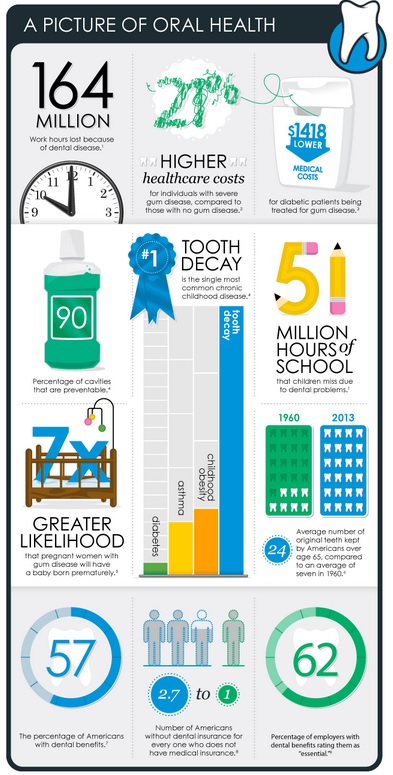
#Importance of Dental Coverage
Compare Dental Plans & Get Quotes
-
Picture of Oral Health cdc.gov
- Dental For #Everyone, Instant Quotes - Online Enrollment
-

Delta Dental - Get Quotes & Enroll
- Quotit Quotes for Dental
- Dental to lower Share of Cost Medi Cal our webpage
Email us [email protected] or get a quote for the latest information.
California
Deep dental cleaning is also called periodontal scaling and
root planning, or SRP.
- Deep dental cleaning is also called periodontal scaling and root planning, or SRP. It’s similar to how a hygienist typically cleans your teeth but focuses on the outer surface of the roots and below your gum line. This special cleaning is needed when tartar buildup has caused infection of the gums. Pockets form, a widening of the gumline that has pulled away from the tooth. Loss of this connective tissue can lead to bone loss and, eventually, tooth loss. Learn More
- The Difference: Deep Dental Cleaning vs Regular Cleaning

- Image from Mouth Healthy.org
- You Tube VIDEO on deep cleaning
- If you’re a dentist check out Spear Education.com
- If you have recently sat in your dentist’s chair for a routine exam, or you plan to in the near future, you are already ahead of the 34% of Americans who skip their checkup.
- Let’s set the record straight: if your dentist has suggested a deep cleaning, it is important that you get one scheduled right away. my ideal dental.com
- Here’s how to avoid the need for a deep dental cleaning
- You can prevent gingivitis and periodontal disease and avoid the need for a deep dental cleaning. “Probably 95 to 98% of dental disease, and periodontal disease in particular, is preventable,” Dr. Crum says.
- Key to prevention is better home care. You’ve had the recommendations drilled into your head since you were a kid—brush twice a day and floss once a day. If traditional brushing and flossing aren’t cutting it for you, there are different home care tools you can try.
- People with manual dexterity issues or arthritis might do better with an electric toothbrush.People who don’t like wrapping floss around their fingers can use floss picks or power cleaners like Waterpiks.People who have larger spaces between their teeth can try small brushes for cleaning that area.
Visiting your dentist periodically is also key. Regular cleanings can catch gum disease early and keep the plaque and tartar from spreading below the gumline. considerable.com

Technical & Research Resources
- webb dental.com/
- tmj.org/
- Basic and general rules on Coordination of Benefits
- Appeals & Grievances our webpage
- Dental is an essential benefit under ACA/Obamacare CHCF.org
- Read the actual policy EOC for full details of the benefits our webpage