Dental & Vision Coverage under Medicare Part B?
Dental Coverage under Medicare Part B
is very limited
Medicare does not cover generally cover dental, oral surgery, chipped teeth, extractions, dentures or implants, accidents, routine care or most dental procedures such as cleanings, fillings, tooth extractions or dentures. In rare cases, Medicare Part B Doctor Visits will pay for certain dental services. Medicare Part A Hospital will pay for certain dental services that you get when you are in the hospital. Learn More: medicare.gov/dental
Some Medicare Advantage plans may include dental benefits.
- Anthem
- UnitedHealthcare®
- Blue Shield
- SCAN
- Medi Gap plans offer dental… when you get the “extras’ or “inovative” etc.
- Get quotes
We did not in our research find any coverage under Medicare for Accidents! Scroll down for FAQ’s
- Expanded coverage for medically necessary dental procedures in Medicare. Coverage of some services
- specifically, elimination of infection preceding an organ transplant and certain cardiac procedures — will begin in 2023,
- while coverage of dental services linked to head and neck cancers will start in 2024. CDA.org *
- you receive an oral examination in the hospital because you will be having a kidney transplant or in a rural or federally qualified health clinic before a heart valve replacement;
- you have a disease that involves the jaw (like oral cancer) and need dental services that are necessary for radiation treatment;
- you had a facial tumor removed and had ridge reconstruction (reconstruction of part of the jaw) as part of that procedure;
- you need surgery to treat fractures of the jaw or face; See TMJ below
- you need dental splints and wiring as a result of jaw surgery.
While Medicare may pay for these initial dental services, Medicare will not pay for any more follow-up dental care after the underlying health condition has been treated. For example, if Medicare paid for a tooth to be removed (extracted) as part of surgery to repair a facial injury you got in a car accident, it will not pay for any other dental care you may need later because you had the tooth removed.
Medicare will pay for some dental-related hospitalizations, for example, if
- you develop an infection after having a tooth pulled;
- you require observation during a dental procedure because you have a health-threatening condition.
- Medicare will cover the costs of hospitalization (including room and board, anesthesia, and x-rays). It will not cover the dentist fee for treatment or fees for other physicians, such as radiologists or anesthesiologists.
While Medicare may pay for in-patient hospital care in these circumstances, Medicare will never cover any dental care specifically excluded from Original Medicare (i.e., dentures), even if you are in the hospital.
Learn more ⇒
- medical necessity Medicare dental work
- CMS General Explanation
- Justice in Aging – Oral Health for older Americans
- Medical Loss Ratio – Insurance Companies must pay out 80% of what they take in in premiums. If they are going to pay for Dental Implants, how much do they have to charge?
- Incremental Expansion of Dental Coverage in Medicare Medicare Rights *
- Research highlights inadequate dental benefits in Medicare Advantage News Medical.net *
Exclusions
Dental For #Everyone,
has an excellent website with full brochures, Instant online quoting and enrollment

- Dental for Everyone includes quotes from
- Careington Discount Plan
- Bright Benefits
- Renaissance Dental
- Delta Dental
- AmFirst
- One of our colleagues on how Dental for Everyone Works.
- Some of our webpages on dental
- VSP Vision

Contact Us - Ask Questions - Get More Information
[email protected]
By submitting the information below , you are agreeing to be contacted by Steve Shorr a Licensed Sales Agent by email, texting or Zoom to discuss Medicare or other Insurance Plans as relevant to your inquiry. This is a solicitation for Insurance
Medi Cal, Justice in Aging
FAQ
- Question Will Medicare pay for implants if the cause of the loss of teeth was due to a severe and life threatening #infection, primary cause.
- Answer:
- How to Determine Medical Necessity
- Dentists may ask specific questions to determine whether dental implants are medically necessary or not. Some of these include:
- Has the patient suffered a traumatic injury to the area?
- Is the condition the result of an infection, such as ulcers, diabetes, or GERD?
- If patients can answer “yes” to one or both of these questions, they may be eligible for coverage.
- Ultimately, however, they will need to consult with their provider to confirm if the treatment will be covered.
- In some cases, dental implants will be covered by insurance policies. Issues resulting from trauma or infections that require dental implants will usually be covered by these insurance plans. However, there are many factors to consider, and patients will need to reach out to their insurance providers to find out what can and cannot be covered. Harden Dental *
- Medical insurance will pay for a procedure if it’s a necessary treatment for a diagnosed medical condition.
- For instance, if tooth problems have made it impossible for a patient to eat solid food, that person has stepped over the line from a dental to a medical issue. As insurers become more concerned with systemic illnesses and whole-body health, they’re more likely to understand that dental practices play an important roll on a patient’s medical team. Dentistryiq.com *
- How To Know When Health Insurance Will Cover An Oral Procedure Insurica.com *
- Dentists may ask specific questions to determine whether dental implants are medically necessary or not. Some of these include:
- adicalgonquin.com/medicare-dental-implant-benefits/
- kff.org/medicare/medicare-coverage-of-dental-services
- Medically Necessary Dental Services NIH
- cms.gov/medicare/dental
- Clinical Guidelines
- How to Determine Medical Necessity
#TMJ, Temporo Mandibular joint caused by trauma
(such as a blow to the face),
might be covered under Original Medicare
Treatment efforts for TMJ are directed toward:
1) reduction of pain,
2) improvement of dysfunction,
3) slowing the progression of the joint disease.
Temporomandibular joint arthroplasty is usually attempted after all nonsurgical methods of treatment have failed.
Conservative therapy is the mainstay in treating TMJ. This therapy may include behavior change, oral medications for pain, anti-inflammatory injections, and orthotic devices. Surgical treatments, often irreversible, may be recommended for difficult or unresponsive cases.
Learn more ⇒
- Our webpage on Medical Necessity
- William Square Dental.com on TMJ

- Photo Courtesty of Willams Square Dental

#Importance of Dental Coverage
Dental & General Health
Insurance 101?
We suggest that you check out Life Insurance, Disability, Long Term Care and Retirement as these risks may cause much more financial devastating to your budget than dental bills.
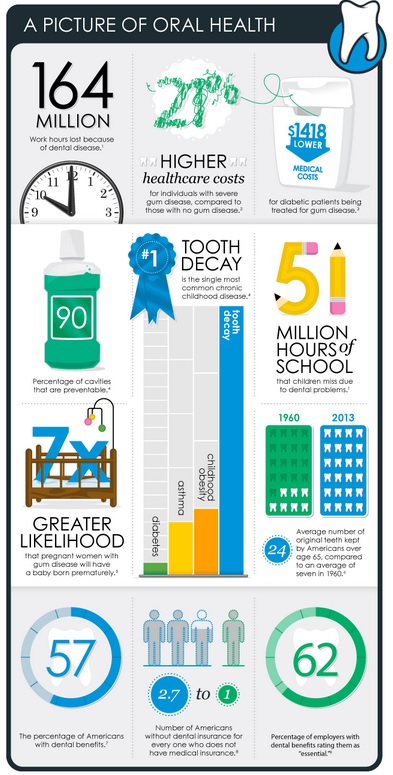
Picture of Oral Health
- Dental For #Everyone, Instant Quotes - Online Enrollment
-

Delta Dental - Get Quotes & Enroll
- Dental care reduces likelihood of hospitalization for people with diabetes or coronary artery disease Medical Press 5.6.2022
- The 2022 State of America’s Oral Health and Wellness Report Commissioned by Delta Dental Plans Association
- What drives buyers of individual Delta Dental plans?
- 77 Million Adults Do Not Have Dental Insurance
- CDA-sponsored bills seek more protections, increased oversight of dental insurance Bills would prohibit plans from imposing arbitrary waiting periods, denying coverage for preexisting conditions; require rate review and ERISA notice Learn More >> CDA * CA Legislature * California Benefits Review Program *
Steve on buying, shopping and best use of premium dollars
Dental Insurance VIDEO

MORE VIDEOS
- What dental Insurance... should I buy???
- VIDEO the dentist attempts to give you some guidance about things to consider before buying a dental insurance plan, finance plans available, negotiating with your dentist
- Sacramento Truck driver sudden dealth from tooth infection Sacramento Bee 1.31.2017
- Health Savings Accounts?
- Video - how bad sugary drinks are for you
Oral Health for #Seniors
Justice in Aging - Advocates Guide Updated 2025

- Denti-Cal under Medi Cal
- National Institute for Dental Research - Caregiver information
- Health.Gov tips for older adults
- nia.nih.gov/taking-care-your-teeth-and-mouth
- Dental Care - Medicare


#Delta Dental Direct
Delta Dental - Get Quotes & Enroll Affiliate Link
Be sure to put in our AGENT # 2094784

Delta Dental – Covered CA Plans
-
-
- Much more detail on Delta Dental our webpage
-

Dental - Glossary – #Dictionary
- Golden West
- Sealants Fact Sheet
- Dental Site – Dr. Dorfman DDS Excellent Site for Dental Information
- Deep Cleaning explanation & coverage
- Dental Implants
- Sacramento Truck driver sudden dealth from tooth infection Sacramento Bee 1.31.2017
Vision – Cataracts
VISION FAQ’s
-
What does Medicare Part A & B pay for vision?
- Medicare doesn’t cover eye exams (sometimes called “eye refractions”) for eyeglasses or contact lenses.
- Some Medicare Advantage Plans (Part C) offer extra benefits that Original Medicare doesn’t cover – like vision, hearing, or dental.
- Eye exams, if you have diabetes
- Glaucoma tests
- Macular degeneration tests and treatment .medicare.gov/coverage/eye-exams-routine
- Part A doesn’t cover unless it’s a medical problem/emergency.
- Medicare Part A is intended to serve individuals strictly as a hospital insurance. If you are admitted to the hospital because of an accident involving your eyes, your plan benefits would apply; otherwise, you are responsible for all costs associated with routine vision corrections and eye exams. Oftentimes, individuals with Medicare Part A enroll in a private, individual vision insurance plan for coverage.
- Medicare Part B is a medical insurance plan. As such, coverage applies to some vision care, but only when you have a medical condition that involves your eyes or affects your vision. Medicare Part B does not cover routine eye examinations and vision correction. That means prescription glasses and contact lenses will not be covered by your plan, unless you have had a necessary cataract surgery.
- Medicare Part B does cover annual glaucoma screenings for high-risk patients. These include individuals with diabetes or a family history of glaucoma, African-Americans over the age of 50, and Hispanics over the age of 65. Medicare Part B also covers cataract surgery, prosthetic eyes and special treatments for macular degeneration, but a 20% coinsurance cost typically applies to many of these treatments. vsp.com/medicare-vision-coverage
- See Medicare Benefits Booklet
- medicare.gov/eyeglasses-contact-lenses
- medicare.gov/eye-exams-for-diabetes
- CMS.Gov on Cataract Surgery
- Though Medicare will cover both laser and traditional cataract surgeries, they do not yet cover New Technology Intraocular Lenses (NTIOLS). For instance, Medicare may not cover you if you need multifocal or toric lenses, though they will cover monofocal lenses. READ MORE >>>
How is #Cataract Surgery – Placement covered by Medicare?
Private Insurance? Medi Cal?
- Eyeglasses & contact lenses
- Medicare doesn’t usually cover eyeglasses or contact lenses. However, Part B covers corrective lenses if you have cataract surgery that implants an intraocular lens. Corrective lenses include one pair of eyeglasses with standard frames or one set of contact lenses.
- Costs
- You pay 100% for non-covered services, including most eyeglasses or contact lenses.
- After you meet the Part B deductible, you pay 20% of the Medicare-approved amount for corrective lenses after each cataract surgery with an intraocular lens. You pay any additional costs for upgraded frames. Medicare will only pay for contact lenses or eyeglasses from a supplier enrolled in Medicare, no matter if you or your supplier submits the claim.
- Things to know
- Medicare covers cataract surgery if it’s done using traditional surgical techniques or using lasers.
- Eyes
- See “Artificial eyes & limbs” on page 13.
- CMS.gov Cataract Surgery
- It’s basically 80% and you pay 20%, which can be covered under Medi Gap
- or a Medicare Advantage Plan.
-
Coverage Indications, Limitations, and/or Medical Necessity
- Further Reading
Our other pages on
Dental Coverage
We don't put a lot of effort into selling dental coverage. Generally it's a wash on paying premiums vs getting back claims payments. Unless it's employer group. Then the premiums are tax deductible under IRS Section 106.
Here's more information on how we feel about dental. Here's our page on implants, where we get lots of inquires, but few sales. Most people only seem to want dental coverage, after they've been told they need a lot of dental work. Not profitable for Insurance Companies. See our other pages for details & explanations. See our page on Medical Loss Ratio. Insurance Companies need to take in $1 to pay 80c in claims.
Medicare Plans
- Anthem Blue Cross
- Blue Shield – Medi-Gap – Any Medicare Provider
- Health Net Medi Gap
- UnitedHealthcare Medi Gap
- Scan
Individual & Family Plans
Dental For Everyone,
has an excellent website with full brochures, Instant online quoting and enrollment
One of our colleagues on how Dental for Everyone Works..
Employer Group Plans
- Medi-Cal