
Medi-Cal Eligibility in California
- Medi-Cal eligibility can depend on your
- dhcs.ca.gov/ updates/medi-cal-changes/ for 2027
- The rules are not the same for everyone.
- Use the choices below to find the information that fits your situation.
- Already have Medi-Cal?
- Use our guides for
Which Medi-Cal Eligibility Rules Apply?
The first step is determining whether you are being evaluated under MAGI Medi-Cal or one of California’s Non-MAGI Medi-Cal programs.
- MAGI Medi-Cal
- Generally applies to adults under age 65, children, parents and pregnant individuals.
- Uses Modified Adjusted Gross Income and tax-household rules.
- Usually focuses on current monthly income rather than only last year’s tax return.
- Generally does not use the Non-MAGI asset test.
- See my web page — MAGI Medi-Cal income limits and eligibility.
- Non-MAGI Medi-Cal
- May apply when someone is age 65 or older, blind, disabled, receiving Medicare or seeking long-term-care benefits.
- Uses different income rules and may allow certain health-insurance premiums or medical deductions.
- Asset limits may apply to some Non-MAGI programs.
- See my web page — Aged and Disabled Medi-Cal.
- Important:
- Do not assume that one Medi-Cal income or asset limit applies to everyone.
- A child, working adult, Medicare beneficiary and nursing-home applicant may each be evaluated under different rules.
What Can Affect Medi-Cal Eligibility?
- Income
- Wages, self-employment income, unemployment, Social Security, pensions and other income may be treated differently.
- See my web page — MAGI Medi-Cal income limits.
- Household size
- Who lives with you is not always the same as who belongs in your Medi-Cal or tax household.
- Marriage, pregnancy, dependents and tax-filing relationships can affect the determination.
- Age, disability and Medicare
- Different rules may apply after age 65 or when someone receives disability benefits or Medicare.
- See my web page — Aged and Disabled Medi-Cal eligibility.
- Assets and property
- California does not apply the same asset rules to every Medi-Cal category.
- Bank accounts, investments and other property may matter under certain Non-MAGI programs.
- See my web page — current Medi-Cal asset limits and exemptions.
- Residency and immigration category
- California residency is required, but immigration-related eligibility and benefit rules depend on the applicant’s circumstances and the type of coverage requested.
- Do not cancel coverage or avoid applying based only on rumors. Review the current rules and any written notice from Medi-Cal.
- Work Requirement for 2027
- quotit.com/medicaid-work-requirements-final-rule-what-agents-need-to-know-for-2027
- market place.org/ more-than-2-million-young-adults-could-lose-medicaid-soon
Common Medi-Cal Eligibility Situations
- Your income is within the MAGI Medi-Cal range
- Review the current income chart and determine the correct household size.
- See my web page — MAGI Medi-Cal income chart.
- You are age 65, blind or disabled
- You may qualify through the Aged, Blind and Disabled Federal Poverty Level program or another Non-MAGI category.
- See my web page — Aged and Disabled Medi-Cal.
- You receive SSI
- SSI recipients in California generally receive Medi-Cal automatically, but special issues can arise when SSI stops or changes to another Social Security benefit.
- See my web page — SSI and automatic Medi-Cal eligibility.
- You received SSI as a Disabled Adult Child
- Special federal protections may allow Medi-Cal to continue when Social Security changes from SSI to a Disabled Adult Child benefit.
- See my web page — Disabled Adult Child and Pickle Amendment protections.
- You work and have a disability
- The 250% Working Disabled Program may provide full-scope Medi-Cal without a Share of Cost.
- See my web page — 250% Working Disabled Program.
- You were assigned a Share of Cost
- A Share of Cost does not necessarily mean that you have no other options.
- Allowable health-insurance premiums and medical expenses may reduce or eliminate it in some situations.
- See my web page — how to reduce or eliminate Medi-Cal Share of Cost.
- You already have Medicare, employer coverage or private insurance
- It is sometimes possible to have Medi-Cal together with other health coverage.
- See my web page — Medi-Cal with Medicare or private insurance.
What Does Medi-Cal Cover?
Full-scope Medi-Cal is comprehensive health insurance—not merely emergency or clinic coverage. It includes the Affordable Care Act’s essential health-benefit categories and may provide additional services that are not ordinarily included in private health insurance.
Medi-Cal may also provide important benefits such as adult dental coverage , vision benefits , non-emergency medical transportation and certain long-term services and supports.
Already Have Medi-Cal?
Eligibility does not end with the original application. You may need to renew your coverage, report changes, provide documents or respond to a county notice.
- Complete your renewal
- Do not ignore a renewal form or assume Medi-Cal renewed automatically.
- See my web page — Medi-Cal renewal and redetermination.
- Report important changes
- Changes may include income, address, household size, marriage, pregnancy or other health insurance.
- California instructs members to report applicable changes within 10 days.
- See my web page — how to report a change to Medi-Cal.
- Official source — DHCS: Update Your Information.
- Upload requested proof
- Save copies of every document and confirmation showing when it was submitted.
- See my web page — proof needed for BenefitsCal uploads.
- Choose or change a Medi-Cal health plan
- Your choices may depend on your county, other insurance and whether you also have Medicare.
- See my web page — Medi-Cal HMO versus Fee-for-Service.
- Disagree with a Medi-Cal decision
- Read the Notice of Action carefully and act before the appeal deadline.
- See my web page — Medi-Cal appeals and State Hearings.
Apply for Medi-Cal or Get Help With Your Case
- Apply or manage your case through BenefitsCal
- Use BenefitsCal to apply, view notices, complete tasks and upload documents.
- Save your confirmation number and copies of everything submitted.
- Contact your county Medi-Cal office
- The county makes the official eligibility decision and handles case-specific questions.
- See my web page — Medi-Cal county contacts and help.
- Income too high for MAGI Medi-Cal?
- You may qualify for a Covered California health plan with financial assistance.
- Compare Covered California and individual health plans.
- There is no additional charge for my assistance when I am appointed as your health-insurance agent.
Medi-Cal Eligibility Questions
- Does Medi-Cal use monthly or annual income?
- MAGI Medi-Cal commonly evaluates current monthly income. Covered California generally uses projected annual household income. The rules can become more complicated when income fluctuates or is seasonal.
- See my web page — MAGI Medi-Cal income rules.
- Does Medi-Cal have an asset limit?
- Not for everyone. MAGI Medi-Cal generally does not use the Non-MAGI asset test, but assets may matter for certain aged, disabled, Medicare and long-term-care programs.
- See my web page — current Medi-Cal asset limits.
- What happens if my income becomes too high for Medi-Cal?
- You may be eligible for Covered California with premium assistance, or you may be evaluated for another Medi-Cal category.
- See my web page — moving from Medi-Cal to Covered California.
- Can I have Medi-Cal and private insurance at the same time?
- Sometimes. Coordination rules determine which coverage pays first.
- See my web page — Medi-Cal and other health insurance.
- I lost my child’s Medi-Cal card. How do I replace it?
- Request a replacement Benefits Identification Card through your county Medi-Cal office or BenefitsCal.
- See my web page — Medi-Cal contacts and replacement-card help.
- Official source — DHCS Medi-Cal Help Center.
- Who makes the final eligibility decision?
- Your county Medi-Cal office determines which program applies, what proof is required and whether you qualify.
Important Medi-Cal Eligibility Resources
- My web page —
- BenefitsCal — apply, renew and manage your case
- California DHCS — Medi-Cal Help Center
- #My Medi-Cal How to get the Health Care You Need pdf
- General information only:
- Medi-Cal eligibility depends on the individual’s circumstances and eligibility category.
- Rules and effective dates can change.
- Review every Notice of Action carefully and confirm case-specific questions with your county Medi-Cal office.
- I am an independent California insurance agent.
- Medi-Cal generally does not compensate insurance agents for Medi-Cal eligibility or casework. However,
- I can help you compare and enroll in Covered California and individual health insurance, Medicare Supplement insurance, and dental and vision insurance that may coordinate with Medi-Cal.
- There is no additional charge for my assistance when I am appointed as your insurance agent.
Child Sub Pages


When does coverage #start?
- I applied for Medi-Cal but have not received any information from the county
- Medi-Cal will pay medical bills for 3 months prior to acceptance into medi-cal, but one must ask for retroactive coverage Western Poverty Law Center Page 5.211. * Excerpt of email from [email protected]
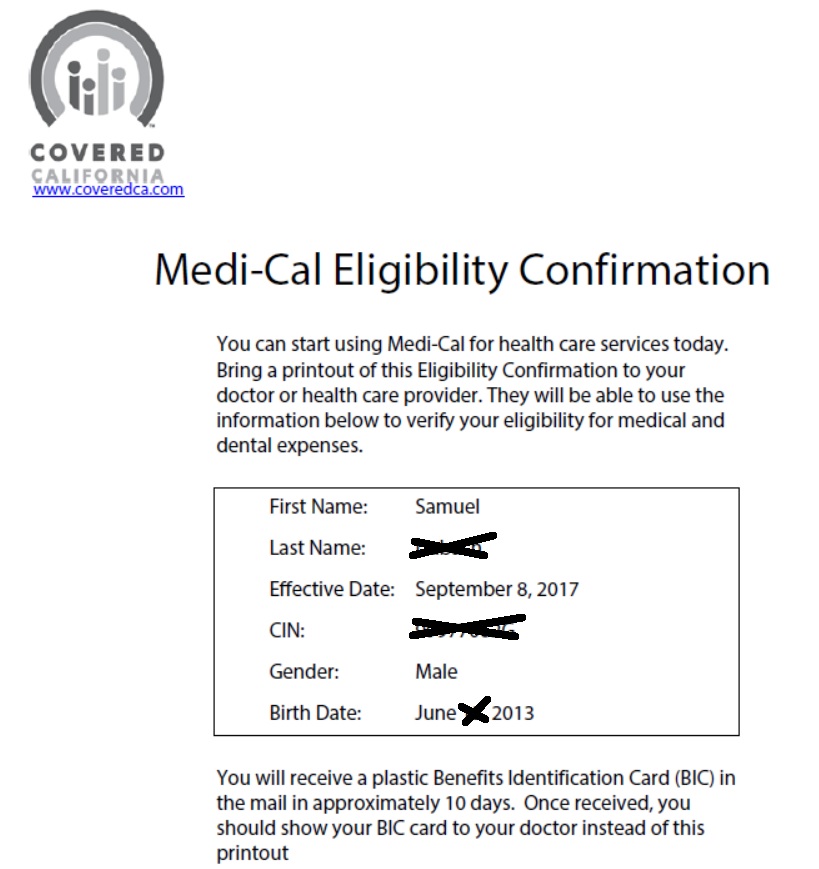
- Note that you can get immediate confirmation of provisional Medi-Cal enrollment when you apply direct or through an agent – at no additional charge on Covered CA’s website. If you scroll down on the eligibility page and find it.
- Scroll down for Other ways to get immediate medical care and more proof that you have coverage while waiting for your ID cards.
- Medi-Cal Eligibility & Covered California – FAQ’s DHCS.gov
- Hospital Presumptive Eligibility (PE) program
Documentation Required during
Covered CA 90 Day #Conditional Eligibility
A 90 day conditional eligibility notice means that you get coverage for 90 days even though Covered CA hasn’t verified that you qualify. As long as you send the proofs that are being asked for, everything is fine! There is NOTHING to worry about! Just comply. If you have trouble with compliance, email us.
Clients need to submit valid documentation for one or more of the following reasons:
- U.S. Citizen/National or non-citizen with a lawfully present status
- Income (MAGI Line 37*) Insure Me Kevin.com 2.19.2016
- Social Security Number (SSN)
- Incarceration Status – Insure Me Kevin.com
- American Indian/Alaska Native Status
You can upload, fax, send to their Certified Agent or mail their documentation. More than one document may be required.
View our Conditional Eligibility Quick Guide * or Job Aid for more information on the notice and to view a list of acceptable Verification Documentation.
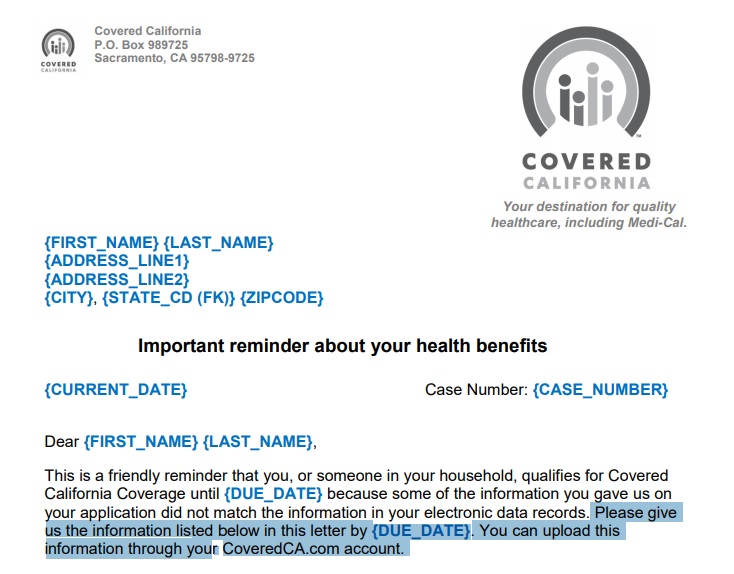
Look for this sentence in the letter that you get from Covered CA.
We need your proof within 90 days. If we get a response and you prove your citizenship by the due date above, you will keep your insurance through Covered California.
Here’s the biggest lesson I learned in one year of law school. Read everything 3 times and when you think you understand it, read it again.
Resources & Links
- Medi-Cal’s website for Pending Applications & Newly Enrolled
- More Information – Covered CA Start Date – Conditional Eligibility


Eligibility
Undocumented, Illegal, Lawful Presence
DHCS.gov Medi Cal Immigrant FAQ on Eligibility
- Visit our webpage on Lawful Presence for Covered CA
- All undocumented Californians would still be covered for emergency medical and pregnancy care — so-called “limited scope” share of cost coverage that is paid for with federal dollars. But those who don’t enroll before January 2026 would be uncovered for other medical expenses, such as prescription drugs and doctor’s visits. Learn More >>> Cal Matters. org
Medi Cal
out of state and #emergency coverage?
- CA Medi Cal – Out-of-state medical care is limited to the following:
- (a) (1) When an emergency arises from accident, injury or illness; or
- (2) Where the health of the individual would be endangered if care and services are postponed until it is feasible that he/she return to California; or
- (3) Where the health of the individual would be endangered if he/she undertook travel to return to California; or
- (4) When it is customary practice in border communities for residents to use medical resources in adjacent areas outside the State; or
- (5) When an out-of-state treatment plan has been proposed by the beneficiary’s attending physician and the proposed plan has been received, reviewed and authorized by the Department before the services are provided; and the proposed treatment is not available from resources and facilities within the State.
- (6) Prior authorization is required for all out-of-state services, except:
- (A) Emergency services as defined in §51056.
- “emergency services” means those services required for alleviation of severe pain, or immediate diagnosis and treatment of unforeseen medical conditions, which, if not immediately diagnosed and treated, would lead to disability or death.
- (B) Services provided in border areas adjacent to California where it is customary practice for California residents to avail themselves of such services. texas.gov/medicaid
- Medi Cal Treatment Authorization Request
- 540-1 (a) (5) When an out-of-state treatment plan has been proposed by the beneficiary’s attending physician and the proposed plan has been received, reviewed and authorized by the Department before the services are provided; and the proposed treatment is not available from resources and facilities within the State
- (A) Emergency services as defined in §51056.
- Medi Cal only covers outside of CA for emergencies and very special circumstances. Cornel Law *
- Sources
- cdss.ca.gov/Medi-Cal-Out-of-State-Coverage
- casetext.com/section-51006-out-of-state-coverage
- Cornel Law
-
- California Advancing and Innovating Medi-Cal (CalAIM) is a long-term commitment to transform and strengthen Medi-Cal, offering Californians a more equitable, coordinated, and person-centered approach to maximizing their health and life trajectory.
- Medicaid.gov
- Disability Benefits 101
- Western Poverty Law Center Guide
- Medi-Cal enrollees not sure how to use coverage california health line.org
- Medi-Cal pays $415 to $575/month or MORE to HMO’s to take care of you
- Medi Cal Explained CHCF
- Medi-Cal Facts and Figures, 2024 Edition Gives a lot of information on ALL Health Insurance Programs
- cal matters.org/medi-cal-eligibility/
- dhcs.ca.gov/Budget-Highlights
- ebudget.ca.gov/Full Budget Summary
-
Prescription drugs.
- Hearing Aid Cap FAQ’s
- Health screenings for kids
- Preventive and wellness services and chronic disease management.
- Mental Health CHCF Fact Sheet
- Substance abuse CHCF Article
- Maternity
Ongoing Care & Recovery
- Personal care services (IHSS)
- Nutrition Food & Meals
More Details
- My Medi-Cal brochure
- dhcs.ca.gov/Medi-Cal_EHB_Benefits
- dhcs.ca.gov/Benefits_services.aspx
- dhcs.ca.gov/Benefits-Chart
- Check with your HMO Providers Evidence of Coverage
- Insure Me Kevin.com – Medi Cal HMO same coverage as Covered CA HMO! Provider list may differ!
-
Much more on Medi Cal
- Medi Cal Explained CHCF
- More
- Historical Guide 2006 CHCF 174 pages
- Cal AIM California Advancing and Innovating Medi-Cal — is a far-reaching, multiyear plan to transform California’s Medi-Cal program and to make it integrate more seamlessly with other social services. The goal of CalAIM is to improve outcomes for the millions of Californians covered by Medi-Cal, especially those with the most complex needs.
- You Tube Videos
- DHCS.CA.Gov
- chcf.org/focus-on-cal aim
- VIDEO Introduction to Medi Cal Los Angeles DPSS
- California voters give Medi-Cal doctors a raise by passing Prop. 35
- 10 Essential Health Benefits
- Video
- Our Webpage on Medi Cal Benefits
- Denti Cal
******************************************
- Western #Poverty Law – Exact Legal Rules on Coverage for Low Income Californian’s
Nolo Social Security, Medicare, Medi Cal & Government Pensions

-
Our Webpage on COVID 19
- CA State Senator Steven Bradford 35th District
- His Webpage on COVID 19 Resources
-
BIC Benefits Identification Card
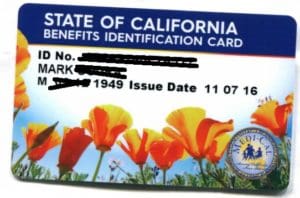
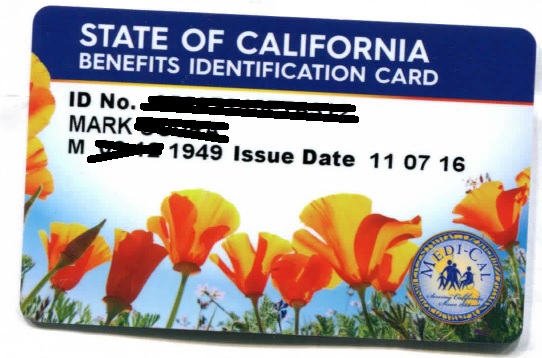
FAQ’s “C-CHIP County Children’s Health Initiative Program”
- The County Children’s Health Initiative Program (C-CHIP) sccgov.org a health insurance program (Medi-Cal) that offers affordable and comprehensive medical, dental, and vision insurance for children age 0-19 who qualify. Qualification is in 3 Northern CA counties and is for those who are just out of the normal Medi Cal income limits 266-322% Federal Poverty Level (FPL).
- Learn more by clicking on the links below:
- InsureKidsNow.gov
- Health Care.Gov
- LA County.Gov
- cchi 4 families.org
- Disability Benefits 101 – Excellent explanation!
- Work Requirements?
- CHIP Children’s Health Insurance Program
- Learn more by clicking on the links below:
- Medi-Cal vs. Covered CA: Agents are paid commissions by insurance carriers (e.g., Anthem, Blue Shield, Kaiser) only when consumers enroll in private insurance plans (Qualified Health Plans) through Covered California.
- No Pay for Medi-Cal: There is no commission for Medi-Cal, which is a state-funded program rather than a private insurance carrier.
- Prohibited Fees: Licensed agents are strictly prohibited from charging consumers for services, including assisting with a Medi-Cal application. [1, 2, 3, 4, 5]
1. Commissions Require a Private Premium [1]
- These commissions are a small percentage drawn directly from a consumer’s monthly premium.
- Because Medi-Cal is a government welfare benefit funded entirely by state and federal tax dollars, there is no premium paid by the consumer.
- With no premium exchange occurring, there is no private funding pool or built-in mechanism to generate a sales commission. [3, 4, 5]
2. Strict Laws Against Charging Public Assistance Applicants [3]
- Under the California Insurance Code, health insurance agents are legally prohibited from charging consumers direct out-of-pocket fees for help with standard health plans.
- Charging a fee to a low-income consumer to help them access a free, government-mandated safety net program like Medi-Cal is illegal and constitutes a violation of consumer protection laws. [3, 6]
3. The “No Wrong Door” Policy Conflict
- To be certified to sell profitable private plans, Covered California legally mandates that agents assist anyone who applies, even if the system determines the client is only eligible for Medi-Cal.
- The state views this uncompensated labor as a baseline requirement for holding a Covered California Agent Certification. [8]
4. Public System Design
FAQ’s
- How does Covered California work with Medi-Cal?
- Covered California will act as a “one-stop shop” for health insurance. Through Covered California, you will be able to apply for Medi-Cal benefits electronically and receive a real-time eligibility results. You will also be able to report changes online and receive real-time customer support 24 hours a day. dhcs.gov More FAQ’s DHCS ♦ Insure Me Kevin.com
- Disability Benefits 101 – Medi-Cal The Details
- What is California Advancing and Innovating Medi-Cal (CalAIM)
- Cal Aim is a long-term commitment to transform and strengthen Medi-Cal, offering Californians a more equitable, coordinated, and person-centered approach to maximizing their health and life trajectory.
- Goals of CalAIM
- 1. Identify and manage comprehensive needs through whole person care approaches and social drivers of health.
- 2. Improve quality outcomes, reduce health disparities, and transform the delivery system through value‑based initiatives, modernization, and payment reform.
- 3. Make Medi-Cal a more consistent and seamless system for enrollees to navigate by reducing complexity and increasing flexibility. DHCS *
- why doesn’t medi-cal really help? So long on #hold, so much wasted time?
-
- Why is my website so much more informative than Medi-Cals or Covered CA’s?Medi-Cal like any other “business” wants to expand. So they have a motive to keep you there. The Co-Pays and deductibles are lower. They include adult dental & vision.Medi-Cal and the Insurance Companies don’t pay agents, yet it’s just as time consuming and complex to help people with Medi Cal as a Covered CA or direct plan!
- If you like waiting on hold with Covered CA – Stay there. If you would like to just send an email and I’ll take care of it, appoint me as your agent and I’ll see what I can do.
- It’s been a whirlwind deciding what to do, health-insurance-wise and, after a consultation with our tax guy, we’ve decided to register for Medi-cal. I know you get no money from this, so I’m sorry for wasting your time with Oscar Insurance inquiries. Thank you for all of your help. We’ll be in touch in the future if, as we hope, we can make enough money to get back on CC.
Effective Date? Temporary Instant ID Card”
-
- Benefits Cal is a one-stop-shop to apply for…
- Cal Fresh
- Ages 26 through 49 Adult Full Scope Medi-Cal Expansion regardless of immigration status
- Cal WORKs
- Medi-Cal
- CMSP (County Medical Services Program)
- Disaster Cal Fresh
- GA/GR (General Assistance and General Relief )
- Briefing — Medi-Cal Explained: An Overview of Program Basics
- chcf.org/medi-cal-explained/
- #BenefitsCal is a one-stop-shop to apply for…
- Medi-Cal
- County Medical Services Program (CMSP),
- Food Assistance – Cal Fresh (formerly known as Food Stamps)
- How to use Eat Fresh.org VIDEO
- Cooking & Nutrition
- California Work Opportunity and Responsibility to Kids (CalWORKs) or check their other website
- Medi-Cal
-
Here you can review and choose the HMO that you want to deliver your Medi-Cal health Care.


- Benefits Cal is a one-stop-shop to apply for…
-
BIC Benefits Identification Card
Links & Resources
- california healthline.org/illegal resident-expansion
- kff health news.org/morning-breakout/californians-face-long-wait-times-when-calling-medi-cal-analysis-finds/
- https://www.chcf.org/publication/medi-cal-facts-and-figures-2024-edition/
- https://www.chcf.org/blog/medi-cal-considers-income-not-assets-enrollees/
- FAQ Medi Cal Rx
https://medi-calrx.dhcs.ca.gov/cms/medicalrx/static-assets/documents/faq/Medi-Cal_Rx_Members_FAQ.pdf - Medi Cal for illegal aliens…
- https://www.dhcs.ca.gov/services/medi-cal/eligibility/Pages/Adult-Expansion.aspx
- https://www.dhcs.ca.gov/services/medi-cal/eligibility/Pages/youngadultexp.aspx
- https://www.dhcs.ca.gov/services/medi-cal/eligibility/Pages/OlderAdultExpansion.aspx
- https://www.dhcs.ca.gov/services/medi-cal/Pages/Medi-CalFairHearing.aspx
- https://healthconsumer.org/wp/wp-content/uploads/2017/04/cs032WorkingDisabled.pdf
- https://insuremekevin.com/magi-medi-cal-income-eligibility-for-2023-increases-over-6/
- https://www.dhcs.ca.gov/services/medi-cal/eligibility/Pages/youngadultexp.aspx#:~:text=This%20initiative%2C%20called%20the%20Young,DHCS)%20website%20for%20SB%2075
- https://www.coveredca.com/learning-center/information-for-immigrants/deferred-action-for-childhood-arrival/
- https://khn.org/morning-breakout/cms-proposes-rules-to-ease-enrollment-in-medicaid-chip/
- https://insuremekevin.com/medi-cal-bridging-the-gap-for-adults-26-49-years-old/
- https://www.shouselaw.com/ca/defense/fraud/medi-cal-fraud/
- https://www.desertsun.com/story/news/health/2022/05/03/california-expands-medi-cal-services-undocumented-seniors/9620961002/
- Our webpage on child support & medi cal
- https://www.chcf.org/wp-content/uploads/2019/03/MediCalExplainedEligibilityEnrollment.pdf
- https://www.chcf.org/wp-content/uploads/2019/03/MediCalExplainedEligibilityEnrollment.pdf
- https://www.chcf.org/wp-content/uploads/2019/02/MediCalExplainedPaymentManagedCarePlansCurrentProcessChallenges.pdf
- Newsom Wants to Expand Medi-Cal to All Undocumented Immigrants by 2024. Advocates Say They Need It Soonerhttps://www.sacbee.com/news/politics-government/capitol-alert/article262935493.html
- Disability Rights CA Medi Cal Resources
- Medi-Cal Info on Covered CA Website
- wikipedia.org on Medi Cal
- Mental Health
- Eligibility
- Payments to HMO’s
- Medi Cal budget
- Insurers make billions off Medicaid in California during Obamacare expansion LA Times 11.5.2017
-
ObamaCare – #Expansion to 138% of FPL
-
Assembly Bill 1 ** Senate.bill.1.
- If you don’t have free Medicare Part A
- Work Requirements